
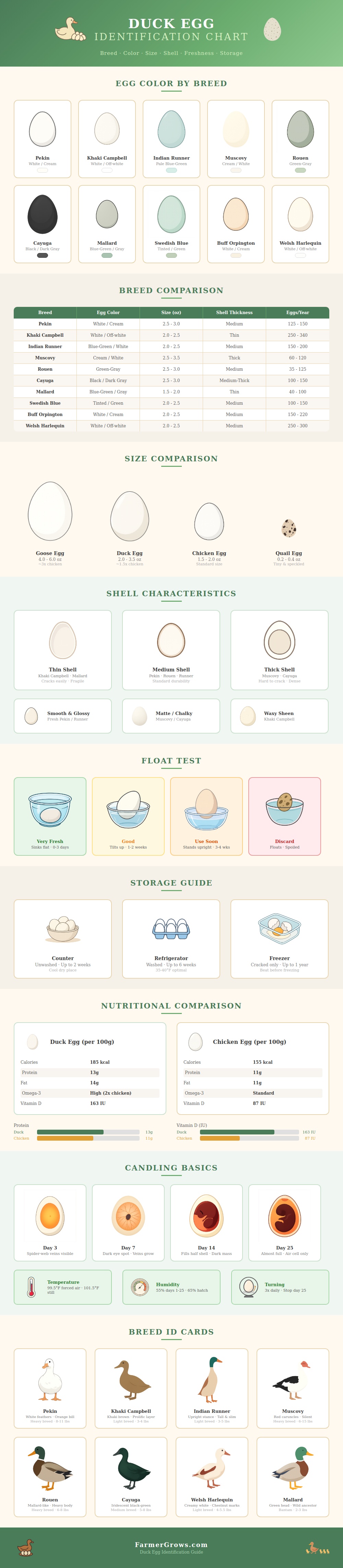
Duck egg differ from chicken egg in many ways. The difference in duck egg include the weight of the shell of the duck egg, the color of the yolk of the duck egg, and the nutritional content of duck eggs. Because duck eggs vary in these different way, it is important for cook to be able to identify the different types of duck egg that can be obtained so that the egg can be used in an appropriate way.
The breed of duck that laid the egg determine the color of the shell of duck egg. For example, Indian Runner and Mallard duck will produce duck eggs with pale blue green shells. Cayuga duck will produce deep charcoal shells.
Differences Between Duck Eggs and Chicken Eggs
Pekin and Khaki Campbell duck will produce cream or white shell. By learning the color of the shell produced by each breed of duck, cook will be able to determine the breed of the duck from which the egg came. Additionally, different breeds of ducks will produce different amount of eggs; some breeds will produce less eggs than others, which may require the cooks to take special care of those duck eggs in the kitchen.
The size of duck eggs is also different than chicken eggs. Duck eggs are larger than chicken eggs, but smaller than goose egg. Additionally, duck eggs contains more fat and protein than chicken eggs.
Therefore, duck eggs will make baked goods taste richer, and will make custards set more fast. Finally, because duck eggs contain more fat and protein than chicken eggs, more cook will feel full after eating recipes containing duck eggs. The thickness of the shell of a duck egg can affect the way in which the cook handle and stores the duck eggs.
Duck eggs with thick shells will be more resistant to cracking during transportation of the eggs. Additionally, the thicker the shell of the duck egg, the longer it may remain on a counter. Conversely, duck eggs with thin shells are more fragile.
These egg will require more gentle handling, and will need to be transport to the refrigerator more quickly. The freshness of a duck egg can be tested through the float test. A fresh duck egg will rest flat on the bottom of a bowl of water.
With age, the eggs will eventually begin to tilt until they float due to the amount of air that enter the egg through the shell. This process is faster in warm kitchens than in cool kitchens. Depending upon whether or not the duck egg is washed, there are different ways to store duck eggs.
If duck eggs are not washed, they have a natural coating that protect them against bacteria. Unwashed duck eggs can be stored at room temperature for up to two week. If the cook wash duck eggs, they will lose this natural bloom.
In this case, duck eggs must be stored in the refrigerator. Finally, duck eggs can be frozen, but the cook must crack the shell and beat the eggs lightly prior to placing them into containers for freezing. Due to the difference in fat and protein content in duck eggs in comparison to chicken eggs, duck eggs have different nutritional property.
Duck eggs contain more fat and protein than chicken eggs. Additionally, duck eggs contain more vitamins and more omega-3 content than those from chicken eggs. Therefore, duck eggs that contain more fat and protein are more useful for recipes in which the yolk of the egg is the main ingredient in the recipe, such as sauce or ice cream bases.
One way of looking into the contents of a duck egg without cracking its shell is through a process called candling. With candling, cook can determine if there is an embryo inside the egg, or if the egg is infertile, for instance. Additionally, cracks in the shell can also be seen using this process.
Knowing the breed of the duck from which the duck egg originated will help cooks to identify the characteristic of that duck egg. For example, heavy-bodied breeds will produce eggs with thick shells and large size, whereas breeds that are lighter will produce more eggs but with thinner shells. By knowing the breed of the duck, cooks can more easy and accurately plan their kitchen and kitchen tasks so that they dont end up with disappointment later in the preparation of meals.
Knowing these different detail about duck eggs is important in that knowing these details will allow cooks to match the type of duck egg to the task that they need to perform in the kitchen.