Decorative Landscape Stone Calculator
Estimate decorative stone volume, tons, bag count, fabric overlap, edging adjustment, and overage for polished pebbles, marble chips, slate, lava, quartz, shell, and other finished landscape beds.
Use this calculator for decorative top-dress stone in visible beds, planters, walk-up borders, mailbox islands, and low-maintenance accent areas. It separates polished, colored, chipped, and shell materials from plain road-base gravel or river-rock estimating.
Your Decorative Stone Estimate
Enter your bed size, stone finish, depth, and purchase method to estimate the order.
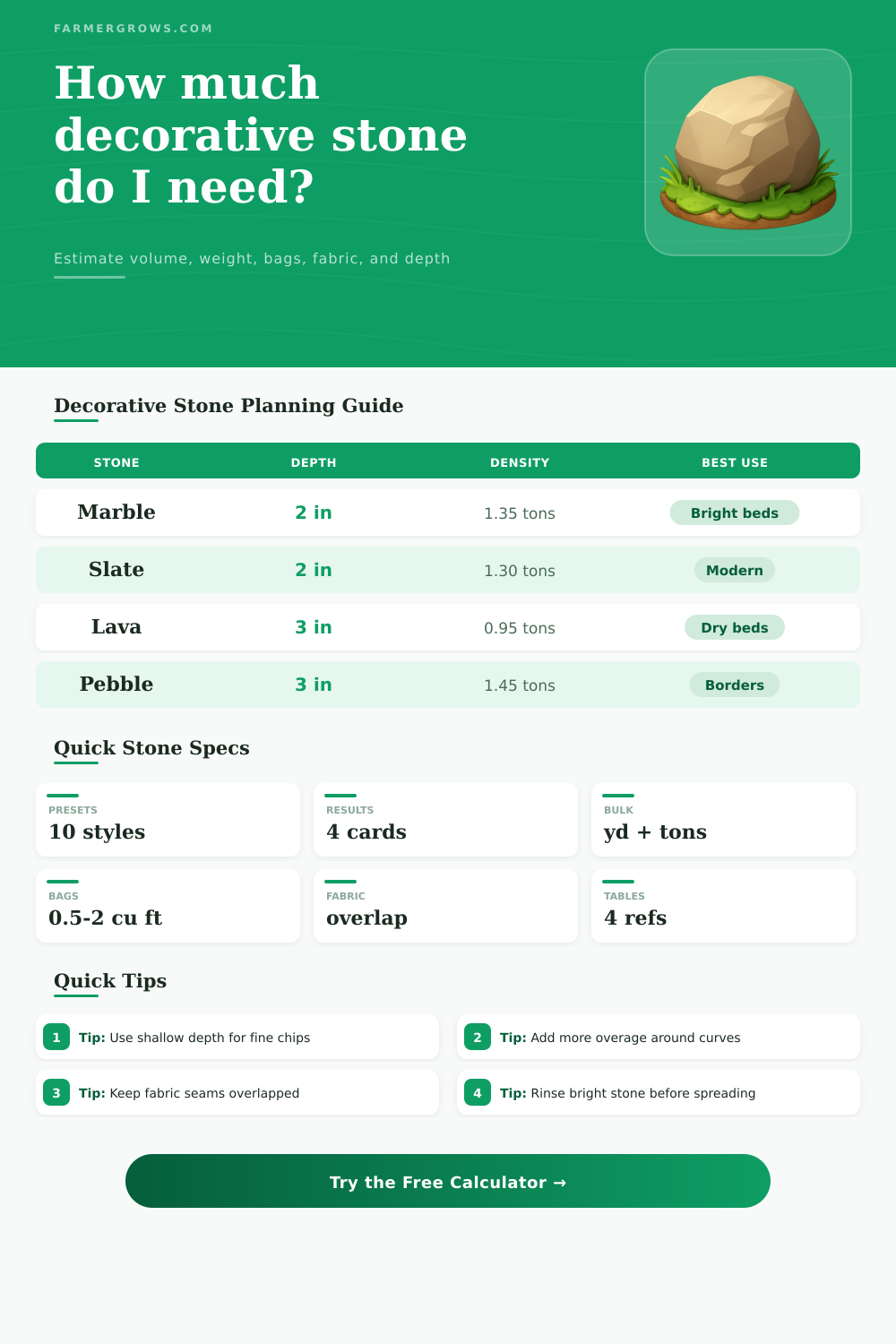
| Decorative stone | Typical size | Bulk density | Visual use |
|---|---|---|---|
| White marble chips | 3/8 to 3/4 in | 2,700 lb/yd3 | Bright formal beds, entry islands, mailbox features |
| Black polished pebble | 1 to 2 in | 2,900 lb/yd3 | High-contrast courtyards, pots, water-feature edges |
| Charcoal slate chips | 1/2 to 1 in | 2,600 lb/yd3 | Modern linear beds and contemporary planting strips |
| Red lava stone | 3/4 to 1-1/2 in | 1,900 lb/yd3 | Warm xeriscape accents and drought-tolerant plantings |
| Quartz sparkle chips | 3/8 to 3/4 in | 2,750 lb/yd3 | Reflective foundation bands and feature planting pockets |
| Mexican beach pebble | 2 to 3 in | 2,850 lb/yd3 | Premium rounded borders, dry creek accents, specimen plants |
| Buff limestone chips | 1/2 to 1 in | 2,650 lb/yd3 | Warm neutral borders and Mediterranean-style beds |
| Crushed shell | 3/8 to 5/8 in | 2,450 lb/yd3 | Coastal beds, cottage paths, bright informal accents |
| Blue granite chips | 3/4 to 1 in | 2,800 lb/yd3 | Cool-toned accents, architectural planting beds |
| Tumbled glass mulch | 1/2 to 1 in | 2,400 lb/yd3 | Small planters, art beds, containers, low-traffic displays |
| Finished depth | Best for | Coverage per yd3 | Metric coverage |
|---|---|---|---|
| 1 inch | Fine chip refresh over an existing clean bed | 324 sq ft | 30.1 m2 at 2.5 cm |
| 1.5 inches | Small polished accents or decorative color topping | 216 sq ft | 20.1 m2 at 3.8 cm |
| 2 inches | Most marble, quartz, slate, limestone, and shell beds | 162 sq ft | 15.1 m2 at 5.1 cm |
| 2.5 inches | Rounded pebbles where fabric must stay hidden | 130 sq ft | 12.1 m2 at 6.4 cm |
| 3 inches | Large beach pebble, lava, or prominent display beds | 108 sq ft | 10.0 m2 at 7.6 cm |
| Bag size | Bags per yd3 | Coverage at 2 in | Coverage at 3 in |
|---|---|---|---|
| 0.5 cu ft accent bag | 54 bags | 3 sq ft per bag | 2 sq ft per bag |
| 0.75 cu ft small bag | 36 bags | 4.5 sq ft per bag | 3 sq ft per bag |
| 1 cu ft standard bag | 27 bags | 6 sq ft per bag | 4 sq ft per bag |
| 1.5 cu ft large bag | 18 bags | 9 sq ft per bag | 6 sq ft per bag |
| 2 cu ft contractor bag | 13.5 bags | 12 sq ft per bag | 8 sq ft per bag |
| Stone finish | Maintenance level | Common issue | Planning note |
|---|---|---|---|
| White marble or quartz | Moderate | Shows mulch dust, leaf tannin, and soil splash | Use edging and rinse before spreading near doors |
| Black polished pebble | Low to moderate | Can show hard-water spots and footprints | Keep depth closer to 2.5 to 3 in for full hide |
| Slate or granite chips | Low | Sharp edges migrate slightly under foot traffic | Use metal or stone edging for crisp modern borders |
| Lava stone | Low | Porous pieces trap organic litter | Blow lightly; avoid aggressive raking that crushes pieces |
| Crushed shell | Moderate | Settles and compacts after rain | Plan extra overage for refresh after the first season |
Angular chips usually cover fabric at 2 inches, while smooth pebbles often need 2.5 to 3 inches because rounded gaps reveal more of the underlayment.
Decorative batches vary by quarry, polish, and dye lot. Saving one or two bags, or a small bulk reserve, makes later touch-ups blend better.
The amount of decorative stone used in a border or bed affect the entire appearance. Use enough to completely fill it out, and your bed looks full. Use too little and the landscape fabric is visible (once wet). Use too much and no one can see it.
Enter the variables: depth of material, type of stone, and shape of bed into this calculator, and let it do the work for you. Knowing what you are controlling with each variable is key. How much does a ton of rock weigh? It depends on the type of stone. For example, lava rock weighs around 1,900 lbs/cubic yard, while white marble chips is about 2,700. If you compare those two that difference translates straight into the final weight figure. One may be lighter and easier to move by hand but it could be less stable because of that weight and move more when people walk by.
How to Use the Stone Calculator
Since the calculator set the density value based off what you want ordered, this figure has been automatically corrected to your desired material weight. Now, depth isn’t about style. Generally speaking, angular chips will stack on top of each other at two inches, concealing any fabric beneath them. Because rounded pebbles tend to create more space between each stone most suppliers suggest using two and a half or even three inches for Mexican pebble and beach pebble bed. Enter your depth into the tool. You can test both values to see the difference in volume and bags required before calling your supplier.
It also accounts for border complexity. A simple straight bed loses little, if any, of its potential to a waste line. One with several plant pockets and/or curves may need an additional six or nine percent. This is no problem as long as you select the kind of border in the calculator. The calculator then includes that allowance in your final total. That is how it reaches a state where things don’t look sparse once everything settles and every single plant are in place.
The plan for fabric works similarly: A small allowance around the edge plus overlap across the seam keeps any soil from wiggling up in between the stone. You don’t need to take a separate measurement because the tool calculates fabric area based on the same bed dimensions that you’ve entered.
The last variable that most folks underestimate is overage. If you have a simple rectangle that is all nice clean edges five percent can work, however if you have a larger area that matches an existing color or think you may need to touch it up here and there down the road ten or fifteen percent can come in handy. The calculator includes a buffer when calculating the yards and bags. This prevents you from ordering only what is calculated and ending up short. You should of checked this before ordering.
After getting the numbers, you can use the reference tables on the page to put them into context. They include bag counts per yard, coverage per yard at various depths, and maintenance notes per stone type, which will help you determine if the order you’re about to place is realy going to work out in your setting.
What’s the real value of this tool? It converts these tables into one consistent estimate rather than making you cross-reference multiple sources manually. And: The best orders are those that feel just right post-first-season and slightly generous when delivered. It’s easiest to hit that sweet spot by running the numbers with a modest buffer, plus some reasonable assumptions about border loss and depth. You’ll find it works moddernly well.