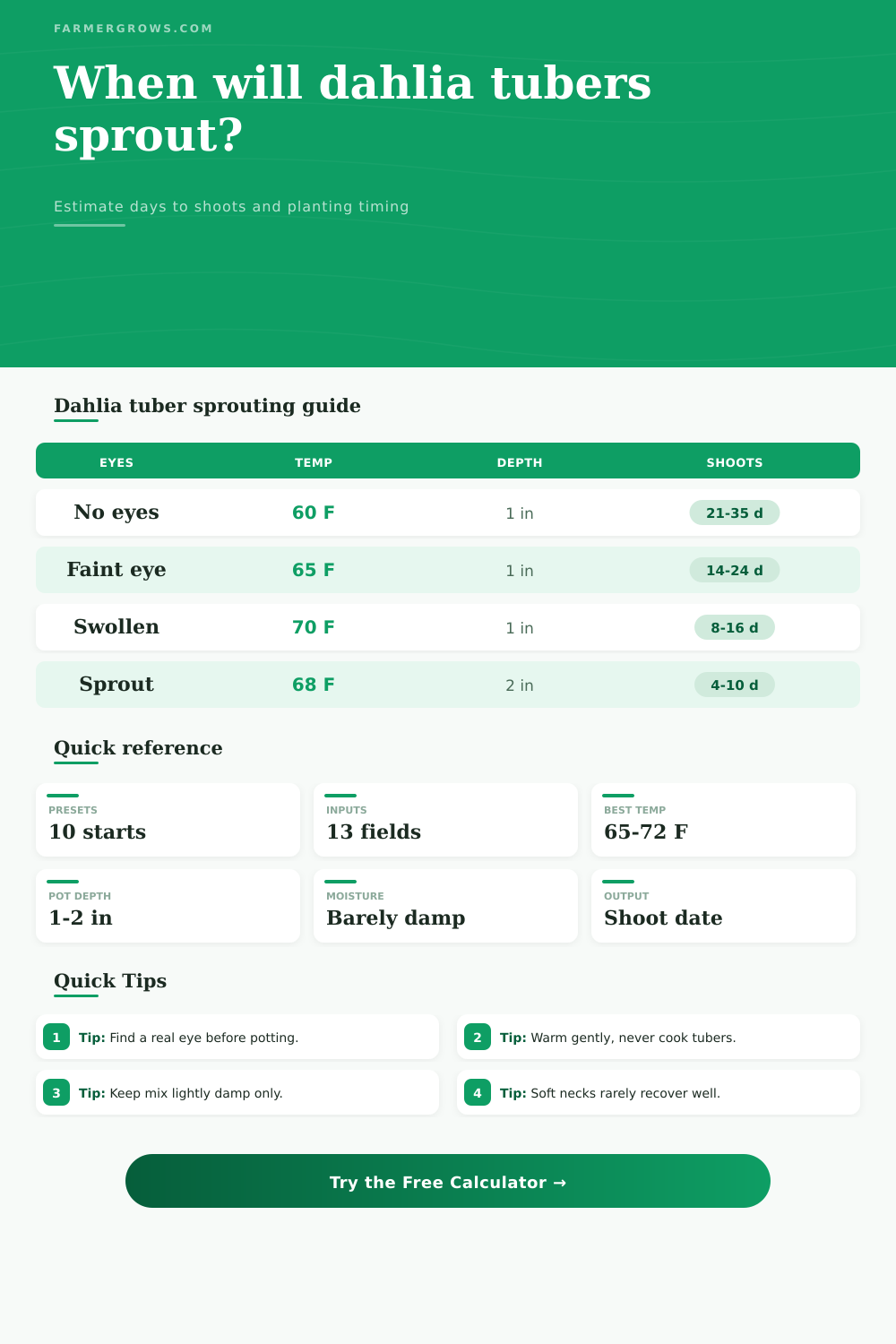
Dahlia Tuber Sprouting Time Calculator
Estimate how many days a dahlia tuber needs to show shoots after potting, presprouting, or planting from eye visibility, warmth, potting depth, moisture, firmness, variety vigor, zone, and planting date.
Load a realistic tuber start, then adjust eye visibility, presprout temperature, potting depth, moisture, tuber firmness, variety vigor, zone, and planting date.
Use average potting mix temperature near the crown. Dahlias sprout from eyes at the crown, so tuber size helps only when the neck and crown are firm and an eye is present.
Dahlia Tuber Sprouting Results
Results update from your tuber condition, eye stage, warmth, depth, moisture, and planting date.
These cards show the main drivers behind the estimate, so you can see whether the delay is mostly eye stage, temperature, depth, moisture, or tuber condition.
Use these stage cards to compare your current estimate with common dahlia tuber starting points.
Possible, but inspect the crown often and avoid wet mix until the eye swells.
A good presprout stage for gentle warmth, shallow cover, and steady checking.
Usually the best stage to pot up or plant if weather and soil temperature cooperate.
Handle carefully, protect from frost, and avoid snapping the tender shoot.
| Eye visibility | Typical shoot timing | What it means | Care move |
|---|---|---|---|
| No visible eye | 21-35 days | Crown may still be dormant or the eye may be hidden | Warm gently and inspect the crown before burying deep |
| Faint eye | 14-24 days | Small nub is forming at the crown | Keep shallow, bright, and barely damp |
| Swollen eye | 8-16 days | Stored energy is moving toward shoot growth | Pot or plant with the eye facing up |
| Pin sprout | 5-12 days | Shoot is active but still protected | Handle carefully and avoid cold shocks |
| Green shoot | 3-8 days | Above-ground emergence is already underway | Give bright light and frost protection |
| Presprout temperature | Effect on timing | Main risk | Best use |
|---|---|---|---|
| Below 55°F / 13°C | Slow by 5-14 days | Dormancy continues in wet media | Holding tubers before potting |
| 60-64°F / 16-18°C | Moderate wake-up | Uneven eyes on slow varieties | Cool room presprouting |
| 65-72°F / 18-22°C | Fastest reliable range | Drying if air is very low humidity | Indoor pot starts and trays |
| 73-78°F / 23-26°C | Fast but more stressful | Soft rot if mix is wet | Short warm-up for firm tubers |
| Over 80°F / 27°C | May stress tubers | Rot, shrivel, weak shoots | Avoid sustained heat |
| Cover above crown | Sprouting effect | Moisture note | When useful |
|---|---|---|---|
| 0-0.5 in | Fastest eye monitoring | May dry quickly | Open trays and pre-eye checks |
| 1-2 in | Good pot-start balance | Light moisture stays steadier | Indoor presprout pots |
| 3-4 in | Adds several days | Moisture must drain well | Outdoor planting after soil warms |
| 5-6 in | Slow emergence | Cold wet soil can delay badly | Final bed depth in warm climates |
| Problem sign | Likely cause | Effect on shoots | Next check |
|---|---|---|---|
| Soft neck | Crown rot or storage damage | Very low confidence | Cut back only if clean tissue remains |
| Wrinkled body | Moisture loss in storage | Moderate delay if neck is firm | Use barely damp medium, not soaking |
| Wet sour mix | Poor drainage or overwatering | Rot risk before roots grow | Unpot, dry, and inspect crown |
| Long pale shoot | Too warm and too dark | Fragile growth | Move to brighter cool light |
Eye visibility: A dahlia tuber body without a viable crown eye will not sprout, even if the tuber feels plump. Look near the neck and crown before waiting weeks.
Moisture: Before roots form, keep medium only barely damp. Tubers do not drink much yet, so saturated potting mix often delays shoots by causing rot.
Depth: Shallow potting helps you monitor eyes and speeds first emergence. You can plant deeper in the final bed after shoots and roots are active.
Cold risk: Dahlias are frost tender. If the calculated shoot date lands before safe outdoor conditions, keep pots under bright frost-free cover.
This calculator is a planning estimate, not a guarantee. Dahlia tubers vary by storage history, crown quality, variety, and hidden eye damage.
In your hand you grip these lumpy potato things, hoping against hope they’re alive. Even a sleeping tuber look just like a dead one until it wakes up. The silence of all those waiting tubers are deceptive. And it’s at this waiting game stage that most gardeners gets impatient, and do something to the plant that kills it before ever seeing daylight.
The truth about how long it will take to see signs of life is what separates success from rotting disappointment in a compost heap.
How to Wake Up Your Dahlias
First, your biggest error: Where do you check? On that big fat tuber called storage root? Nothing. That is strange. You think the plant must be dead (or asleep!). Uh-oh. The trap is that Dahlia eyes only grow on crown, where the old neck connected to body. No eye? No amount of water and warmth will coax any action out of the tuber’s belly.
The “Eye Visibility” option in the tool above accounts for this bit of biology and lets you plug in what you actualy see, such as a swollen button. It is a faint pink nub, which you can translate into actual days, making guesses unnecessary and getting things growing.
The same applies to temperature. While dahlias are technically tropicals, hating all things cold, many gardeners attempt to cheat nature by forcing their own in cool garages in hopes of getting a jump on spring. But low temperatures don’t merely slow growth; they also open up a dangerous zone during which moist conditions remain in contact with inactive tissue long enough to cause fungal rot.
Generally speaking, tubers will wake up when held within range of about 65 to 72 degrees F. This is the sweet spot where there’s enough metabolic activity to force some shoots, but not so high as to stress them or dry them out too soon. Cool to you? Adjust your expectations accordingly, because in cold temperatures, all those chemical reactions within the tuber simply occurs at a slower rate.
How deep? Most folks don’t know depth really counts. If you pot a tuber to start the sprouting process, burying it more than a couple of inches deep means the emerging shoot has to use up precious stored energy to force its way up through the soil. Each inch of resistance slows down emergence and raises the chance that the shoot will run out of gas before it emerge.
Planting shallow, where you can keep an eye on crown, means the first tender shoots has a straight shot up, too. Once roots form, you can add more soil; better safe at the start than sorry in the early wake-up stages.
Perhaps the most difficult thing to learn is how to manage the moisture around them. Since we have experience with livig plants, we assume that wetness is a good thing. A non-sprouting tuber behaves more like a sealed package. It doesn’t absorb water as such across its surface (at least not in any large way). It require only enough moisture to avoid drying out and enough humidity to maintain the flexibility of its tissues. To soak the medium is to invite soft rot by marinating a bag of starch in water while it waits.
Ideally, there should of be just-damp conditions. The medium will be moist, but if you squeeze it tightly, it will feel dry to your fingertips.
And finally, there’s the issue of variety vigor. Some may sprout fast, some take longer; a little dahlia that’s making a bed will sometimes shoot out in two weeks if all goes well, but a giant dinnerplate type may be as unresponsive as a lump on ground for more than a month. This isn’t a matter of the big tuber being sluggish; just that it has more bulk to move and a different inner clock ticking along. Knowing this means you don’t toss good tubers aside prematurely because they’re running late.
The tool accounts for those habit variations. You get your own window instead of someone else’s average, which could realy throw you off with slow starters.
So what is the main point? Sprouting comes down to having all your environment’s ducks in a row. And then being patient enough to wait them out. Depth but no obstruction; warmth but no heat; moisture but no wetness. As you follow along while keeping your specific potato condition in mind, the waiting becomes more like a schedule, not just a game. Not only do you know approximately when to expect some green, but how to maintain health of the plant until it appears. Get the basics right, and the rest of the silence breaks, usually before you feared and more then you hoped.