Dahlia Bulb Planting Depth Calculator
Estimate dahlia tuber hole depth, crown cover, staged backfill, bed capacity, trench volume, staking urgency, and container clearance from variety size, soil, drainage, frost timing, mulch, and spacing.
Dahlias grow from tubers, not true bulbs, so this planner treats the crown and visible eyes as the key planting point. It reports final hole depth and initial cover separately because many growers cover lightly at planting, then finish backfilling as shoots extend.
📋Dahlia Depth Presets
⚖Dahlia Depth Method
Measured from finished soil surface to the bottom of the tuber trench or planting hole.
Estimated soil above the crown and eyes after final backfill, excluding loose mulch on top.
Early cover can stay lighter when soil is cool, then the rest is pulled in after shoots appear.
Tall varieties are flagged for stakes or netting before roots spread through the planting hole.
🌺Dahlia Planting Inputs
Your Dahlia Planting Plan
Adjust inputs and calculate to see the recommended depth plan.
📏Dahlia Depth Reference
📚Planning Tables
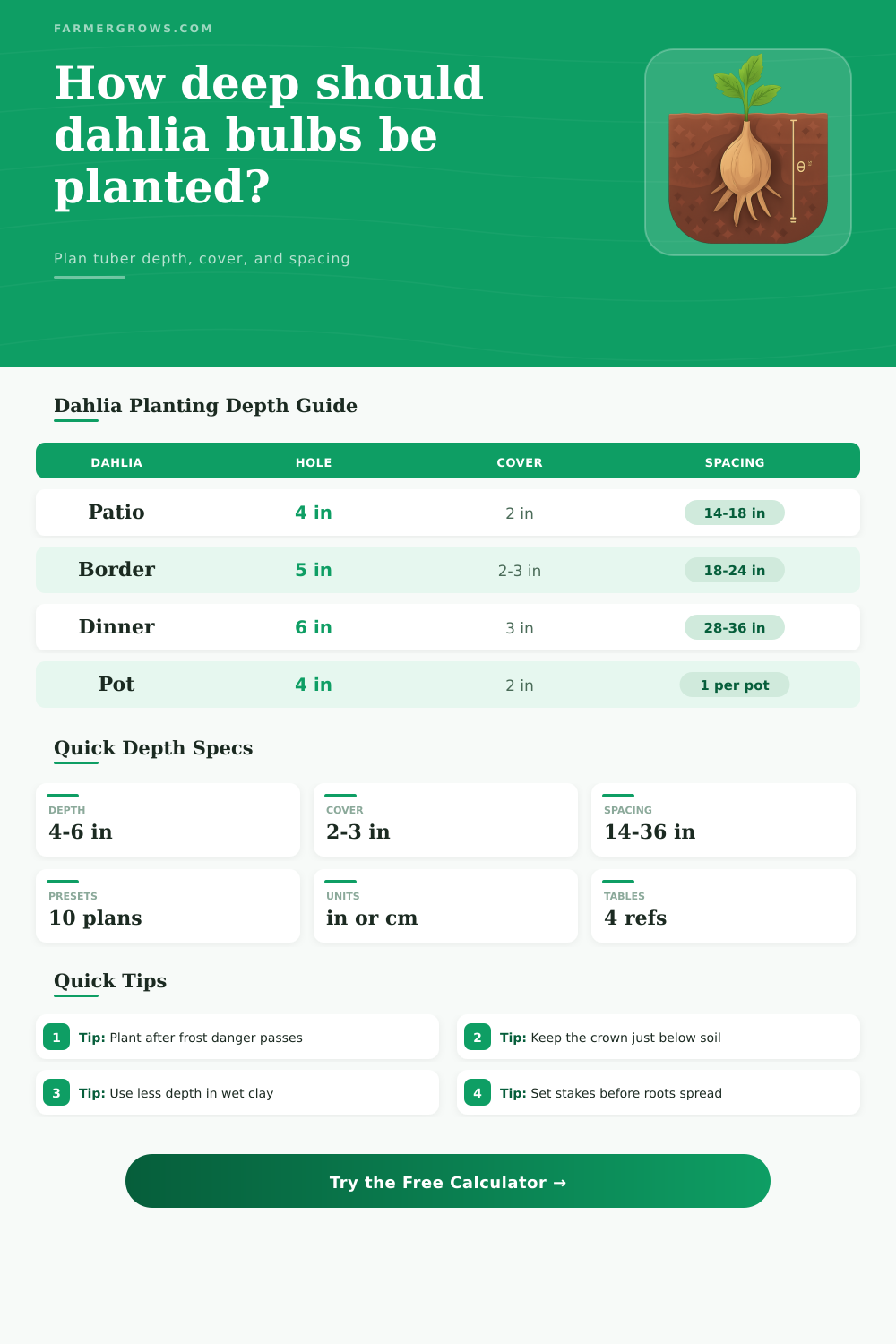
Depth By Dahlia Type
| Dahlia type | Typical hole depth | Final crown cover | Spacing range | Depth note |
|---|---|---|---|---|
| Patio or dwarf | 3.5 to 4.5 in | 1.5 to 2.5 in | 14 to 18 in | Good for large pots and front borders. |
| Border dahlia | 4.5 to 5.5 in | 2 to 3 in | 18 to 24 in | Balanced depth for most garden beds. |
| Ball, pompon, cactus | 5 to 6 in | 2.5 to 3.5 in | 20 to 30 in | Use stakes before roots spread. |
| Dinnerplate or giant | 5.5 to 6.5 in | 3 to 4 in | 28 to 36 in | Needs support and wider spacing. |
| Mild-zone overwinter bed | 5.5 to 7 in | 3 to 4.5 in | 24 to 36 in | Only where drainage and winter climate allow. |
Soil And Timing Adjustments
| Condition | Depth change | Why it matters | Extra action |
|---|---|---|---|
| Sandy, fast-draining soil | Add about 0.5 in | More cover reduces drying and gives anchor. | Water in, then mulch after shoots show. |
| Loose garden loam | No change | Good air and moisture balance. | Use standard depth for the variety size. |
| Heavy clay or slow drainage | Subtract 0.5 to 1.25 in | Cold wet soil increases tuber rot risk. | Plant on a mound or improve drainage. |
| Cool soil after frost | Lighter initial cover | Shoots emerge better when soil warms faster. | Backfill gradually as stems grow. |
| Warm settled soil | No change to slight increase | Growth is faster and roots establish quickly. | Keep moisture steady, not soggy. |
Spacing Capacity Examples
| Bed or row | Spacing | Estimated capacity | Best use |
|---|---|---|---|
| 4 ft by 8 ft bed | 24 by 24 in | 8 plants | Home cutting patch |
| 3 ft by 12 ft row | 18 by 24 in | 8 plants | Border dahlias |
| 30 in by 30 in pot | Single plant | 1 plant | Patio dahlia |
| 4 ft by 20 ft bed | 30 by 36 in | 8 plants | Tall dinnerplate types |
| 100 ft field row | 18 in in row | 66 plants | Cut flower production |
Container Clearance Guide
| Container depth | Safe dahlia fit | Depth target | Warning sign |
|---|---|---|---|
| 10 to 12 in | Dwarf or patio only | 3.5 to 4 in | Little root room below tuber. |
| 14 to 16 in | Most patio and border types | 4 to 5 in | Needs steady watering. |
| 18 to 22 in | Tall border or cutting types | 5 to 6 in | Stake before growth gets tall. |
| 24 in plus | Large varieties with support | 5.5 to 6.5 in | Use a heavy pot to prevent tipping. |
🌱Planting Tips
Lay the tuber horizontally with the crown and eyes facing up. Avoid packing fertilizer or hot compost directly against the crown.
Cover the crown lightly at first, then pull more soil into the hole once shoots are active and the weather has settled.
If the site stays wet, plant shallower on a small mound or raised bed instead of burying tubers deeper in cold clay.
Place stakes, cages, or netting when planting tall dahlias so you do not pierce tubers and roots later.
One of the reasons people mess up when they plant dahlias is because the tubers are initially delicate, shaped like a ginger root. If planted too deeply (like potatoes), the dahlia’s crown will rot in the ground if it’s soggy. Or the tubers will heave out in frost (and be to shallow). The trick is to figure out how to keep the tubers alive without drowning them and the tool helps you do just that.
That’s the tuber, which you want barely covered, about an inch or two deep, just below the crown (which is the knobby part at the top, where the shoots will push out). When all the backfill have been shoveled in, add another couple of inches over the crown. But it doesn’t happen all at once, depending on your climate.
How Deep to Plant Dahlia Tubers
Staged planting can be helpful, particularly in cool zones: Plant the tuber with an inch or two of soil on it initially, to give it some protection but still let it warm up. As things stabilize and the plant starts pushing out green shoots, pull more soil up onto the stem. This help roots grow deeper along the buried stem, which is especially important for providing extra support to tall varieties. The tool calculates how much later backfill you will need so you don’t dig blindly.
How does that basic depth change? Adjustments depend on the soil texture. For most border dahlias, five inches work well. This is the standard depth for loam, which is the best mix of moisture and air. Heavy clay, however, will be waterloged, and slow to warm up come spring. Don’t expect tubers planted an inch underground in sodden clay to sprout; they’ll simply rot there. In such a situation, increase the depth (or build small mounds) to promote better drainage. The “less” column in the reference tables indicates when to adjust downward based off drainage problems.
Sandy soils, by contrast, are fast-draining and provide less anchorage. Here, perhaps, tuck the tuber in slightly deeper (a half-inch?). This ensures it is snug and won’t blow about in the wind while also staying fairly moist.
Size also matters: Small patio dahlias can be happy in containers, if container is not too shallow but still large enough for their roots to develop without becoming sodden. The largest of all, dinnerplate types; are top heavy; they requires more depth and wider separation from their neighbors to avoid toppling over. Violate any of these width considerations and you’ll end up with crowded beds, which invite trouble from airless conditions that foster disease. Follow these spacing guidelines when you plan out how much space to devote to each variety, allowing them to form a good root system first. Then they will reward you with blooms.
Depth is one thing; timing’s another, since tubers will rot if planted prematurely in cold, sodden soil. Wait until the threat of hard frost is past and soil has warmed some. To jump-start things (though you should of wait until the soil is warm so they don’t rot), tubers can be pre-sprouted indoors, or try the staged backfill trick. Staking at planting time is another good tactic, besides the fact that any stakes you drive in afterward may damage the tuber or puncture its roots.
Underground is where it’s all about dahlia success: Tubers want air; they do NOT like to be buried deep under insulation. Adjust your planting depth (based on variety and soil type) to help your tubers thrive. Whether in a cutting garden or in patio pots, the careful balance of too much and too little, of protection versus breathing, turns those lumpy bits into something spectacular by late summer.