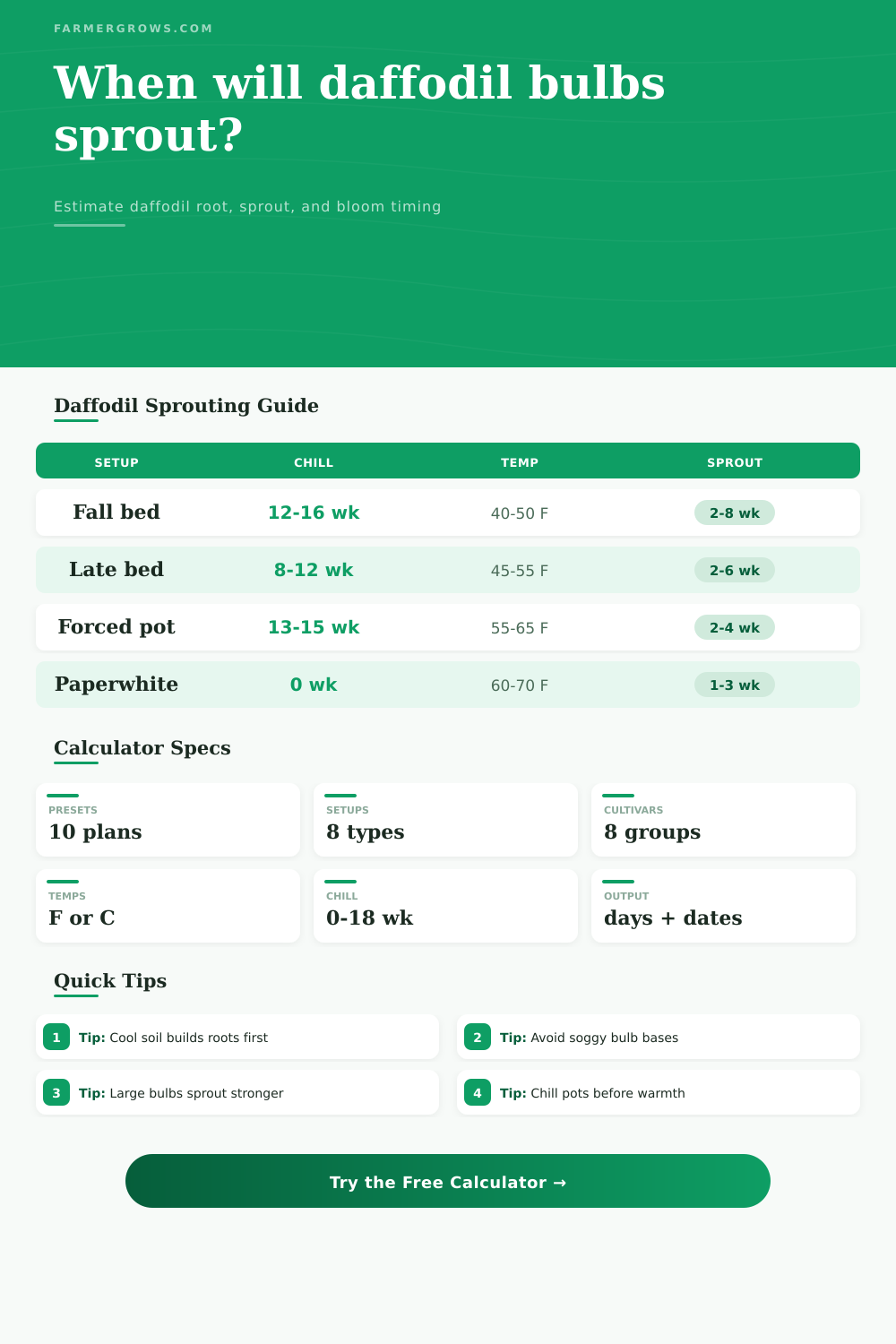
Daffodil Bulb Sprouting Time Calculator
Estimate when daffodil bulbs should root, send visible shoots, and reach bloom stage from planting method, chill weeks, soil temperature, bulb size, depth, and moisture.
Choose a real planting or forcing situation, then adjust the temperature, bulb size, planting depth, and chill history to match your bed, container, or indoor pot.
Daffodil Sprouting Estimate
The estimate will update as you change the daffodil planting conditions.
Roots grow in cool autumn soil; top shoots may appear in winter or early spring depending on climate.
Bulbs can still root if the ground is workable, but bloom may be later or shorter in the first season.
Chill the planted pot first, then move it to bright moderate warmth for predictable sprouting and bloom.
Paperwhites are tender narcissus and sprout indoors without the long chill needed by hardy garden types.
Use these horticultural planning ranges to sanity-check the calculator. Actual emergence shifts with cultivar, local weather, drainage, bulb maturity, and whether roots were already active.
| Daffodil group | Typical chill need | Sprout tendency | Bloom tendency |
|---|---|---|---|
| Trumpet and large-cupped | 13-15 cool weeks | Reliable mid-speed shoots | Early to mid spring |
| Small-cupped and doubles | 14-16 cool weeks | Moderate shoots | Mid spring |
| Miniature and species types | 10-14 cool weeks | Often early, shorter shoots | Early to mid spring |
| Jonquilla and poeticus types | 12-16 cool weeks | Can be slower in cold soil | Mid to late spring |
| Paperwhite narcissus | 0-2 cool weeks | Fast indoor shoots | 3-6 weeks indoors |
| Soil or pot temperature | Root effect | Visible shoot effect | Watch point |
|---|---|---|---|
| 32-39°F / 0-4°C | Very slow roots | Sprouts pause | Normal winter dormancy |
| 40-50°F / 4-10°C | Best cool rooting | Slow, sturdy shoots | Ideal chill/root period |
| 51-60°F / 11-16°C | Roots continue | Moderate emergence | Good warm-up range |
| 61-70°F / 16-21°C | Fast top growth | Quick shoots indoors | Needs enough prior chill |
| Above 70°F / 21°C | Root stress rises | Weak or stretched shoots | Move pots cooler |
| Bulb size | Common depth over nose | Sprouting behavior | Best use |
|---|---|---|---|
| Jumbo 16+ cm | 6-8 in / 15-20 cm | Strong roots, strong shoots | Showy beds and forcing |
| Large 14-16 cm | 5-7 in / 13-18 cm | Reliable garden emergence | Most borders and drifts |
| Medium 12-14 cm | 4-6 in / 10-15 cm | Moderate vigor | Containers and mixed beds |
| Small 10-12 cm | 3-5 in / 8-13 cm | May bloom lighter first year | Naturalizing and nursery rows |
| Miniature 8-10 cm | 3-4 in / 8-10 cm | Short fast shoots | Rock gardens and bowls |
| Forcing stage | Typical duration | Temperature target | Visible sign |
|---|---|---|---|
| Plant and water pot | 1 day | Moist, not soggy | Bulb noses just covered or set by plan |
| Cold root period | 12-15 weeks | 35-48°F / 2-9°C | Roots at drain holes, 1-2 in shoots |
| Cool bright transition | 5-10 days | 50-60°F / 10-16°C | Green shoots strengthen |
| Display warm-up | 2-4 weeks | 60-65°F / 16-18°C | Buds rise and color opens |
Roots come before shoots. A planted daffodil bulb may be busy below ground for weeks before you see green growth. In cool beds, steady moisture and drainage matter more than warmth.
For forcing, do not rush the cold period. Moving pots into warmth before roots fill the pot often gives short stems, weak blooms, or shoots that stall after emerging.
When you plant daffodil bulbs in October, it can look like nobody’s home. Nothing seem to happen; the ground just sits there, as if perhaps you haven’t done things correctly. But don’t worry. It isn’t a sign of failure. In fact, that quiet time is simply biology at work: Daffodils are obligate rooters; first they must set down their roots good and strong, then sprout leaves. If they jump the gun on leaf growth, bulb exhausts its reserves and doesn’t continue building roots.
On this page, a calculator explains how this timing works, estimating when daffodil shoots will push up after rooting. It wants more: not just a planting date but also soil temperature and chill history. Why? Not all bulbs responds the same way to being cooled. Cold can be a trigger, and it can pause them. For example, most daffodils (hardy ones, anyway) require at least 12-16 weeks of chilly conditions in the ground for their internal structure to develop. If they don’t get the cold treatment, they’ll remain dormant and confused.
Why Daffodils Take Time to Grow
If you’re skipping the chill phase by forcing a pot of paperwhites indoors, for instance, or if you’re popping bulbs into a fall bed outdoors, the tool will account for this in adjusting its predicted timing. Paperwhites skip ahead, and get up and going in three weeks indoors. Trumpets require a long winter, and patience.
Bulb size also affects the timing. If you buy giant-size bulbs (or if they’re just naturally jumbos), those bulbs is full of carbohydrates, which makes them tougher; they’ll outlast dry periods and power their way through compacted clay. Smaller bulbs like a miniature variety will sprout sooner (they don’t have far to go) but won’t last nearly as long if things aren’t right for them. The circumference you choose in the calculator affects when the bulb starts emerging because it takes bulb size into account. The bigger the bulb, the more likely its roots will be down deep, and it will take longer for shoot to catch up and poke above ground to get at light.
Another variable that is misunderstood is depth. When gardeners plant too shallow, they want something to happen sooner, but they are wrong. Bulbs need to be planted two to three times their own height below ground level, so their crowns are shielded from frost heave, and growing foliage stays cool. The tool will factor in how deeply you’re planting. If deeper, the predicted sprouting date will move later. That’s great news, since it tells you that bulbs are safe. You’ll get a little insurance delay before the shoot pushes up to face potential late frost or any other weather threat.
The trick with cool is that it only works in certain moisture conditions. Bone-dry soil doesn’t do anything for bulbs, as their roots require both air and time to stretch out and drink up. Where’s the coolness? The calculator asks about moisture. How’s it set? Pick “dry,” and risk score goes up. The sprouting window lengthens. Oops: The bulb wants some rain. Pick “wet,” and we’re looking at rot risk instead. A bulb can’t grow roots if soil is soaked, and it will turn to mush first. Think of it like an even moister-than-damp (but not swampy) state: just damp.
BULBS: Get the bulb thing going: You can plant them in a fall bed or force them indoors. The trick is to put the potted bulbs in a cold, dark spot for several weeks and then ease them into light. Don’t take a warmed-up pot from a cozy spot and put it in the bright sun or the emerging shoots will be weak and spindly. The flowers will be tiny and the foliage will stretch.
With the calculator, that switch gets modeled: When should you take it out of cold and dark and how long until it’s ready for the warmth? Avoid mistake of rushing things with the display. It tells you the sprout date and bloom window. It also includes a risk assessment (for instance), if the risk is high you can do something about it by moving the pot to a cooler spot or adjusting your watering. There’s no guessing involved. The tool converts bulb size and soil temperature into a calendar that you can trust.
No more worry about empty ground; now you’re trusting the process. “Waiting is hard; I know.” And gardening is an exercise in faith: Life goes into the ground, and then you wait. Biology doesn’t change with the calculator. It merely helps you wait by reminding you that something is going on below. There is activity beneath surface. The shoots are up and the roots is down.
Patience isn’t a virtue; it’s a necessity. Let the bulb do its thing. The bulb knows what it’s doing, and so must you.