
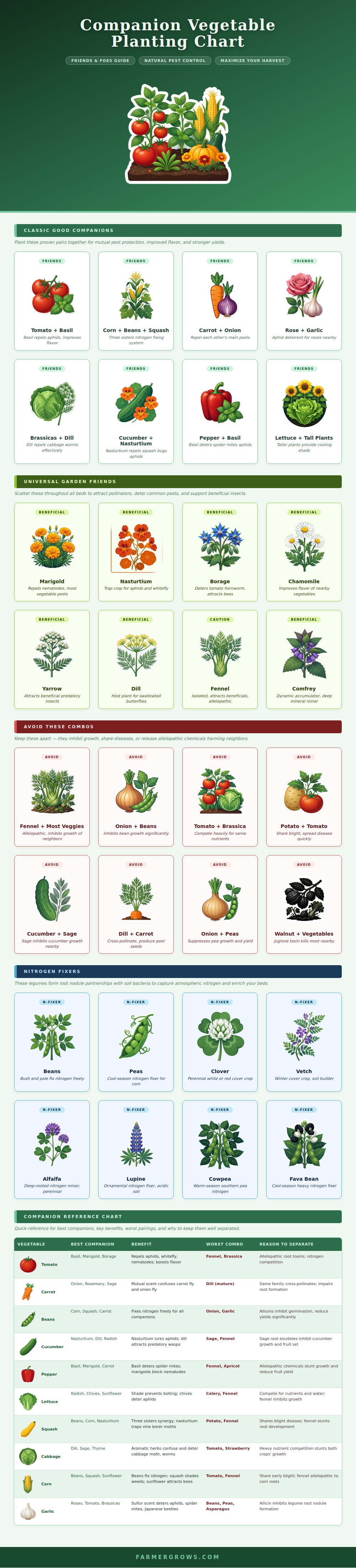
It starts as A PLAN: You select seed and turn over dirt, all in the name of starting a garden, then…bam! Then what? Pests attack, or something happens that makes your plant sick (and it’s not from lack of watering). Before long companion planting is more about survival than design.
This chart help break down those relationships, making the vegetable garden a connected system. It is not magic; it is biology.
How to Plant Your Garden Well
It’s not surprising: tomatoes and basil are classic combination. They’re a classic combination. That’s first on the chart because it shows the principle. Planting them together protect the tomatoes. The tomatoes support the basil, and the basil deters pests such as aphids who munch on tomato leaves.
Why? People tend to assume it’s only about better taste, but no: You’re creating a defense line when you grow these two together. Better flavor is just an extra bonus for your kitchen.
Another standard is the Three Sisters method, which you can see in the above guide. Beans, corn, and squash grown together create triangle of interdependence: the beans fix nitrogen in soil; the squash spreads out and shades it to retain moisture and suppress weeds; and the corn act as a trellis for the beans. It is a self-sustaining system that’s worked for hundreds of years. All you have to do is look at infographic to understand the space where each one fit in.
But not all relationships work in harmony. Fennel, for instance, is listed as a solitary plant on chart: It’s allelopathic, releasing substances that prevent other nearby plants from growing. Plant a row of fennel beside your beans and you hurt your beans; same with carrots, the guide cautions. “Keep fennel well away from major crops,” or better yet, isolate it, it says. This is another piece of advice beginners tend to gloss over, wanting to get things planted ASAP. Rushing too much could of spoil your crop.
Some universal garden friends (pest repellents) belong in each bed: nasturtiums, for instance, and marigolds. Use marigolds to try to reduce nematodes and other soil pests; use nasturtiums as trap crops. They attract aphids, for example, luring them off more precious veggie. Both are on the chart, labeled beneficial additions. These things help pollinators and also makes life difficult for pests. Grow them all around your beds, and it’s a confusing scent landscape for the pests. They can’t find what they’re after.
Legumes like clover, beans and peas is the workhorses of soil health. They “fix” nitrogen from the air into the soil, making it available for other plants. This explains the term “nitrogen fixers” used in infographic above. By rotating them into beds you lessen reliance on synthetic fertilizers. It is a low-cost way to keep soil healthy. Because we focus only on the crop we’re harvesting, we forget this extra benefit. Healthy soil are at the root of all.
Just as you want to plant some good combinations, there is others you don’t want to mix. For example, do not plant tomatoes with potatoes. The two share diseases like blight, so growing them near each other practicaly invites trouble. “Don’t Grow Beans With Onions,” the chart cautions, because the former can’t grow in the presence of the latter’s sulfur compounds. No negotiation here; these are tough rules. There is no talking your way out of a biological conflict.
As you make plans in the garden, keep this chart nearby. Look for patterns. Group friends together and separate foes. Think about how one plant may stop another from growing or help it along. It’s not about perfecting things; it’s about working with nature. Your garden will be more resilient, more productive, and healthier. And when you eat tomatoes from home, you’ll taste the difference made by careful planning. The roots shows the care you gave them.