
Have you ever cut open a seemingly ripe piece of fruit on your citrus tree only to find it’s sour? That’s because citrus are fruits that don’t keep ripening after being picked: once picked, they don’t go on ripening by converting starches to sugars. What comes off the tree is what you get, so timing is key.
But don’t judge ripeness by the color of your fruit only. Green pigment may wash off skin of citrus during cool nights even if they’re still unripe inside. The result is a seemingly ripe tomato that’s actualy more tart then you might think. To see what’s happening inside, get beyond the skin. Inside the fruit, the solid component are concentrating and the juice sacs expands.
How to Know When Citrus Is Ready
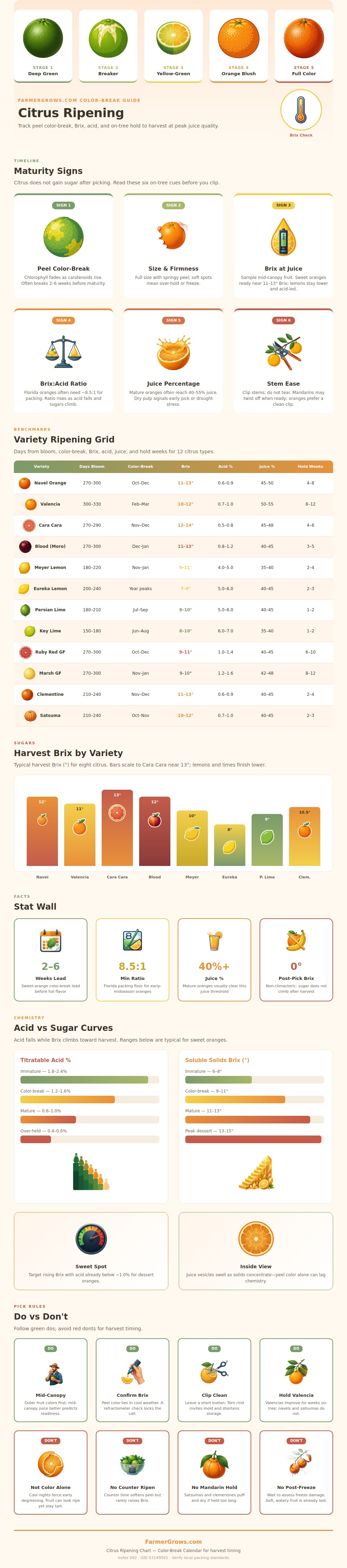
There’s a chart measuring the sugars versus acids that indicate the optimal picking moment. When it’s right, sugar concentration matches the natural acidity so it tastes just right. Home growers often fail to consider brix and acid ratio. In fact, most common Florida orange type have a brix-to-acid ratio of 8.5 to 1. That’s right, the amount of sugar has to almost equal nine times the acidity before the fruit will taste sweet. Sugar increase and acid decreases as the fruit ripens. You can see the opposite balance in the chart. Picking too early results in fruit with low sugar and high acidity. Picking overripe fruit result in flat-tasting fruit with low acid.
Keep in mind that not all citrus will be ready at the same time. There is no one calendar date for picking anything or even for any of the trees in your garden. For example, navels and satsumas begin to go downhill after some period of time on tree. Sometimes they just dry out and get puffy. On the other hand, valencias can stay on the tree for months. And sometimes they gets better tasting through the winter. Each tree is an individual; treat them accordingly… Don’t harvest them all at once.
As with timing, how you go about picking also matters. Always try to have a clean cut. Not a tear. A tear harms the fruit which opens it up to mold. Oranges need to be snipped, but you can gently twist mandarins off. Best advice: Sample some in center of the tree, too. Fruit on the outside will be changing color earlier and getting more sun. Fruit on the inside shows how mature the crop actualy is.
Knowing what to look for helps you harvest better. It’s no longer about chasing color; it’s about pursuing balance. If the juice is just right; that perfect blend of sweetness and brightness, you know you should of got it right. And that’s why you grow the trees.