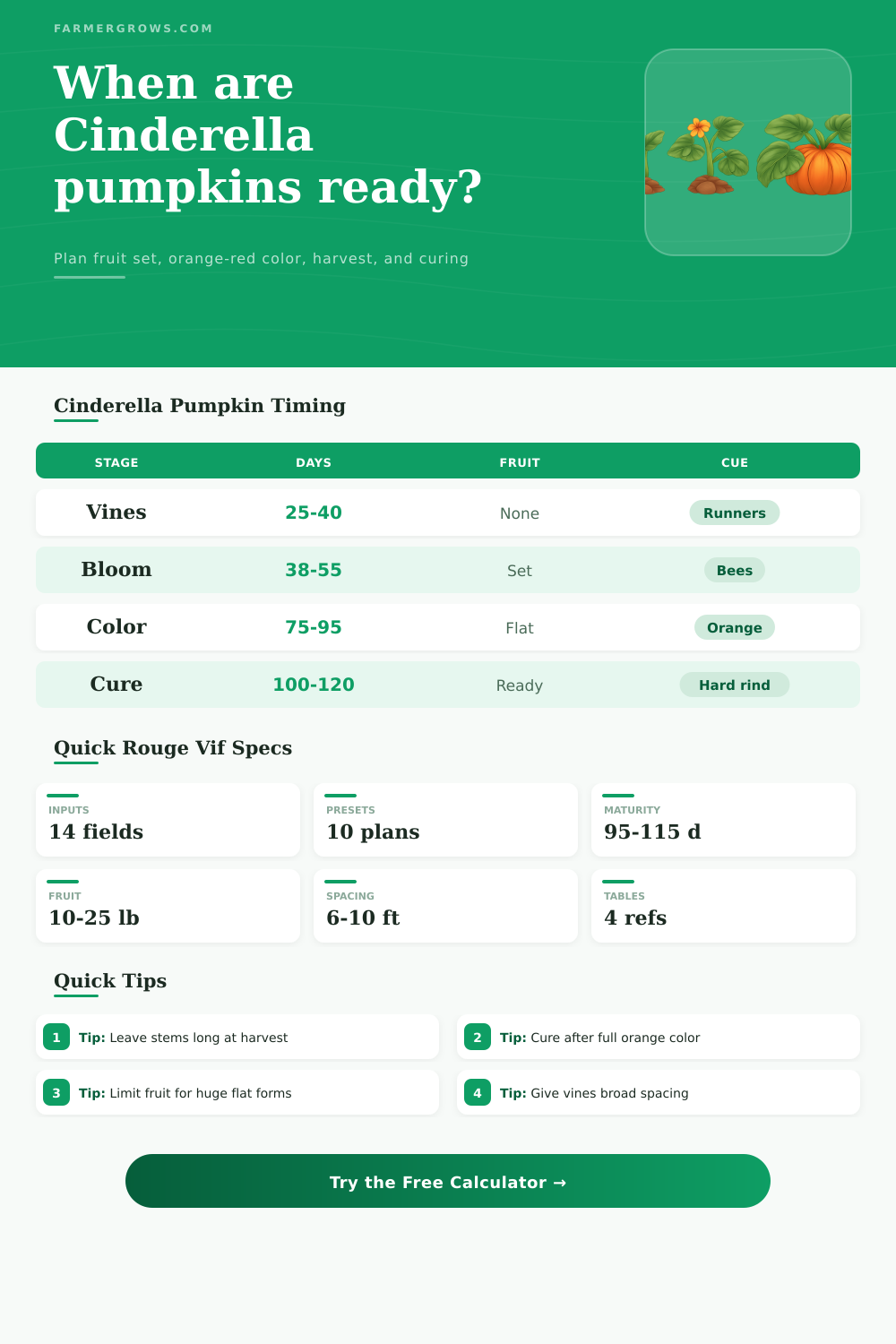
Cinderella Pumpkin Growth Time Calculator
Estimate Rouge Vif d'Etampes and Cinderella pumpkin vine growth, first female bloom, fruit set, flattened fruit sizing, orange-red color development, harvest window, curing time, spacing, and storage readiness.
Cinderella pumpkins are grown for broad, deeply ribbed, flattened orange-red fruit that can be ornamental and culinary. This planner is tuned for Rouge Vif d'Etampes style pumpkins, not dense butternut squash, Kent squash, or giant exhibition pumpkins.
Cinderella Pumpkin Growth Results
These dates estimate the first female blooms, main fruit set, orange-red color development, harvest window, curing finish, and storage readiness for flattened Rouge Vif style pumpkins.
| Stage | Typical timing | Cinderella-specific cue | Planning note |
|---|---|---|---|
| Emergence to runners | 7-25 days from planting | Large leaves and long vines begin to run | Cold soil can delay direct-sown seed more than transplants. |
| Male bloom first | 35-50 days | Flowers open before useful fruit set | Do not count the first male flush as harvest progress. |
| Female bloom and set | 45-65 days | Small flattened baby pumpkins appear behind flowers | Bee activity decides how many well-shaped fruit remain. |
| Full size and color | 75-105 days | Fruit flattens, ribs deepen, rind shifts orange-red | Do not harvest only because fruit is large; check rind and stem. |
| Harvest and cure | 95-125 days plus cure | Hard rind, corking stem, strong orange-red color | Cut with a long handle and cure before storage or display. |
| Harvest target | Fruit load per plant | Expected fruit profile | Best use |
|---|---|---|---|
| Large centerpiece | 1 to 2 | Wide, heavy, deeply flattened fruit | Porch display, market feature, carving-free decor. |
| Balanced heirloom | 2 to 3 | Medium-large orange-red fruit with usable flesh | Display first, cooking after curing. |
| Kitchen batch | 2 to 4 | Smaller but mature fruit with firmer flesh | Roasting, puree, soup, and baked dishes. |
| Late color finish | 1 to 2 | Fewer fruit ripen more reliably before frost | Short-season gardens or cool fall weather. |
| Patch style | In-row spacing | Row spacing | Cinderella pumpkin effect |
|---|---|---|---|
| Wide heirloom patch | 8 to 10 ft | 10 to 12 ft | Best for full flattened shape, big leaves, and lower mildew pressure. |
| Market rows | 6 to 8 ft | 8 to 10 ft | Balances fruit count with walkable harvest lanes. |
| Backyard edge | 5 to 6 ft | 6 to 8 ft | Works if vines are trained, but fruit size may drop. |
| Large fruit pruning | 8 to 12 ft | 10 to 14 ft | Thin to one or two fruit once good flattened pumpkins set. |
| Checkpoint | Ready sign | Too early sign | Action |
|---|---|---|---|
| Color | Strong orange-red over most of the rind | Yellow, green, or pale shoulders | Leave on vine if frost is not near. |
| Rind | Thumbnail does not easily dent the skin | Soft skin or watery shine | Wait for hardening before long storage. |
| Stem | Drying, corky stem with firm attachment | Green, soft, easily bruised stem | Cut with 3 to 4 inches of handle. |
| Curing | Warm, airy cure for about 10 to 20 days | Wet rind, bruises, or stem cracks | Use damaged fruit first; store only sound pumpkins. |
For the broad carriage shape, mark the earliest well-pollinated female blooms and avoid crowding the patch. Thin weak or misshapen young fruit once several good pumpkins are safely sizing.
For storage and cooking, harvest by maturity cues rather than porch color alone. A fully colored but uncured Cinderella pumpkin can still bruise, soften, or lose stem quality.
Grow Cinderella pumpkins for their storage qualities and also for their odd shape. Popular for fall decorations, Cinderellas (properly called Rouge Vif d’Etampes) has a flat shape with ribs, or “fins,” and sweet, heavy flesh that’s good to eat, too. But how do you know when to pick? These heirloom varieties need more time on the vine different than typical jack-o-lantern-type pumpkins; the trick is waiting until their hard rinds form before harvesting. Early picking result in rotting during storage. Waiting too late means damage from frost.
Timing your own crop is as critical as sowing the seed. Vines mature at different rates, depending on weather: A hot summer accelerates; a cool fall decelerates color change. To account for those changes, use online calculator on this page to see when things happen in your area by entering your average temperatures and your first frost date. Why? Because it corrects for how warm or cold your zone is. (A lot of us just count X number of days from sowing, which is unrealistic, since soil temp also greatly affects emergence.) The calculator factors that reality into the timing of when it says each plant will be ready.
How to Grow Cinderella Pumpkins
Fewer fruits per plant tend to grow larger, but potentially slower in terms of rind hardening. Proper spacing matters, as our instinct sometimes doesn’t: Pumpkins are vigorous, running vines requiring breathing room. If they are more crowded, there is higher humidity around the leaves. This leads to more powdery mildew and weakened vine later during fruit fill. See the reference tables for guidance on spacing and its impact on disease pressure and yield.
Six to ten feet per plant should provide adequate air circulation, and let in good light so that vines stretch out freely and pumpkin get even sun exposure. That will help them all have uniformly colored broad shoulders. Insufficient light = uneven ripening (green patches), compromising not just look but also their ability to store well.
Incomplete pollination also affects the final form of your harvest. If not fully pollinated, Cinderella pumpkins will be misshapen. A bee might visit a female flower but not deposit enough pollen to fertilize all ovules properly. What happens then? Fruits may grow lopsided or have strange ridges, or even sunken spots. There is nothing you can do about getting more bees to come by (though if there was little activity, you could of tried hand-pollinating some early flowers). But at least you’ll end up with a few symmetrical fruits that managed to make it onto the vine. The tool factors in the strength of pollination in its estimate, as poor fruit set can cause the plant to stop allocating energy.
When it’s time to pick (and remember, it’s all about more than color, it’s about the texture), the rind should be too tough to pierce with a thumbnail; the stem will also start to cork over. Don’t let the vine go totally dead, that might mean stressed out, but not necessarily ripe. Once picked, curing is key to storing through winter. For at least a couple of weeks, put them in a warm, well-ventilated place. That will continue to harden their skins even more and help heal any small wounds. It helps the fruit last longer. Weeks, not days or just a few weeks, but it also makes the soft fruit tougher, less likely to rot on your pantry shelf or on the porch.
PUMPKINS: Managing Expectations versus the Realities of Your Local Climate
With these heirlooms, you desire not only sweetness in the flesh, but big size for presentation, too, but nature has her own agenda. Planning allows you to see key times for sizing up, flowering and cure time. It takes the guesswork out of growing. Stop worrying about whether you are on time or late, and start learning to believe what the numbers say. Beautiful pumpkins holds through winter. A perfect balance of beauty and longevity…that’s why it’s worth all the extra effort.