Chili Pepper Growth Time Calculator
Estimate pod set, green chili picking, fully red ripe harvest, and frost-season fit for named chili pepper types using heat class, SHU range, start method, warmth, sun, and crop stress.
This chili-specific planner separates pod set, green harvest, ripe red harvest, and season length. It is tuned for culinary chilies from mild roasting types to very hot sauce peppers, not general sweet peppers or single-variety jalapeno and ghost pepper timing.
Chili Pepper Calendar
Results update from your chili type, heat class, start method, and warm-season conditions.
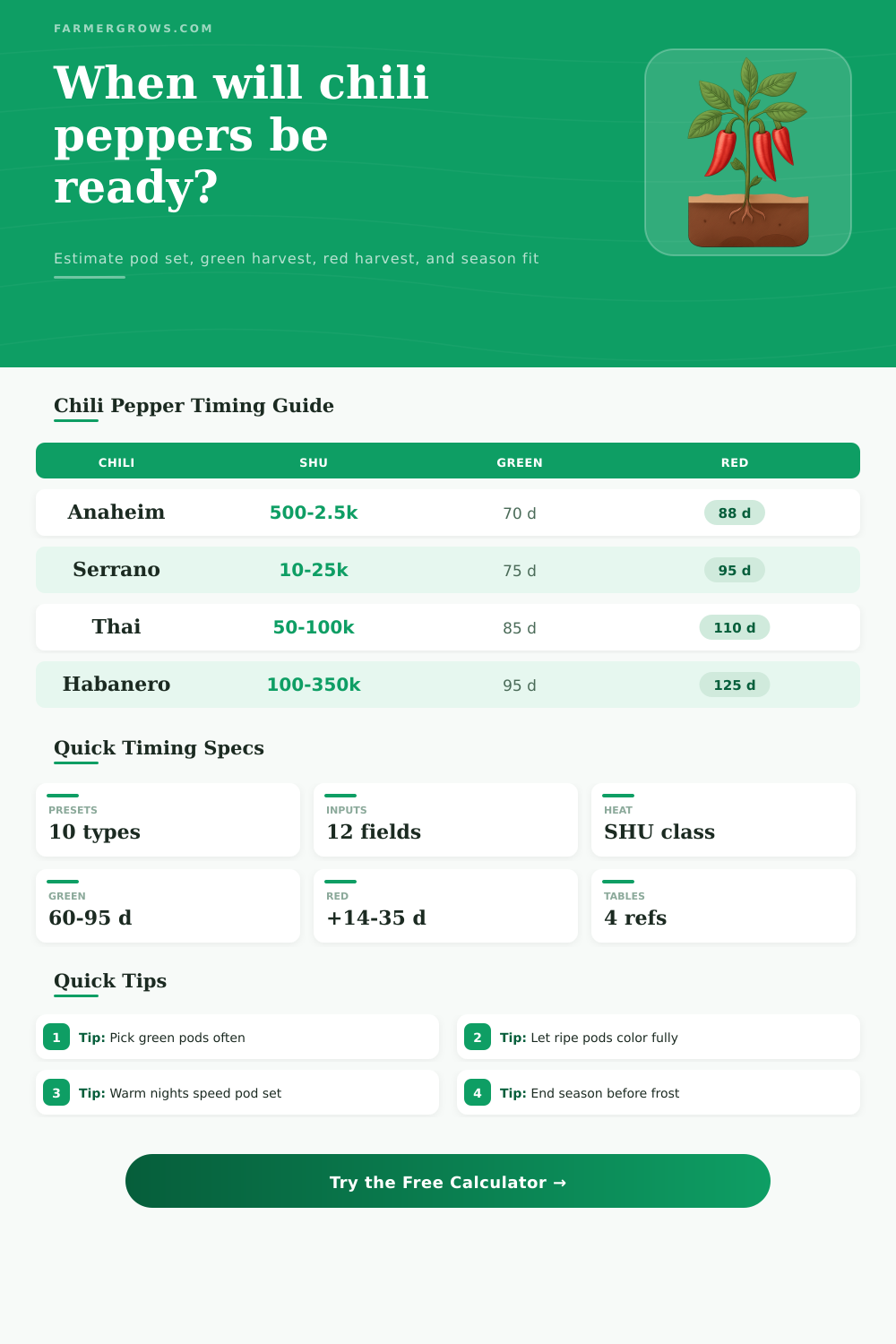
| Chili type | Typical SHU range | Heat class | Green harvest from transplant | Ripe color from transplant |
|---|---|---|---|---|
| Anaheim / New Mexico | 500 to 2,500 SHU | Mild | 68 to 75 days | 85 to 95 days |
| Poblano / ancho | 1,000 to 2,000 SHU | Mild | 70 to 80 days | 90 to 105 days |
| Fresno | 2,500 to 10,000 SHU | Medium | 70 to 78 days | 88 to 100 days |
| Serrano | 10,000 to 25,000 SHU | Medium hot | 72 to 82 days | 92 to 105 days |
| Cayenne | 30,000 to 50,000 SHU | Hot | 75 to 88 days | 100 to 115 days |
| Thai bird | 50,000 to 100,000 SHU | Hot | 80 to 95 days | 105 to 125 days |
| Habanero / Scotch bonnet | 100,000 to 350,000 SHU | Very hot | 90 to 110 days | 120 to 145 days |
| Growth stage | What changes in the plant | Typical timing | Timing risk |
|---|---|---|---|
| Germination | Seed cracks and first leaves emerge | 7 to 21 days, longer for very hot chilies | Cold seed mix or old seed slows the whole crop |
| Transplant establishment | Roots resume growth after setting out | 7 to 14 days after transplant | Soil below 60°F can add a week or more |
| Flowering and pod set | White flowers hold small chili pods | 30 to 60 days after transplant | Nights below 55°F or above 75°F can reduce set |
| Green harvest | Pods reach usable full size before color | 60 to 95 days after transplant | Water swings can slow pod sizing |
| Ripe red or mature color | Pods finish color and mature flavor | 14 to 35 days after green size | Short seasons may need protected ripening |
| Condition | Chili response | Timing adjustment | Field action |
|---|---|---|---|
| Soil below 58°F | Roots pause and leaves may purple | Add 10 to 16 days | Delay transplanting or warm the bed |
| Soil 65 to 80°F | Fast root growth and steady pod sizing | No delay | Keep mulch and moisture consistent |
| Nights below 55°F | Flowering continues but set is weaker | Add 4 to 10 days | Use tunnel cover or wait for warmer nights |
| Nights above 76°F | Pollen quality drops and flowers shed | Add 5 to 12 days | Use shade and avoid dry stress |
| Less than 6 hours sun | Plants stay leafy with fewer ripe pods | Add 6 to 14 days | Move containers or reduce plant crowding |
| Harvest goal | Best chili examples | Pick stage | Season planning note |
|---|---|---|---|
| Green roasting | Anaheim, poblano, serrano | Full size, glossy green | Earlier picking extends total pod set |
| Mixed kitchen use | Fresno, serrano, Thai | Some green, some color-turning | Balances early yield with ripe flavor |
| Red sauce | Fresno, cayenne, Tabasco | Fully red and firm | Needs enough warm days after green size |
| Drying | Cayenne, Thai, aji, habanero | Fully ripe, thin-walled if possible | Allow extra time for color and dry weather |
| Very hot sauce | Habanero, Scotch bonnet | Full mature orange, red, or yellow | Start early and protect late-season ripening |
For faster pod set: Transplant into warm soil, protect early nights, and avoid heavy nitrogen once plants start branching. Chili plants need active roots before flowers hold fruit.
For red harvests: Keep picking green pods only if total yield is the goal. For sauce or drying, reserve enough mature pods to finish color before frost or cool nights.
Chili peppers are one of those plants that most home gardeners start out wanting to grow well, yet then gets thwarted by timing. Following the directions on the packet, you sow the seeds in late winter, and sit tight till frost gives up its grip. Next thing, it’s time to transplant those looking-perfect seedling outdoors, but for what seems like weeks nothing happens. By August, there still aren’t any pods, and now you’re panicked. Water? Soils? Not likely. More typically: a poor match between your local weather calendar and the natural clock inside the pepper itself.
Unlike tomatoes, which will produce fruit even if you start them incorrectly, chili peppers is very picky about how they grow. They need specific temperatures at each stage to move to the next phase, from vegetative growth to flower production to fruit (pod) set.
How to Grow Chili Peppers Successfully
To spare you from guessing about days until the first frost, the calculator (above) does all of this math for you after you enter your local conditions and start date. Then it break down the timeline by stages. It shows the days of germination, the days for transplants to establish, and the days to set pods. It also shows the days to reach green-harvest stage and the days until ripe color is achieved.
Why bother? Because every one of these periods can be sensitive to stress, and will respond accordingly. Consistent warmth in soil mix favors germination; steady moisture during establishment promotes good root growth in transplants. Flowers require moderate night temperatures; if temperatures goes above seventy-six or below fifty-five degrees F at night, the plants frequently abort flowers instead of setting fruit.
This mismatch between a plant’s biological clock and local weather calendar explains why peppers might leaf out beautifully but never produce a single pod. When you select a variety in the tool, you are essentially choosing a length of string to measure against your season. Fast movers includes mild chili types such as Anaheim or Poblano, which might be ready in as little as a couple of months (seventy days) from planting out, when harvested green. On the opposite end: the hotter types including Scotch Bonnet or Habanero will take much longer, up to one hundred twenty days or beyond, just to change colors. To include this in the equation, the tool includes the respective Scoville Heat Unit range of each variety, then tweaks the number of days to match.
If you want red ripe pods for drying or sauce-making, plan ahead for those additional two to three weeks required for color development; otherwise, go ahead and pick them green at an earlier date to stretch out picking time.
Soil temperature at planting time is something most growers don’t think of, but it is important. When transplanting, if the soil is still cool, the seedling’s roots will goes dormant. They wait for warm soil in. All the while, they make the plant look like it is doing great, green and thriving, but they are actualy adding ten to sixteen days to your timing. This stealthy lag takes real time off your season and makes it feel like it has shortened up on you without you knowing. And mulch stabilizes the temperature.
That’s why the tool also asks about your stress patterns (including uneven watering) and moisture patterns. The plant drops its buds to protect itself when things get too crazy. It is better to be a little short on water then to have alternating cycles of dry and safe that send the plant’s reproductive system into alert mode.
Another factor: Sunlight plays a role in how easy pods reach their final color. Plants exposed to less than six hours of direct sun are likely to remain leafy and fail to complete their color change. Though they might produce green chilies, the competition between decreasing daylight and cooler nights in autumn makes reaching an orange- or even red-hued stage quite a losing battle.
Also, do you have a brief season where you live? The tool will indicate whether a particularly hot variety is realistic, or if you’re better off trying one of the fast-maturing milder types. Not that it judges; it just shows you what the remaining days mean.
With chili growing, it’s not so much about forcing things as it is learning to cooperate with the plant’s natural cycle: No amount of fertilize or watering will make it hurry up and go from flower to fruit. You should of planned for this, because fast movers includes mild chili types such as Anaheim or Poblano, which might be ready in as little as a couple of months (seventy days) from planting out, when harvested green.
So plan backward from that reality: Figure out when your first frost date is, plug it into the tool, and you’ll get a sense of the earliest date you should sow seeds and grow things to ensure success. Then just be patient and let nature warm things up.