Chainsaw Fuel Mix Calculator
Measure a chainsaw fuel batch from the saw manual ratio, fuel volume, saw class, bar length, workload, measuring loss, batch count, and storage window.
Use the ratio printed in your chainsaw owner manual or oil label. This tool keeps the oil math separate from chainsaw workload planning so a bigger bar changes batch freshness advice, not the required manual ratio.
Small tanks and short bars reward fresh quart batches so the mix is used before it sits too long.
For 14-18 in bars, the manual ratio matters more than the job size. Workload mainly changes batch size.
Longer bucking sessions use fuel fast, so split gallons into batches when storage days are uncertain.
Large bars and milling burn steadily. Keep the exact ratio but plan for higher hourly fuel use.
Chainsaw Mix Results
Your chainsaw fuel mix estimate will appear here.
| Manual ratio | Oil per 1 US gallon | Oil per 1 liter | Chainsaw note |
|---|---|---|---|
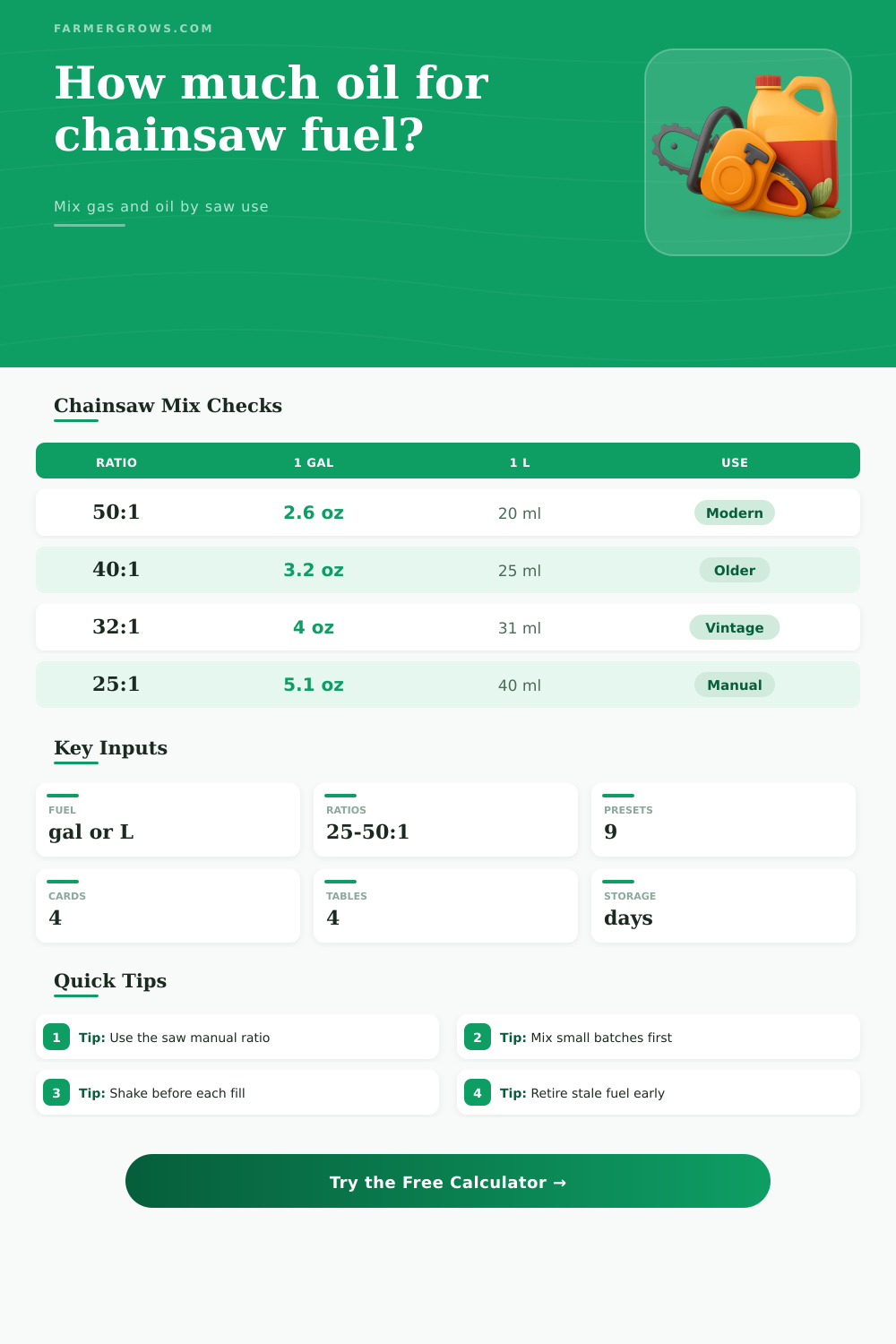
| 50:1 | 2.56 fl oz | 20.0 ml | Common on many modern chainsaws when approved oil is used. |
| 45:1 | 2.84 fl oz | 22.2 ml | Useful when a manual or oil bottle specifies this exact ratio. |
| 40:1 | 3.20 fl oz | 25.0 ml | Seen on some older saws and some break-in instructions. |
| 32:1 | 4.00 fl oz | 31.3 ml | Follow vintage saw documentation before choosing richer oil. |
| 25:1 | 5.12 fl oz | 40.0 ml | Older equipment may call for this; do not assume it fits modern saws. |
| Saw use | Typical bar | Fuel pace | Batch planning note |
|---|---|---|---|
| Pruning and limbing | 10-14 in | Low | Quart or half-gallon batches often stay fresher. |
| Home firewood | 16-18 in | Moderate | One gallon is practical if it will be used within the storage window. |
| Farm cleanup | 18-24 in | Moderate-high | Split batch count by work day when several saws share one can. |
| Felling and bucking | 20-28 in | High | Large saws empty tanks faster but still use the same manual ratio. |
| Chainsaw milling | 28+ in | Continuous | Plan enough fresh mix for steady cutting and cooling breaks. |
| Batch choice | Best fit | Measuring risk | Practical check |
|---|---|---|---|
| 1 batch | Single saw day | Lowest math risk | Measure all oil once, add to fuel, and shake the can well. |
| 2-3 batches | Several days | Moderate rounding | Use a syringe or graduated bottle for small oil amounts. |
| 4-6 batches | Crew or route | Higher rounding | Label each can with ratio, date, and saw group. |
| 7+ batches | Very small cans | High rounding | Mix larger master batches if oil amounts fall below easy marks. |
| Fuel type | Planning window | Storage signal | Chainsaw action |
|---|---|---|---|
| Pump gas mix | About 30 days | Fastest aging | Mix less if the saw may sit between jobs. |
| Ethanol-free mix | About 60 days | More forgiving | Still label the can and keep it sealed. |
| Stabilized mix | About 90 days | Extended plan | Use fresh stabilizer and follow the product label. |
| Sealed premix can | About 180 days after opening | Longest opened window | Once opened, cap tightly and track the date. |
Add oil to an approved fuel can first, add part of the gasoline, cap it, shake it, then add the remaining gasoline and shake again.
When a big bar or milling setup will not use the whole can soon, split the fuel into smaller dated batches instead of changing the ratio.
When mixing the fuel for a chainsaw, it is important to use the correct amount of oil and gasoline at the engine. Using the wrong fuel ratio for the specific model of chainsaw can cause a variety of issues with the engine, such as the engine may bog down, the engine may emit excess smokes, or the engine may be difficult to start after the fuel has been exposed to the air for a period of time. In many cases, individuals may think that the engine is experiencing some type of malfunction when, in fact, the real problem is with the fuel ratio or the age of the fuel mixture.
Every chainsaw model contain a specific requirement for the ratio of gasoline to oil that should be used in the engine. These specifications can typically be found in the chainsaw manual or on the oil tank of the chainsaw. Many moddern models require a 50:1 ratio of gasoline to oil, but some model manufacturers produce chainsaws with an oil to gasoline ratio of 40:1.
How to Mix and Store Chainsaw Fuel
Using too little oil can result in the engine of the chainsaw being starved of the lubrication it needs to function proper. Using too much oil can lead to the fuel fouling the spark plug of the chainsaw and leaving carbon deposits in the exhaust. A calculator can be used to determine the amount of oil that should be mixed into the gasoline as the calculator will perform the steps necessary to calculate the correct amount according to the specified fuel ratio.
The amount of fuel that is mixed into the chainsaw is another factor to consider in the fuel mixing process. Chainsaws can be used in a variety of ways and the fuel consumption can vary accordingly. For instance, a pruning saw will consume less fuel than a milling saw.
Furthermore, it is common and recommended to prepare a batch of fuel mixture in larger amounts than is use by the saw in a period of time. These larger batches should be divided into smaller batches of fuel to prevent the fuel from sitting for too long and becoming stale, and to reduce the potential for errors made in measuring the correct amount of fuel. Many fuel mixers has a batch count feature that enables the mixer to see how the oil will divide between the various batches of fuel created from the initial batch.
The length of the bar of the saw and the workload that is to be performed with the saw will impact the rate of fuel consumption by the saw. A saw with a short bar will consume fuel at a different rate than a saw with a long bar. Therefore, an individual should consider the workload that is to be performed with the saw when determining the amount of fuel to prepare for the saw.
In addition to the workload that will be performed, it is also necessary to consider the length of time that the fuel will be stored in the container. Fuel containing ethanol will degrade at a faster rate than fuel that does not contain ethanol. Therefore, if an individual plans to store the fuel for longer periods of time, they should adjust the amount of fuel that they prepare based off the type of fuel that they are preparing.
Another factor to consider is the fuel loss allowance. Small amounts of oil will remain in the measuring cup or on the funnel with which the fuel will be poured into the fuel container. Small amounts of oil may also be lost during the pouring of the fuel.
To account for these losses, an individual should begin with a small percentage of extra oil than the amount that is recommended in the fuel mixture instructions for the chainsaw. The breakdown of the fuel mixture will display the amount of oil that is to be added to the fuel, the allowance for the fuel loss, and the total amount of fuel that is to be create according to the specifications of the saw. Reference tables display the amount of oil that is to be added according to the fuel ratio for common fuel ratios.
These tables can be used to understand the amount of oil that is to be added to the fuel in both gallon and liters. Additionally, other reference tables can display the length of the saw bar and the amount of fuel that will be consumed during typical use of the saw. Another table includes information regarding the storage of the fuel mixture as it relates to the different fuel types and how the quality of the fuel will change over time after the oil has been mixed into the gasoline.
While these tables are useful and contain important information regarding fuel preparation, individuals should always refer to the chainsaw manual as this document will contain the specifications for the saw and the fuel that should be used. Certain habits should be followed when mixing the fuel for the saw. The oil should be added to the fuel container first, followed by the addition of a portion of the gasoline.
The fuel container should then be covered and shake to distribute the oil evenly throughout the fuel container before the remainder of the gasoline is added. The fuel container should be labeled to indicate the fuel ratio of the prepared fuel and the date on which the fuel was prepared. Finally, the prepared fuel container should be stored in a cool area.
If the fuel container is stored in the sun or in a hot vehicle, the fuel will age at a faster rate than if the container was stored in a cool shed or barn. Common mistakes include treating each saw as if it has the same fuel requirements as the other saws in the workshop, regardless of the length of the saw bars. For instance, a homeowner may use a chainsaw for occasional tasks, but it may be different than a professional saw that is used in the performance of various tasks each day.
Furthermore, another common mistake is to ignore the time window during which the fuel should be used. For instance, fuel may be mixed in five gallon amounts as it is most convenient to prepare five gallons of fuel, but the fuel will sit stale for three week before the saw can fully utilize it. These mistakes can be avoided by preparing smaller batches of fuel for saws, and dating those fuel batches to ensure that the saw depletes the oldest batches of fuel first.
Mixing the fuel properly will ensure that the fuel mixture matches the specifications of the saw, the tasks that are to be performed, and the calendar. Fuel that matches these three factors will allow for the saw to start and run smoothly. Ensuring that the fuel mixture matches each of these factor will allow for the saw to remain a reliable tool.