Cement Silo Capacity Calculator
Calculate usable storage capacity, tons as-fed, dry matter, and stave rings for concrete stave silos.
📊 Capacity Results
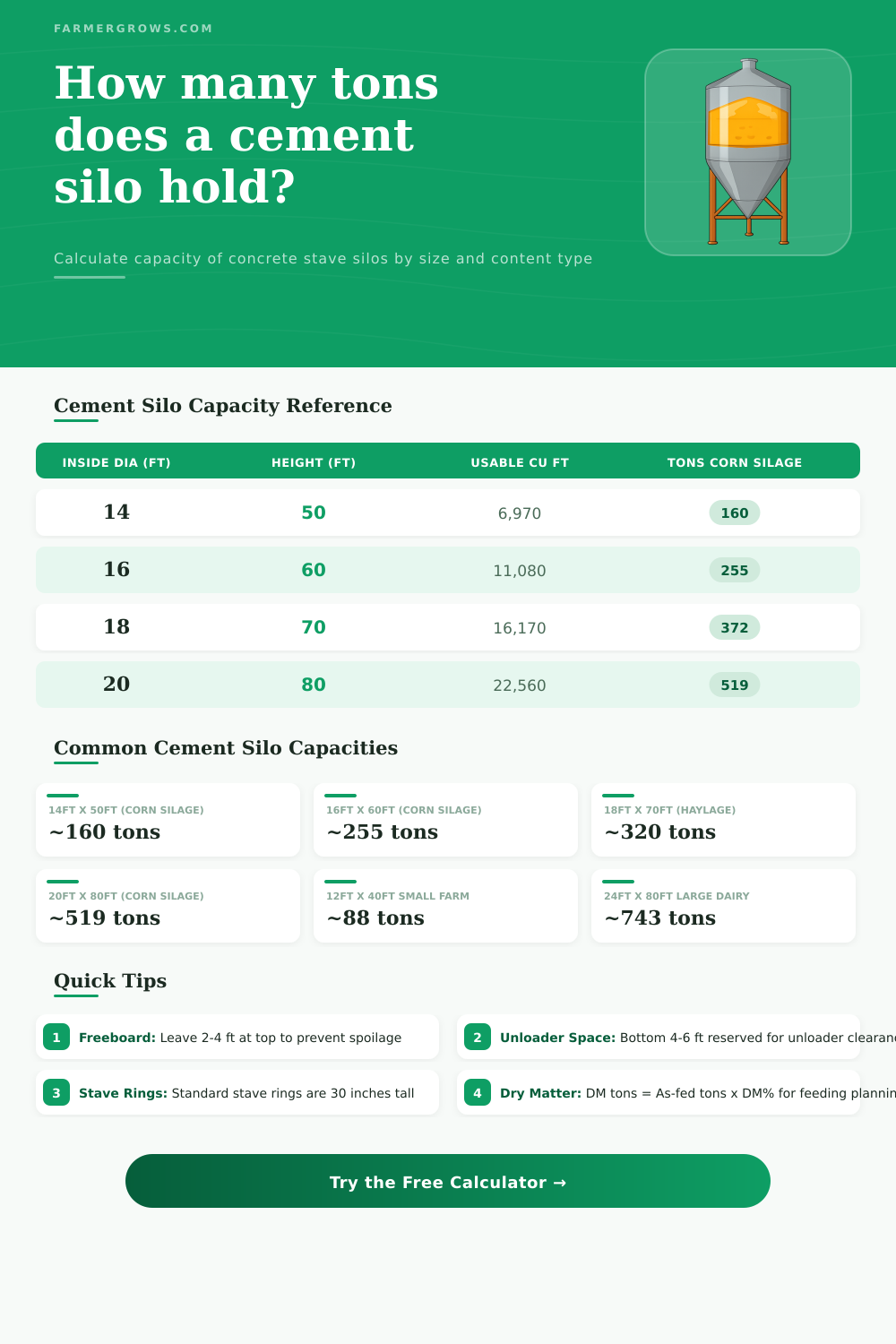
Cement Silo Capacity Reference
| Inside Dia (ft) | Height (ft) | Usable Cu Ft | Tons Corn Silage |
|---|---|---|---|
| 12 | 40 | 3,820 | 88 |
| 14 | 50 | 6,970 | 160 |
| 16 | 60 | 11,080 | 255 |
| 18 | 70 | 16,170 | 372 |
| 20 | 80 | 22,560 | 519 |
| 24 | 80 | 32,480 | 747 |
| 28 | 80 | 44,200 | 1,016 |
Content Type Comparison
| Content Type | Density (lbs/cu ft) | Tons per 1,000 cu ft | Dry Matter % |
|---|---|---|---|
| Corn Silage (65% MC) | 46 | 23.0 | 35% |
| Haylage (50% MC) | 40 | 20.0 | 50% |
| High Moisture Corn (28%) | 42 | 21.0 | 72% |
| Grain Corn (15% MC) | 45 | 22.5 | 85% |
| Wheat (13.5% MC) | 50 | 25.0 | 87% |
| Small Grain Silage (60% MC) | 38 | 19.0 | 40% |
Stave Ring Reference
| Ring Height (in) | Silo Height (ft) | Number of Rings | Cost Factor Note |
|---|---|---|---|
| 30 | 40 | 16 | Base size |
| 30 | 50 | 20 | +25% rings vs 40 ft |
| 30 | 60 | 24 | +50% rings vs 40 ft |
| 30 | 70 | 28 | +75% rings vs 40 ft |
| 30 | 80 | 32 | +100% rings vs 40 ft |
| 30 | 90 | 36 | +125% rings vs 40 ft |
In order to calculate the capacity of a concreate stave silo, it is first necessary to understand that the total height of the concreate stave silo dont represent the amount of feed that the concreate stave silo can hold. In order to determine how much feed the concreate stave silo will need to provide for a herd of dairy cows, you must determine the height of the concreate stave silo that is actualy usable for feeding the cows. The usable height of a concreate stave silo is the height of the silo minus the height that is required for the bottom and the top of the silo.
The height required for the bottom of the silo is to allow the unloader to spin without hitting the feed; four to six feet of space must be left empty at the bottom of the concreate stave silo. The height required at the top of the silo is to prevent the silage from overflowing the concreate stave silo; if the silage overflow, it can damage the roof of the concreate stave silo and the silage can spoil. Thus, you must subtract the bottom and the top of the concreate stave silo from the total height of the silo to determine the usable height of the silo.
How Much Feed a Concrete Stave Silo Can Hold
After determining the usable height of the concreate stave silo, you must calculate the volume of the usable portion of that silo. The volume of a silo in the shape of a cylinder can be calculated by multiplying the constant pi by the square of the radius of the silo times the height of the silo. The radius is half the diameter of the silo; specifically, you must use the inside diameter of the silo in the calculation.
The staves of the silo is thick; using the outside diameter of the silo will result in a calculated volume that is too large. In addition to calculating the volume of the usable portion of the silo, it is also necessary to calculate the weight of the silo and the amount of nutrition that it will provide to the dairy herd. The silage that is stored in the silo may be corn silage, haylage or grains like wheat.
Each type of silage has a different density. Corn silage has a density of approximately 46 pounds per cubic foot when a tractor tire packs it. Haylage has a lower density than corn silage due to the fact that haylage contains more air; haylage contains approximately 40 pounds of weight per cubic foot.
Grains like wheat is denser than silage; wheat weighs approximately 50 pounds of weight per cubic foot. The density of silage can also be affected by the amount of water that the silage contains; silage that contains a greater amount of water has less dry matter than silage that contains less water. Dry matter is the portion of the silage that contains nutrition to the cows; cows dont consume water for nutritional value.
Thus, you must consider the amount of dry matter in the silage in the planning for how the silo will contribute to the nutritional needs of the dairy herd. The number of concreate stave rings that you will use in the construction of the silo will also have an impact upon both the size and the cost of that silo. Each concreate stave ring is 30 inches in height.
Thus, the total height of the silo divided by 30 inches will reveal the number of concreate stave rings that will be needed to build the silo. Taller silos will require more concreate stave rings; the taller the silo, the more hoops will be required to hold the rings together. The size of the concreate stave silo must be sized according to the size of the herd of dairy cows that will be fed from the silo; a silo that is too small will not contain enough silage to feed a large herd of cows, and a silo that is too large will result in wasted silage if the herd is small.
For instance, a 12-by-40 foot silo may be sufficient to store silage for a herd of 50 cows; however, a 24-by-80 foot silo will be better suited for a herd of 500 dairy cows. Finally, a few additional considerations regarding the function of the concreate stave silo should be made. Silage will settle by five to ten percent after silage is loaded into the silo; the silage will take up less space over time.
Additionally, the type of unloader that you will utilize to remove silage from the silo will affect the usable height of that silo; top unloaders and bottom feeders will require different amounts of bottom clearance than other types of unloaders. Finally, it is recommended to place the concreate stave silo on firm gravel; a tilting silo may stress the silos hoops, which can reduce the capacity of the silo overall. You should of considered how much space is needed for the equipment.
Its important to make sure the ground is level so the silo dont tip.