🚚 Cattle Shrink Calculator
Calculate pencil shrink, fill shrink, and pay weight for livestock marketing
✅ Shrink Calculation Results
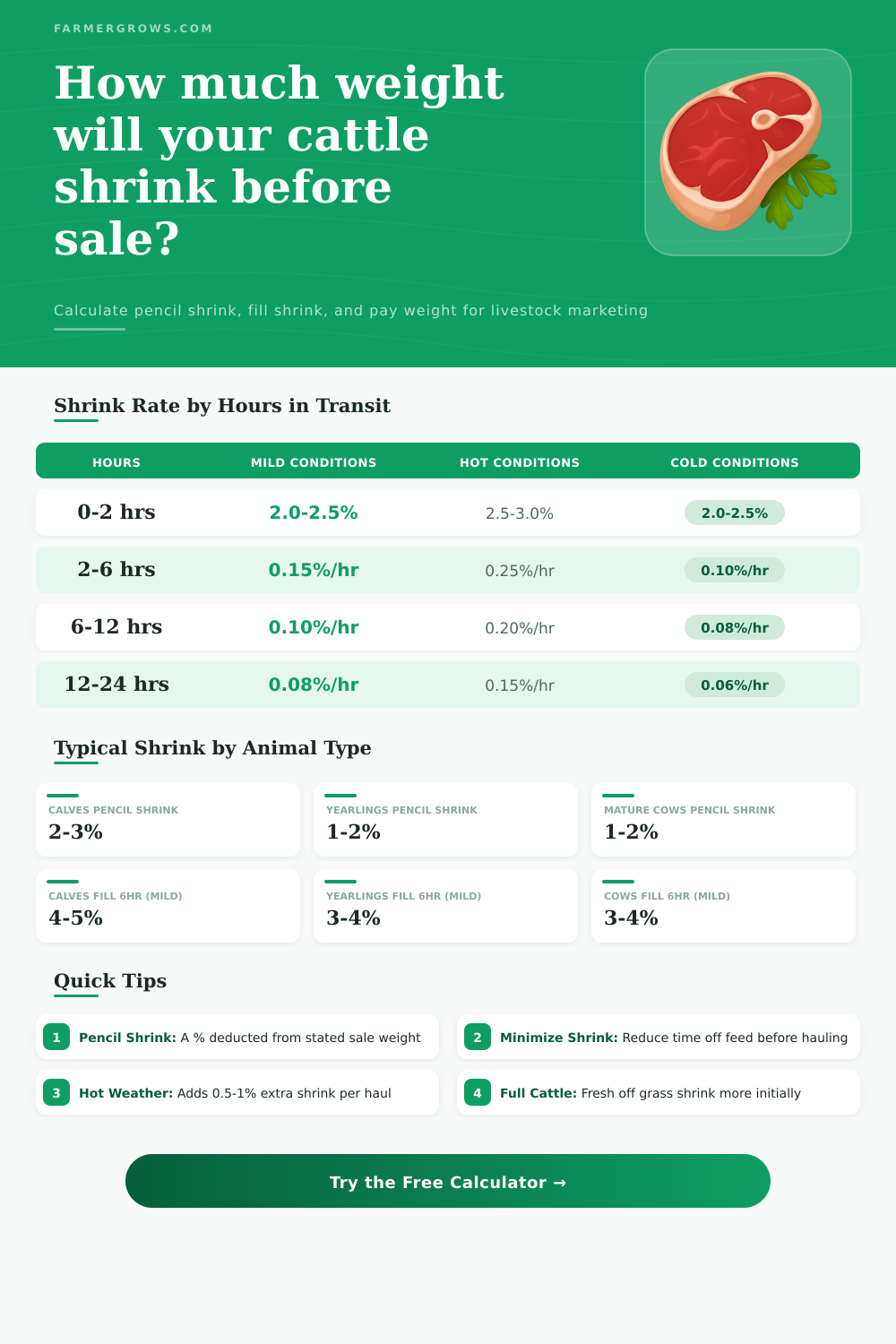
Shrink Rate Reference (% per hour)
| Hours in Transit | Mild Conditions | Hot Conditions | Cold Conditions |
|---|---|---|---|
| 0-2 hrs (initial purge) | 2.0 - 2.5% | 2.5 - 3.0% | 2.0 - 2.5% |
| 2-6 hrs | 0.15%/hr | 0.25%/hr | 0.10%/hr |
| 6-12 hrs | 0.10%/hr | 0.20%/hr | 0.08%/hr |
| 12-24 hrs | 0.08%/hr | 0.15%/hr | 0.06%/hr |
| 24+ hrs | 0.06%/hr | 0.12%/hr | 0.05%/hr |
Shrink by Animal Type
| Animal Type | Avg Pencil Shrink | Avg Fill Shrink (6hr) | Total Typical |
|---|---|---|---|
| Calves | 2-3% | 3-5% | 5-8% |
| Yearlings | 1-2% | 2.5-4% | 4-6% |
| Mature cows | 1-2% | 2-3.5% | 3-5% |
| Bulls | 1-2% | 2-3% | 3-5% |
Weather Impact on Shrink
| Condition | Additional Shrink % | Notes | Management Tip |
|---|---|---|---|
| Mild (spring/fall) | 0% | Baseline conditions | Haul during daylight |
| Hot summer | +0.5 to +1.0% | Increased perspiration | Haul at night, provide water |
| Cold winter | -0.2 to 0% | Reduced metabolic rate | Bedding reduces wind chill |
| Extreme heat/stress | +1.0 to +2.0% | Risk of death loss | Delay haul if possible |
Cattle shrink is the important weight loss that happens during collection, transportation, process or maintenance of livestock without food and water In the beef industry it is not trivial cause. During motion of one place to other, for example of pasture to slaughterhouse, ranch to feedlot either home to market… Cattle lose weight.
Additional shrink happens when physical liquids and solids exit from cattle between home and store.
Why Cattle Lose Weight During Transport and How to Reduce It
Tension matters here a lot. Not only it makes meat tough and helps diseases for livestock, but also cause unnecessary lose through dung, urine and liquid loss from tissues. That weight values a lot.
Shrink commonly shared in two kinds: fill and tissue. Fill shrink originates of dung and urine from digestive system. It grows when pasture and water lack during time, and can reach until 6% weight.
That kind commonly happens at market and rapidy recovers after some days on pasture with water. Tissue shrink, the second kind, requires more time for refill… Of some hours until more than 30 days for that physical weight.
Without pasture and water livestock loses around 1% weight each hour during the first three until four hours, later slowly 0.25% each hour during the next eight until ten hours. Widely feedlot-livestock expects to lose 2-3% during journey, finished-livestock 3-4%. Sharply without food and water during 12 hours pasture livestock loses 4%.
Well address everything during loading. Ease during loading and escape rough starts and stops during way reduce shrink. Most happens during loading and first part, around 25 miles.
In 25 miles you lose half that much as far as in 200 miles. Surprisingly rememberable fact.
Livestock does not eat neither drink in foreign place while around 24 hours or more. That makes things worse at arrival. Feed before journey give energy, maybe lowers tension and shrink.
Main factor is duration without pasture and water. Bad counted it cost money to vendor and customer.