
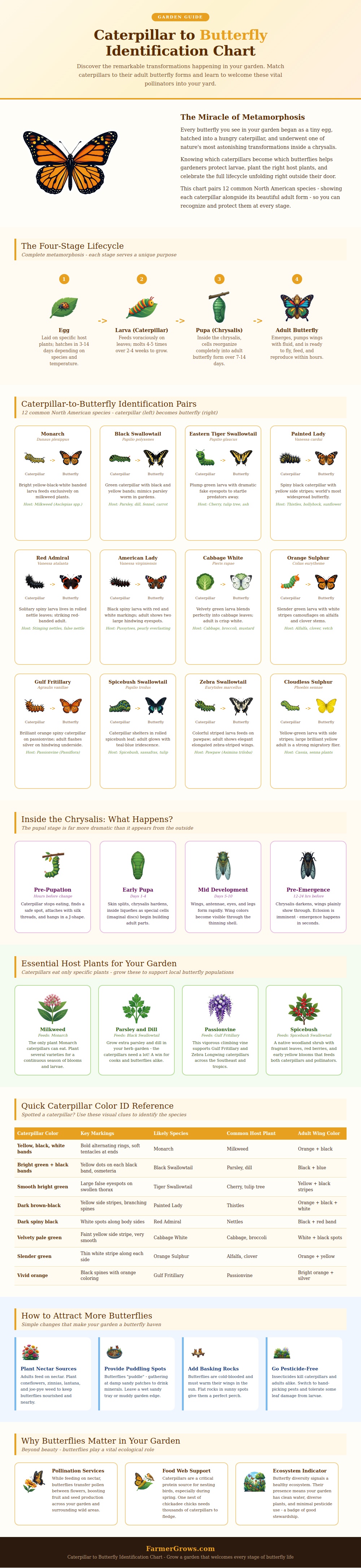
If you have parsley, there’s probably a caterpillar chewing up the leaves, and you’re torn: Are you feeling sympathetic to the bug, or to your gardening pride? Anything munching a leaf look like an enemy, so you want to squash it or spray it. You’re thinking of just one moment in time; missing the larger picture completely. In this case, maybe that worm will be a brillant pollinator who’ll do you good. Knowing what larval form each butterfly take changes things, turns something that was a pest into a partner helping your whole yard.
Most of this happen out of sight during metamorphosis process. It starts with an egg laid on one particular type of host plant. The larva is a specialist and does not feed on anything else. If the preferred food isn’t available, the larva starve. After it hatches, the larva grows fast, eating and growing and eating some more. And shedding its skin many times over as it becomes too tight. Then it turns into a chrysalis and liquefies, then rebuilds itself all over again from scratch. This take about seven to fourteen days, depending on the species and temperature. It also involve a serious reorganizing of structure. Finally, out comes the new creature, still soft-winged and in need of protection (but it pumps blood into its veins), hardening them up so it can fly.
How to Tell Good Caterpillars from Bad Ones
The early detection will prevent accidental harm by alerting you to when you’re dealing with something early in its lifecycle. By noting visual clues (such as spine color or eyespots), the chart shows differences between a beneficial native species (like a swallowtail) versus an alien invader (a harmful pest). It is a plump green caterpillar with fake eyespot on its thorax. That’s an Eastern Tiger Swallowtail, whose larvae eats leaves of tulip trees or cherries (not your vegetable crop). It looks ominous, but it is not harmful.
But is it a pale green velvet-colored larva that blends right in among the brassicas? Probably a Cabbage White, a bad guy on brassica, which need managing in your edibles. Why does it matter, since the plant has already chewed up your leaves? One creature is contributing to biodiversity, while the other is destroying your crop. By understanding which is which, you can live with some leaf loss on non-edible plants. Or, you could of sacrifice some herbs to help support bird populations that depend on insect larvae for protein.
A hospitable habitat doesn’t happen by chance. Encourage adult visits with nectar-rich blooms, and there are plenty of butterfly-friendly ones. Plant some of their favorite host species, too. If you want Monarchs, milkweed is a must. Blue-green Swallowtails love spicebush shrubs. They’ll get food and shelter all at once, a closed-loop system that brings pollinators closer to home. And don’t forget puddling spots (minerals that butterflies sip from damp soil); they’re like easy extras that support health, and won’t cost a penny.
A Zebra Swallowtail basking in the afternoon sunlight may look beautiful, but it’s not alone. Knowing there are larvae in garden means I’m investing in the future blooming of my own plants. It shows that my garden is an ecosystem instead of a sterile display case. Next time you spy a munching mouth at work on a plant, don’t rush to retaliate. Instead, identify the larva and then protect it. That hungry mouth could be preparing for something extraordinery.