
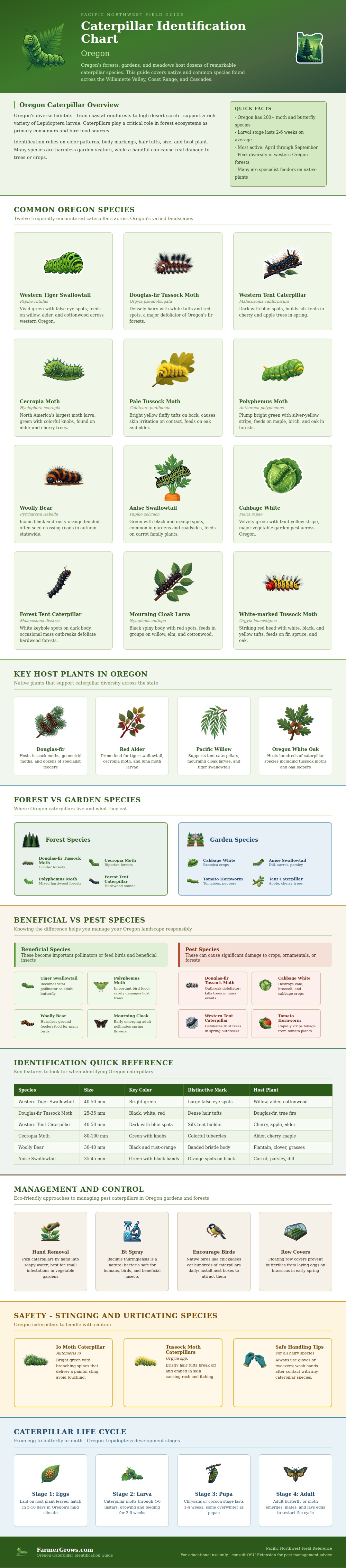
That fuzzy green caterpillar you might spot walking across a branch while wandering around your backyard or an Oregon forest could be headed for a life as a moth, but maybe it’s destined for devouring your tomato plant. How to tell? The key to knowing any caterpillar is often: What does it eat? Hundreds of species lives in the Pacific Northwest, which makes categorizing into groups helpful. Is it a pest or a beneficial insect? Here’s how to tell.
You won’t have to learn name in Latin to keep the creatures out of your garden. Think all hairy caterpillars are dangerous? Think all green ones are harmful pests? Not so: Many are subtler than that. See: A Woolly Bear‘s brown-and-rusty-orange bands? It is harmless and even eaten by birds here in fall. Look-alike Douglas-fir Tussock Moth (above) do cause some defoliation trouble. In fir woods, its population can explode.
How to Tell Good Caterpillars from Bad Ones
The chart points out those details, and lets you decide if you want to step in or not. Panic averted, balance restored in your ecosystem. The larvae live on host plants. The Anise Swallowtail caterpillar (above) probably won’t show up unless you’re growing parsley, carrots, or dill. Their bodies is also green, with orange markings. Unless watched, they’ll decimate your herb garden.
Specialist feeders on native tree species includes Douglas-fir and Red Alder. These creature aren’t typically bothering the vegetable garden. A little knowledge about that relationship can inform your landscaping decisions: To draw the caterpillars away from all those kale heads, plant native willow or oak at the far reaches of your property. It works. I know most folks never think off doing this, but then again…you don’t have to eliminate every single crawler.
There are practical concerns: Are they safe? Not all are. Spiny or urticating (ouch!) hairs mean there could be contact rash, like some tussock moths, including many species in the genus Phryganidia, such as the one pictured here called Io Moth. The ID guide highlights potentially hazardous interactions. If you don’t know what it is, wear gloves (or tweezers) to pick up any surprise find. With kids and/or pets around, better safe than sorry! It’s a lesson gardeners learn when too much itching occurs.
Knowing where something fits in a tree of life changes things; suddenly you’re not fearful but alert. Not all outbreaks need chemical control. One simple approach is to handpick them into soapy water. Another tactic is to encourage our local birds. Chickadees (and other cavity-nesting birds) will eats hundreds of caterpillars each day if we provide nest boxes. That converts a pest outbreak into wildlife food! This matches the mission of Oregon’s sustainable-gardening movement. Caring for native biodiversity is as vital than caring for our crops.
Appreciating what you’re seeing, size, marking, habitat; builds that care. The hidden world under your nose. Each life-stage, egg to caterpillar to adult, is part of the forest web. Before you react, identify the caterpillar. Maybe it’s a potential pollinator… Not just a nuisance. You should of checked first. It was moddern and naturaly beautiful.