Buttercrunch Lettuce Growth Time Calculator
Estimate baby leaf cuts, compact butterhead harvests, transplant timing, spacing effects, bolting pressure, and succession intervals for Buttercrunch lettuce in soil beds or containers.
This calculator is tuned for Buttercrunch, a compact butterhead lettuce with soft cupped leaves and better heat tolerance than many lettuce types. It is not calibrated for romaine, iceberg, Little Gem, loose leaf, hydroponic butter lettuce, or other butterhead varieties.
Buttercrunch Growth Plan
Your calculated harvest dates will appear here.
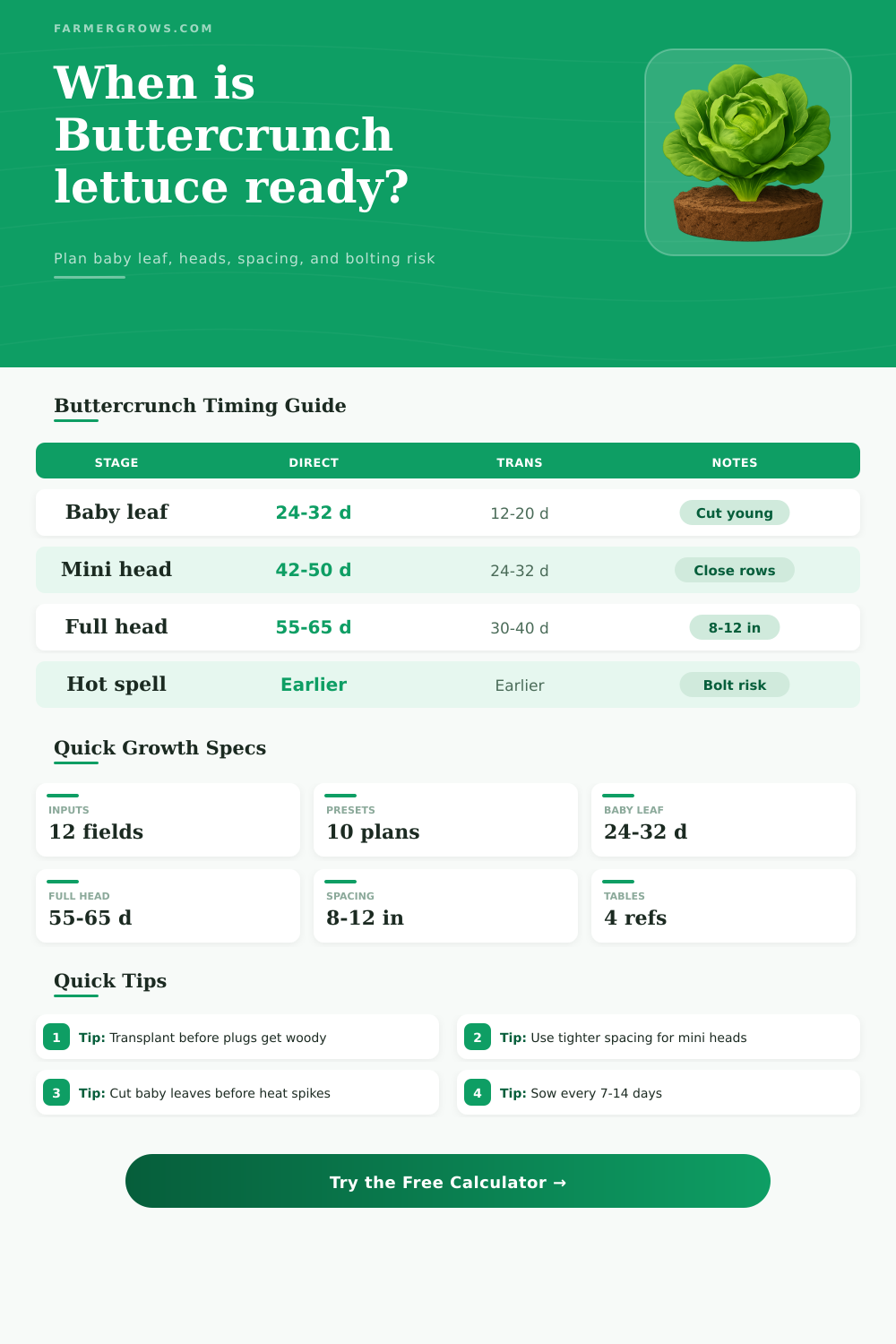
| Buttercrunch stage | Direct seeded from sowing | Transplanted from set-out | What to watch |
|---|---|---|---|
| Germination and stand | 5 to 10 days in cool moist soil | Already emerged in plug tray | Thin direct rows early so heads do not stall. |
| Baby leaf first cut | 24 to 32 days | 12 to 20 days | Cut above the crown for a possible second flush. |
| Mini butterhead | 42 to 50 days | 24 to 32 days | Close spacing gives smaller, quicker heads. |
| Full compact head | 55 to 65 days | 30 to 40 days | Harvest before the center stretches upward. |
| Condition | Growth time effect | Bolting pressure | Buttercrunch action |
|---|---|---|---|
| 50 to 68 F average | Baseline timing | Low | Plan for full compact heads if spacing allows. |
| 70 to 78 F days | Heads mature a little faster | Medium | Use 7 to 10 day successions and check centers often. |
| Warm nights above 65 F | Quality window shortens | High | Pick baby leaf or mini heads before bitterness rises. |
| Fall cooling trend | Growth slows slightly | Low to medium | Allow extra days but expect better head texture. |
| Buttercrunch planting | Best season | Spacing target | Expected head style |
|---|---|---|---|
| Classic spring Buttercrunch | Cool spring | 10 to 12 in | Full compact butterhead, soft cupped leaves. |
| Close-spaced Buttercrunch | Spring or fall | 6 to 8 in | Mini heads, smaller cores, faster harvest. |
| Summer-managed Buttercrunch | Early summer | 8 to 10 in | Medium heads harvested young to beat bolting. |
| Container Buttercrunch | Mild patio weather | 8 to 10 in | One compact head per plant with steady moisture. |
| Goal | Sow or set interval | Harvest rhythm | Best use |
|---|---|---|---|
| Baby leaf salads | Every 7 days | Cut at 3 to 5 in leaf length | Small beds, warm spells, fast turnover. |
| Mini heads | Every 10 days | Harvest when centers cup firmly | Market bunching or tight raised beds. |
| Full heads | Every 14 days | Cut before the stem elongates | Home harvests in cool spring or fall. |
| Heat-risk planting | Every 7 days | Pick young and skip overmature heads | Early summer windows with shade cloth. |
Spacing tip: For true Buttercrunch heads, avoid treating it like loose leaf lettuce. Crowded plants can still be useful, but they become mini heads or baby leaf rather than full cupped heads.
Heat tip: Buttercrunch has useful heat tolerance, but warm nights and long days still matter. When the calculator shows high bolting risk, harvest young and restart the succession.
Buttercrunch lettuce: Plant it because of how it’s supposed to taste; soft, unlike a loose leaf mix or crunchy iceberg. In fact, “cup” describes the shape of the lettuce’s leaves, which form a tight head and they grip on to dressings. To get that, you have to do some work, starting at planting through the period when the lettuce grow fast but before it bolts, turning bitter.
That’s where the calculator comes in (above). Enter your own location’s conditions. You will no longer has to guess whether you are having a heat wave. You just need to understand what those figures actualy mean for your garden soil.
How to Grow Buttercrunch Lettuce
The starting point is where it gets tricky. How will you begin? Will you use direct seeds or young plants from trays? That’s the biggest variable, in a short season that makes a difference. The tool shifts the timeline depending on what you select. Choose between seeds or young plants. It accounts for young plant grown in trays and seeds planted directly in the ground.
And if you opt to transplant, the calculator wants to know when those are: the age of the plug. Waiting doesn’t help them much; older plugs may stunt in their final bed. I’ve seen people miss that one. They assume larger transplants mean a quicker harvest? No! Buttercrunch likes fresh roots in its permanent digs, constrained root balls do it no favors.
Everything else depends on temperature. And yes, buttercrunch is marketed as heat tolerant. That sounds like a free pass for summer gardening. Not so fast. While it handles warmth better than delicate greens, it does have its limits. Yes, warm nights and long days push it to flower, which occurs before you have even formed a good head.
Enter the calculator: It’s figuring out your nighttime and daytime temperatures. From there, it calculates the risk of bolting. When nights exceeds sixty-five degrees, the quality window shrinks. You may get some leaves, but they’ll be small and bitter. The tool shows you when that threshold has been reached, then you change strategies.
But spacings make all the difference. Six or eight inches apart, and they’re baby leaf cuts or mini heads in mere weeks. Space them ten or twelve inches apart to let each plant grow into its largest possible compact head. That’s laid out on the page here, in the reference table, which also illustrates how faster harvesting comes with tighter spacing. Tighter spacing mean smaller individuals.
So what do you really want? The easier way is to have a steady stream of tiny salads. The harder option is a single giant-perfect head, but you would of to wait months for it.
The thing about growing this crop is that succession planting is really the key to make it worth your while. In fact, because Buttercrunch gets going fast, especially in spring. You can sow another row each week or so. This gives you a nice staggered supply of harvests coming on strong. You won’t have one single big glut that then withers as you sit down to eat it.
To map those dates out visually, the calculator tells me when I’ll have the first baby leaf cut ready. When the last full head will be finished. Less precision, more rhythm: Plant a little now, plant again next week. Keep the cycle ticking along.
Few gardeners think about one of the biggest things: moisture consistency. Because lettuce root systems are so shallow, they can’t hold up in drought conditions; conversely, soggy soils causes them to rot. There’s a moisture setting on the calculator. That takes into account whether you’ve been consistent with your watering routine. Fluctuating moisture levels stress the plant, which makes it bolt earlier (to survive). Small thing, but it counts. Consistent watering lead to predictability and crisp leaves.
The final lesson of growing buttercrunch: it’s all about adjusting your expectations to the weather. Water. Space. You got that. No stopping the sun from climbing higher each day. No stalling the warmer nights. The tool creates a realistic schedule within those constraints. It will help you make a decision: go for full heads? Or just baby leaves?
When you can look at those dates and match them up with where you live, sowing the seed feels less like a gamble. It feels more like routine. Plant the seed. See the greens rise. Harvest before it goes bitter. That way the soft texture stays intact from beginning to end.