Butter Lettuce Growth Time Calculator
Estimate butterhead lettuce harvest timing from variety, direct seeding or transplanting, soft head target, spacing, cool-season weather, heat pressure, and succession interval.
Butter lettuce is a butterhead lettuce, not a crisphead, romaine heart, looseleaf-only crop, or hydroponic schedule. Use this for soil-grown Bibb, Boston, and similar soft-heading types where a loose, tender head is the harvest goal.
Butter Lettuce Harvest Estimate
Calculated from butterhead variety, harvest size, direct versus transplant timing, spacing, average temperatures, heat days, shade, and succession interval.
| Butterhead type | Common full-head days | Best season fit | Timing note |
|---|---|---|---|
| Bibb or limestone | 55-65 days from seed | Spring, fall, mild winter | Small tender cup; harvest before outer leaves flare open. |
| Boston butterhead | 60-72 days from seed | Cool spring or fall | Larger loose head; needs more spacing than mini Bibb. |
| Tom Thumb mini | 45-55 days from seed | Short spring window, containers | Compact soft head for closer spacing and quick turns. |
| Four Seasons red | 58-70 days from seed | Cool shoulder seasons | Color improves in cool light; heat can shorten quality. |
| Ermosa type | 55-68 days from seed | Spring, fall, warm shoulder | More forgiving in variable weather, but still not a hot-season crop. |
| Harvest target | Typical days from seed | Suggested spacing | Use in calculator |
|---|---|---|---|
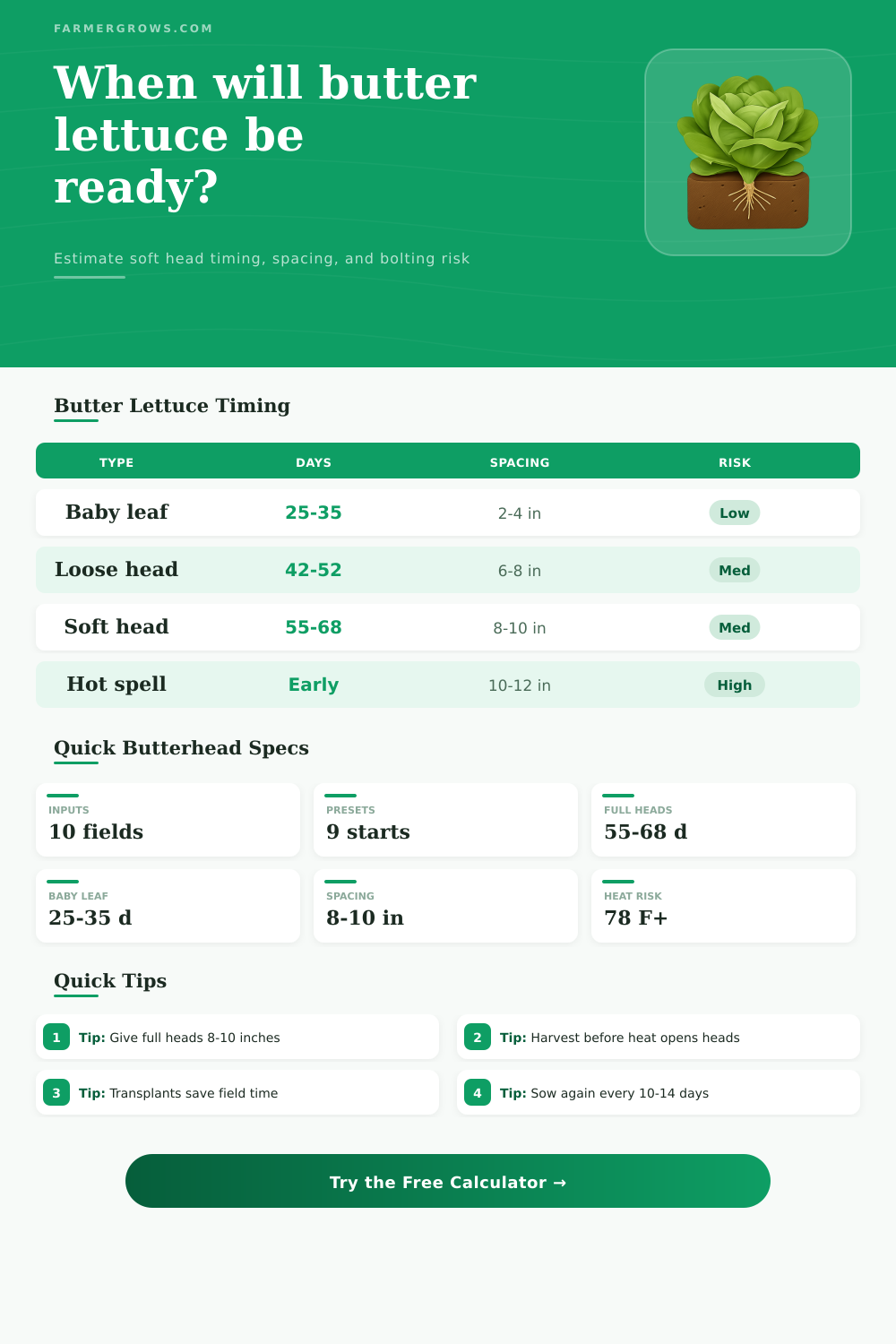
| Baby butter lettuce leaves | 25-35 days | 2-4 in / 5-10 cm | Cut before any soft head forms. |
| Loose young butterhead | 42-52 days | 6-8 in / 15-20 cm | Early tender cups with modest head fill. |
| Full soft butterhead | 55-68 days | 8-10 in / 20-25 cm | Classic butter lettuce head harvest. |
| Large soft head | 65-78 days | 10-12 in / 25-30 cm | Needs cool weather and steady moisture. |
| Season condition | Timing effect | Bolting effect | Butterhead field note |
|---|---|---|---|
| 60-70°F days, cool nights | Best steady growth | Low | Soft heads fill evenly without racing to seed. |
| 50-58°F cool spell | Slower by 4-10 days | Low | Transplants keep the field schedule moving. |
| 72-78°F mild warmth | Fast leaf growth | Moderate | Watch the head daily near maturity. |
| 78-86°F hot spell | May shorten quality window | High | Harvest smaller heads or add afternoon shade. |
| Warm nights above 65°F | Soft heads loosen | Moderate to high | Bitterness can appear before size peaks. |
| Succession plan | Interval | Best use | Adjustment |
|---|---|---|---|
| Baby leaf butter lettuce | 7-10 days | Small frequent salad cuts | Use dense seeding and harvest young. |
| Mini butterheads | 10-12 days | Compact heads for short windows | Keep spacing near 6-8 inches. |
| Full soft heads | 12-18 days | Steady kitchen or market harvest | Use transplants when field space is limited. |
| Spring heat approaching | 7-10 days, then stop | Last cool-season rounds | Shift later rounds to shade or fall planting. |
| Fall planting | 10-14 days | Cooler finishing weather | Add days as day length drops late in season. |
Protect the head stage: Butter lettuce can look ready one week and bolt the next in heat. If the head feels softly filled and weather is warming, harvest.
Space for the harvest you want: Baby leaf can be close, but full soft heads need enough room for leaves to fold inward instead of staying flat.
Gardeners panic when butter lettuce starts to bolt in the spring. Why? It is so quick and beyond your control. The first week you have perfectly formed heads, but then suddenlly they are all looser and bitter as the flower stalk pushes up. It goes fast. You did everything right (right?)…so why didn’t it work?
Most likely, it wasn’t neglect. It was probably an error of judgment: guessing wrong about how much time you have between your seedlings being ready and the heat hitting the crop. Butter lettuce like things cool. So keeping track of days-to-harvest versus days of climbing heat is what makes the difference between a nice, crisp head and something that tastes bitter.
Why Your Lettuce Turns Bitter and How to Fix It
With your local climate conditions and also the variety you are growing (above), calculator factors in normal timing and tweaks it for your weather pattern. It also figures out when your leaves would grow, taking into account that warmer temperatures hastens leaf formation. You’ll learn that a head of lettuce (say a Bibb) sown on the hottest day of spring won’t reach full size as soon as one started under cooler, sixtyish-degree temperatures.
The calculator is sensitive to seed versus plug; if you have transplants, they’re already started, and that cuts down the time spent in the field considerabley. And that’s valuable: It enables you to plan for harvest times ahead of summer heat. If you don’t account for how much using transplant shortens your time in the field, you probably planted too late, and all that effort turns bitter.
People also frequently overestimate spacing. It seems like you’d save some precious garden bed space if you packed things tighter together, but you don’t. Butter lettuce will stretch out sideways instead of up toward becoming a head when planted too closely. There’s no space for the leaves to fold in on each other, so they just stay sprawled open and flat. For those typical soft cup shapes we expect from these lettuces, they’ll need their personal breathing room. The wider apart the rows, the fuller the heads, as chart on the page demonstrates.
So if you’re growing for baby leaf cuts, go ahead and plant densely, there’s no point in leaving gaps when you plan to harvest before the head forms. But if you want full heads of Boston types or Nancy, you can’t avoid a minimum of eight to ten inches between plants; it’s non-negotiable. The tool’s estimates for timing and yield reflect how much wiggle room (or lack thereof) you have in your beds.
Lettuce crops also suffers greatly from heat damage. Unlike many gardeners who consider a one-off hot day an odd thing, butter lettuce reacts to built-up heat stress. Cool night temperatures don’t save it: several days over seventy-eight degrees will cause it to bolt. The calculator gives you a risk assessment by allowing you to input expected hot days ahead of time. Does this put me uncomfortably near the danger zone? That’s what it answers.
If it flags high risk for bolting, it doesn’t mean that you have to call off the crop entirely. Rather, it says that perhaps you ought to plan on harvesting early, or providing shade cloth. The approach changes from wishing for cool weather to planning for warm.
One way is succession planting, which turns one harvest into an ongoing source. Instead of sowing all your seed at once, you sow in stages every couple of weeks (or up to 10-14 days). That means that while one plant is just beginning to leaf out, the previous one is nearing head size for harvest. The calculator plots the intervals so you don’t sow too much at any given time, nor leave gaps, but smooths out the production curve. Now you have a few heads here, then a few there in a couple of weeks, followed by one last batch right before the heat of high summer realy settles in. You should of had discipline, but the payoff is consistent fresh produce for months, not days.
Timing your harvest against temperature changes With lettuce, it’s not so much about forcing the plant to grow faster, but learning to work with its natural rhythm during the growing season. With butter lettuces, the goal is to pick right at the moment of head formation, just as they begin to fill out, but remain tender in their leaves. Pick a day or two too late and all of a sudden they won’t taste good anymore.
The tool helps you understand your spacing needs and how temperature affect your growth timeline. It takes the guessing game out of the equation, which means less time running after ideal conditions and more time working with things that you can control. That equals tight heads, sweet ones, ones that is ready when you’re ready for them.