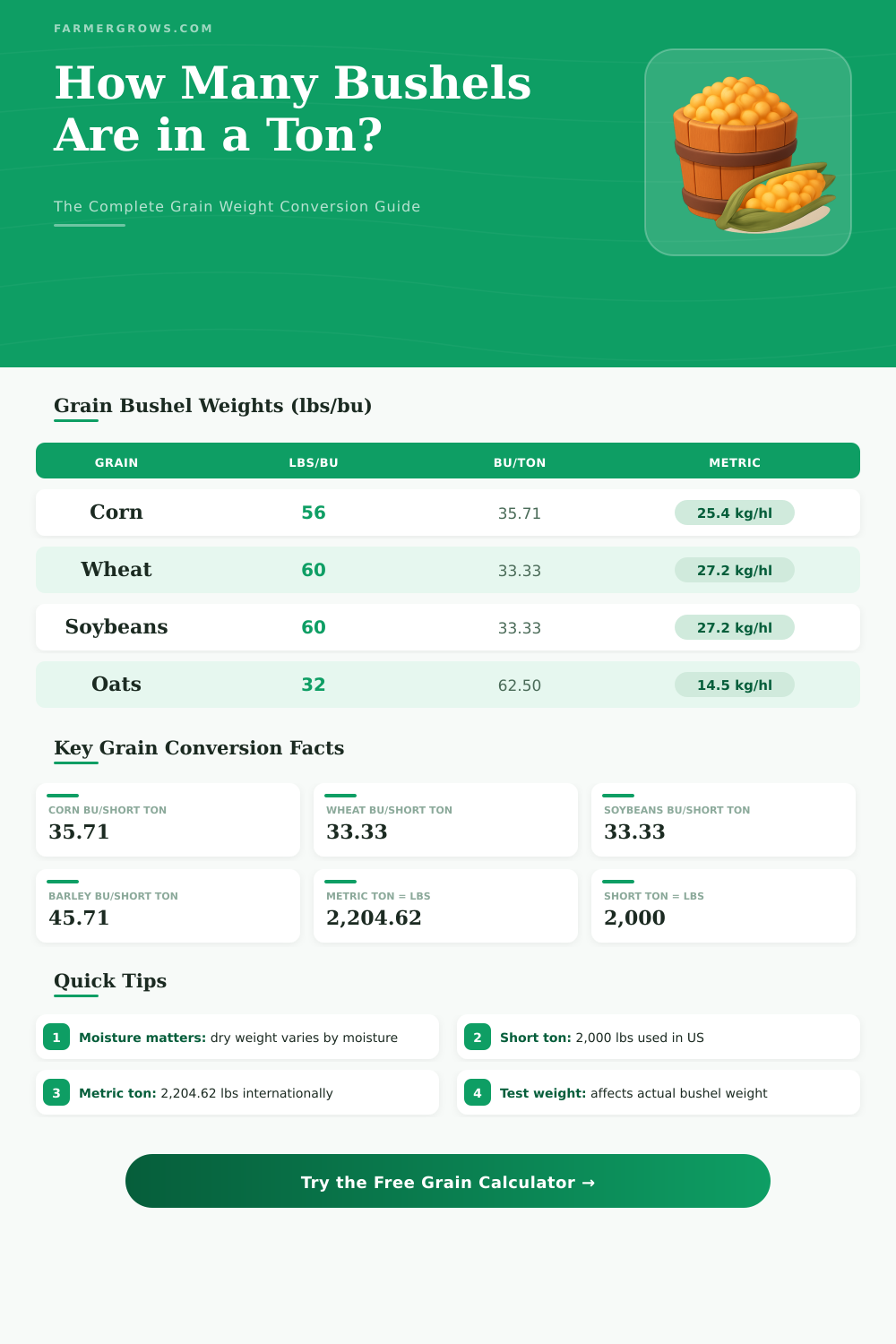
🌾 Bushel to Ton Calculator – Grain
Convert bushels to short tons, metric tons & kilograms for corn, wheat, soybeans and more
| Grain | Lbs / Bushel | Bu / Short Ton | Bu / Metric Ton | Bu / Long Ton |
|---|---|---|---|---|
| Corn | 56 | 35.71 | 39.37 | 40.00 |
| Wheat | 60 | 33.33 | 36.74 | 37.33 |
| Soybeans | 60 | 33.33 | 36.74 | 37.33 |
| Barley | 48 | 41.67 | 45.93 | 46.67 |
| Oats | 32 | 62.50 | 68.89 | 70.00 |
| Grain Sorghum | 56 | 35.71 | 39.37 | 40.00 |
| Canola / Rapeseed | 50 | 40.00 | 44.09 | 44.80 |
| Sunflower | 25 | 80.00 | 88.18 | 89.60 |
| Rye | 56 | 35.71 | 39.37 | 40.00 |
| Flaxseed | 56 | 35.71 | 39.37 | 40.00 |
| From | To Short Ton | To Metric Ton | To Long Ton | To Kilograms |
|---|---|---|---|---|
| 1 Short Ton | 1.000 | 0.9072 | 0.8929 | 907.185 |
| 1 Metric Ton | 1.1023 | 1.000 | 0.9842 | 1,000 |
| 1 Long Ton | 1.1200 | 1.0160 | 1.000 | 1,016.05 |
| 1,000 lbs | 0.500 | 0.4536 | 0.4464 | 453.59 |
| Quantity | Corn (bu) | Short Tons | Metric Tons |
|---|---|---|---|
| Semi-truck load (45,000 lbs) | 803 | 22.5 | 20.41 |
| Hopper car (200,000 lbs) | 3,571 | 100 | 90.72 |
| Grain bin (10,000 bu) | 10,000 | 280 | 254.0 |
| Grain bin (50,000 bu) | 50,000 | 1,400 | 1,270 |
| 1 acre corn yield (180 bu) | 180 | 5.04 | 4.57 |
| 1 acre wheat yield (50 bu) | 50 | 1.50 | 1.36 |
To convert bushels to ton, the individual must have an understanding of the weight of the grains in question and the moisture content of the grain. The individual must know the weight of a bushel of a specific type of grain; the weights of different type of grains are not the same. For instance, corn weigh 56 pounds per bushel, while wheat, soybeans, and other grain weigh 60 pounds per bushel.
Oats, however, weigh less at 32 pounds per bushel. The United States Department of Agriculture (USDA) uses these weights to determine the quality of the grain. A bushel of grain will weigh the most when it is at peak quality and is dry.
How to Convert Bushels to Tons
The moisture content of the grain will also affect the total tonnage of the grain being sold. Grains with higher moisture levels will weigh more; corn with 20% moisture, for instance, will weigh more then corn with an standard moisture level of 15.5%. Buyers does not pay for the weight of the water content in the grain, however.
The individual must adjust the number of bushels of grain for the moisture content; the higher the moisture level, the fewer bushel of grain will be sold. For instance, if the soybeans has a moisture level of 16%, but the soybean contract states that the moisture level must be 13%, the marketable tonnage of the soybean crop will be less than if the soybeans were completly dry. In this instance, the weight of the water in the soybeans must be subtracted from the total weight of the grain to determine the weight of the dry matter in the soybeans.
There are different types of ton that must be understood to accurately perform the conversion from bushels to tons. A short ton, which is the standard unit of weight in the United States, is equal to 2,000 pounds. A metric ton, which international buyers of agricultural products use, is equal to 2,240 pounds.
A long ton, which is used in some trades in the United Kingdom, is equal to 2,240 pounds. The buying contract must recognize the type of ton. For example, if the contract is for the delivery of grain to an international buyer, but the ton type is quoted in short tons instead of metric tons, the weight will be incorrectly calculated.
This incorrect calculation of weight will impact the profit that is earned from that sale of grain. The test weight of the grain is one more variable that can impact the total tonnage of the grain. Test weight is a measurement of the density of the grains in question.
The lower the test weight of the grain, the fewer pound of that specific type of grain will be contained within a bushel. For instance, if wheat have a low test weight, a bushel of that wheat may only weigh 54 pounds instead of the standard 60 pounds of wheat. Using grains with low test weights will result in less total tonnage of grain than grains with higher test weights.
Both the test weight and moisture levels of grain must be checked before the grain is loaded into a transport vehicle. Both of these variables will impact the total value of the grain that is delivered. The different types of transportation equipment will hold different amount of grain.
For instance, a semi-truck can hold approximately 22.5 tons of grain. Therefore, 22.5 tons of corn is equal to approximately 800 bushel of corn. Rail hopper cars can hold up to 100 tons of grain, which is equal to more than 3,500 bushels of grain.
Large grain bin can hold 50,000 bushels of corn, which is equal to 1,400 tons of corn. These types of figures are essential for planning the transport of grain to various locations. They allow individuals to understand how much grain can be transported to customers.
In making the conversion from bushels to tons, errors can result in financial loss for the individual. For instance, if tons are incorrectly change from one type to another, the individual may quote the wrong weight of grain to a buyer. If the individual ignores the moisture level of the grain, the individual may not adjust for the weight of the water content in the grain; it isnt paid for by the buyer.
If the individual assumes that the different types of grain have the same density, the individual will make incorrect calculations of the weight of the grains. The moisture content, test weight of the grains, and the type of tons must all be accounted for in order to ensure that the number of bushels of grain is accurately translated into tons. By correcting for these variables, the individual can accurately convert the volume of grain to it’s actual market value.