
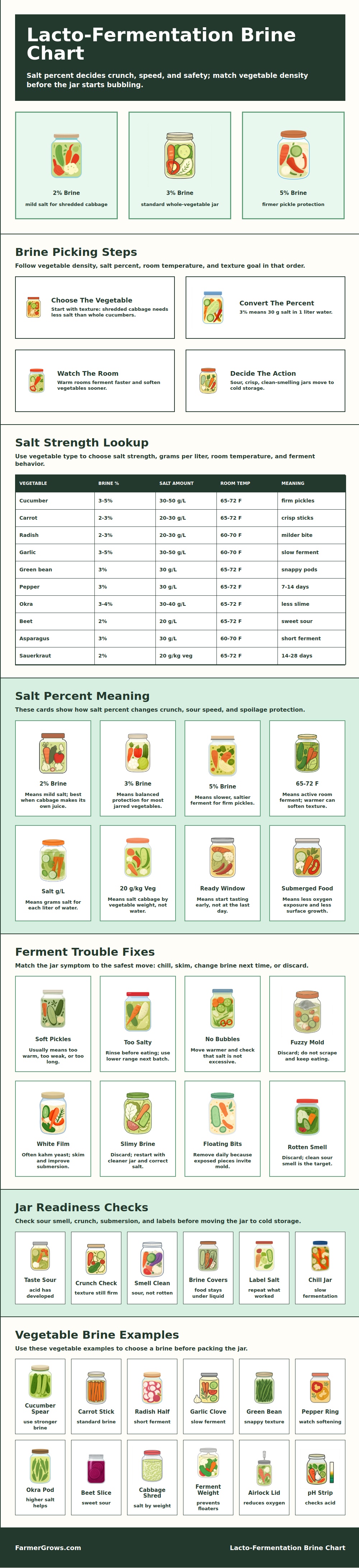
Lacto-fermentation are the process of adding salt, water, and bacteria to vegetable to create fermented vegetables. The goal of lacto-fermentation is for the Lactobacillus bacteria to thrive in the vegetables; the other goal is to ensure that no spoilage bacteria are allowed to grow within the vegetables. If there is too little salt within the vegetables, they will become softly and mushy during the lacto-fermentation process.
If there is too much salt, the vegetables will be too salty to eat. The cook must control the salt concentration within the brine carefully because vegetables require different level of salt. For instance, vegetables that contain more water and have higher density require more salt then others.
How to Make Lacto-Fermented Vegetables
Root vegetables require less salt concentration within the brine, whereas other vegetables require a higher concentration of salt to protect there cellular structure. Higher concentrations of salt will slow the lacto-fermentation process, which allow the vegetables to retain their crunchiness. The type of vegetable will dictate the strength of the brine use for fermentation.
Another variable to consider within the lacto-fermentation process is temperature. If the room where the vegetables is fermenting is too hot, the lacto-fermentation process will occur too quick. Fermenting vegetables too quickly can lead to a loss of crunchiness in the vegetable.
If the room is too cold for the vegetables to be fermenting in the brine, the bacteria will work slow at fermenting the vegetables. In this situation, the bubbles create within the jar may not appear for several day. The cook must continuously monitor the temperature of the kitchen because the bacteria that ferments the vegetables are very sensitive to both heat and cold.
The vegetables must always remain submersed in the brine. If the vegetables extend above the brine, mold will begin to grow on the vegetables. To keep the vegetables submersed in the brine, an fermentation weight can be used.
The use of a fermentation weight will ensure that the vegetables remains anaerobic. The white film that may appear within the brine is Kahm yeast, which is harmless and can be skimmed from the surface of the brine. If colorful mold appears on the vegetables, this is a sign that the vegetables is spoiled and must be discarded.
The bubbling that appears within the jar is a sign of lactobacillus bacteria break down the sugars in the vegetables into lactic acid. The lactic acid give the vegetables their sour flavor and acts as a preservative for the lacto-fermented vegetables. Fermentation is complete when the vegetables have changed smell from the raw vegetable to a sharp sour smell; when the flavor of the vegetables has reached the desired flavor, you should move the jar of lacto-fermented vegetables to the refrigerator.
The low temperature in the refrigerator will place the bacteria into a dormant state; putting the bacteria into a dormant state will preserve the flavor and crunch of the vegetables.