Bulb Planting Depth Calculator
Estimate planting hole depth, soil cover above the bulb, excavation volume, spacing clearance, and depth risk from bulb size, bulb type, soil texture, climate zone, mulch, and container depth.
Depth is usually measured from the finished soil surface to the bulb base. This calculator also shows cover above the bulb top because supplier packets often describe the rule as two to three times bulb height.
Depth Recommendation
Enter bulb size and site conditions to calculate depth.
1. Bulb Type Depth Reference
| Bulb type | Typical bulb height | Depth rule to base | Usual base depth | Notes |
|---|---|---|---|---|
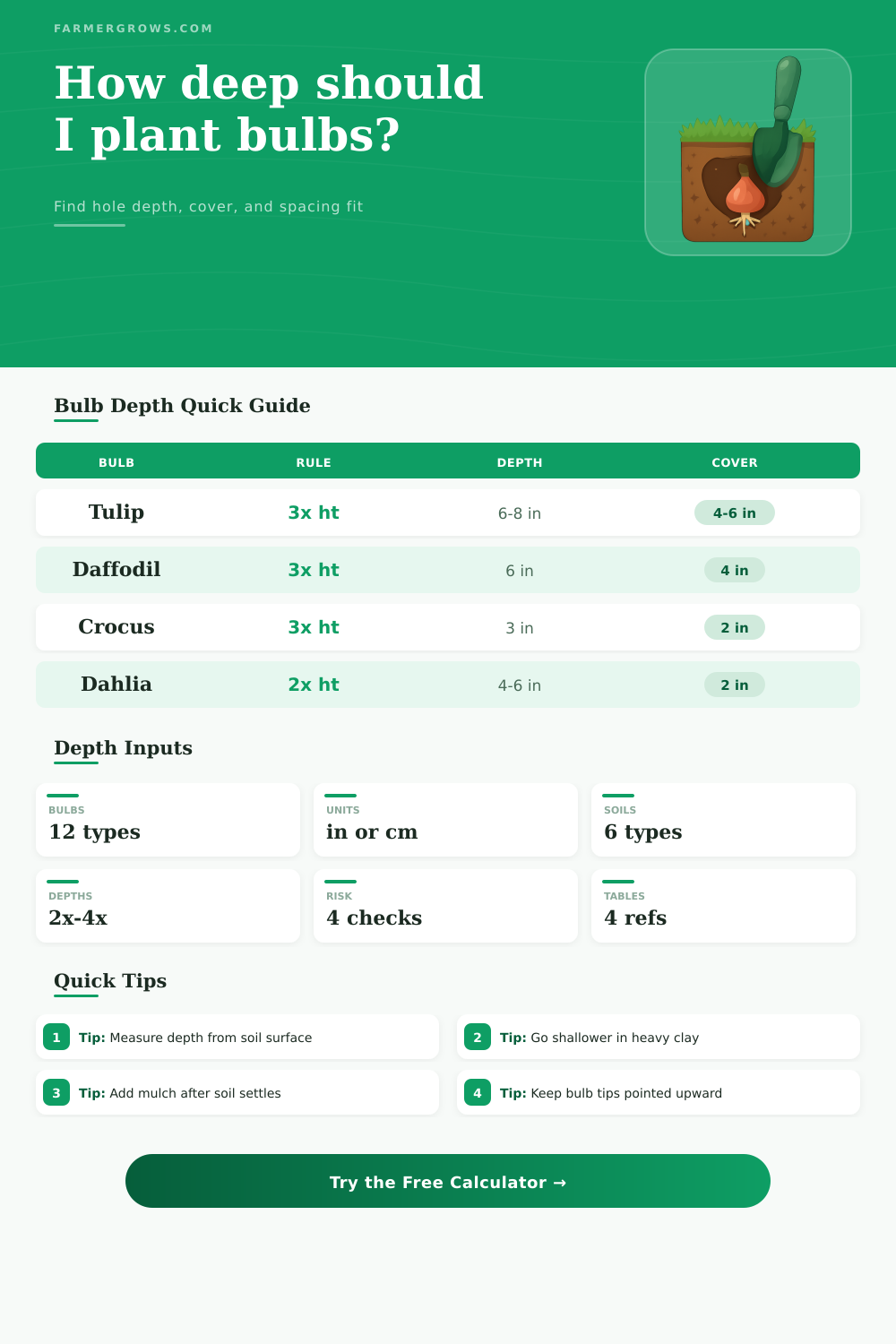
| Tulip | 1.75 to 2.5 in | 3x bulb height | 6 to 8 in | Plant deeper in loose soil for stability and perennial return. |
| Daffodil | 1.8 to 2.4 in | 3x bulb height | 5 to 7 in | Good naturalizer; avoid sitting in wet clay pockets. |
| Crocus | 0.8 to 1.2 in | 3x bulb height | 2.5 to 4 in | Shallow enough for early emergence through turf or mulch. |
| Hyacinth | 1.8 to 2.3 in | 3x bulb height | 5 to 7 in | Needs drainage; gloves are sensible for handling bulbs. |
| Allium | 2 to 3 in | 2.5x to 3x bulb height | 5 to 8 in | Large varieties benefit from firm soil and wind protection. |
| Reticulata iris | 1 to 1.4 in | 2.5x to 3x bulb height | 3 to 4 in | Good for edging and well-drained raised pockets. |
| Lily | 2 to 3 in | 2.5x to 3x bulb height | 6 to 8 in | Stem-rooting lilies may prefer deeper planting. |
| Dahlia tuber | 2.5 to 4 in | 1.5x to 2x tuber height | 4 to 6 in | Plant after soil warms; crown sits near the upper depth zone. |
2. Soil Adjustment Guide
| Soil condition | Depth adjustment | Why it matters | Best practice | Risk if ignored |
|---|---|---|---|---|
| Loam, well drained | 0% | Balanced air, moisture, and insulation | Use packet depth or height multiplier | Low risk if watered in |
| Heavy clay | About 10% shallower | Wet dense soil slows emergence and can rot bulbs | Amend backfill and avoid deep sealed holes | Rot or weak shoots |
| Amended clay raised bed | About 5% shallower | Drainage is better but subsoil may still hold water | Plant on a slight grit or compost cushion | Water pocket below bulb |
| Sandy fast-draining soil | About 10% deeper | More depth buffers dry and cold swings | Firm soil gently after planting | Dry roots or frost heave |
| Container mix | About 15% shallower | Containers have limited root room and freeze faster | Use drainage holes and protect pots in cold zones | Frozen or waterlogged pot |
| Consistently wet site | About 20% shallower | Deep wet planting is the highest rot risk | Move bulbs to raised ground if possible | Bulb loss before bloom |
3. Depth Rule Conversion
| Bulb height | 2x base depth | 2.5x base depth | 3x base depth | 4x base depth |
|---|---|---|---|---|
| 0.75 in | 1.5 in | 1.9 in | 2.3 in | 3.0 in |
| 1.0 in | 2.0 in | 2.5 in | 3.0 in | 4.0 in |
| 1.5 in | 3.0 in | 3.8 in | 4.5 in | 6.0 in |
| 2.0 in | 4.0 in | 5.0 in | 6.0 in | 8.0 in |
| 2.5 in | 5.0 in | 6.3 in | 7.5 in | 10.0 in |
| 3.0 in | 6.0 in | 7.5 in | 9.0 in | 12.0 in |
4. Container And Clearance Checks
| Planting setup | Minimum clearance | Mulch handling | Depth caution | Good use |
|---|---|---|---|---|
| Open garden bed | Depth plus 2 in root room | Count only light mulch credit | Do not leave air pockets under bulbs | Most spring bulbs |
| Raised bed | Depth plus 2 in root room | Mulch helps temperature swings | Check the wet layer below amended soil | Daffodils, tulips, alliums |
| Container | Depth plus 1.5 to 2 in root room | Mulch insulates but reduces space | Protect from freeze-thaw in cold zones | Hyacinths, tulips, minor bulbs |
| Lawn pocket | Depth plus turf thickness | Do not bury under thick thatch | Plant shallow bulbs before turf compacts | Crocus, snowdrops, species tulips |
| Naturalized drift | Consistent depth across uneven ground | Leaf litter counts lightly | Too shallow increases frost heave | Daffodils and small bulbs |
Measure consistently: This calculator reports depth to the bulb base. If your package gives cover above the bulb, compare it to the cover card instead.
Protect the base: Set bulbs on firm loosened soil, not a hollow pocket. Backfill gently so roots can anchor before winter or summer heat.
Dig a hole you think is deep enough; drop in the bulb gently; backfill with soil. Spring arrives, and there’s no tulip where tulips ought to bloom. Why? It wasn’t a matter of bad luck or bad weather. Chances are it was planting depth, or rather, improper planting depth.
More than frost, improper planting depth can hurt these guy. There’s no one-rule-fits-all scenario here. Under ideal conditions, there is such thing as a general guideline, but what if you’ve got a container that freezes fast, or certain spots in your garden that are sandy and others that are clay pockets? Adjust standard advice to suit your soil type.
How Deep to Plant Bulbs
The general advice is to plant bulbs twice as deep as they are high. This is a good place to start, but it does not consider how your soil actualy works. Water sits in place; it doesn’t move through. Planting deeply in clay lock the bulb into soggy ground where it’s more prone to rot.
To find out how much deeper (or shallower) is just right, there’s a calculator that takes your soil type into consideration. It know compacted clay will smother things faster than sand, so that would of need less coverage to maintain moisture around those roots. Sandy soil will dry out faster, so you’d better give it some cushion. Knowing how to take depth properly is another overlooked point for many gardener.
You are not measuring tip-to-tip, but rather the bulb-to-finished-ground measurement. This is how far below the ground the bulb’s base plate sits. With odd-shaped things like dahlia tubers and big alliums, this is important. If you go by top-to-top, it will be planted up too high. Use a tool to show how deep the hole should be beneath the bulb to reach its base, and how much soil should cover just the tip part of it.
The separation makes it easy to imagine where the bulb lives underground, and how much of it is covered up to help protect it against temperature changes. There are more problems with containers: They’re quicker to dry out, and faster to freeze through than open ground. What might work in a garden border overwinter may not work in a twelve-inch pot.
To make sure there’s sufficient root room below the bulb (without encroaching on the bottom of the pot) you can plug numbers into this calculator, which will calculate how much clearance you have below the bulb in the container, taking mulch into account. Yes, mulch insulates…but it isn’t structural soil. Six inches of pine straw is not the same as six inches of firm earth. The tool distinguishes between firm soil cover and loose mulch so you don’t assume everything is fine just because of how it looks on the surface.
In the north, frost heave kills things. The freeze-thaw cycle pushes thing out of the ground. Bulbs gets pushed up into the air if they were planted too shallow. And a few hours of exposure to freezing air means no bloom the next spring. It will let you know if your USDA hardiness zone or planting depth becomes a problem. It will force you to think about: Is deeper planting always good? Or does it impede drainage?
• How frost heave can kill bulbs if they’re planted too shallowly
The how-to details: The pros and cons of different bulbs, from tender beauties like crocus to hardy beasts such as lilies, are spelled out on a reference table that guides you when making the beds. No more guesswork; no more just throwing things in the ground: Planting with purpose is possible.
Are you planting daffodils beneath a tree or planting a pot of hyacinths on the patio? The same concept applies. Protect the tops from the most severe cold and the bottoms from rot caused by wet conditions. Also, give them space to anchor their roots.
Understand what is happening underground, and success will happen above ground. Before long that naked area of earth become a place where things bloom like they should.