
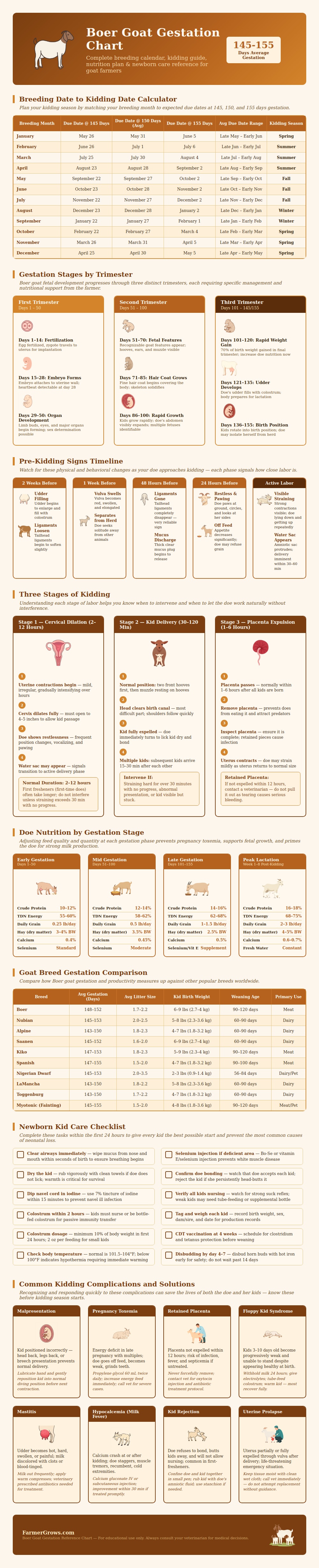
Breeding Boer goats require an understanding of the gestation period of Boer goats. The gestation period for Boer goats last approximately five month, but the gestation period for Boer goats isnt the same length during every week of the pregnancy. The doe performs a period of low activity during the early weeks of the pregnancy, but the final weeks of pregnancy are a period of high demand for the doe and the individuals managing those does.
An understanding of these stages of pregnancy will allow for the creation of a routine for managing the does within the herd. According to the chart included with the reading, different months of breeding will result in the kids being born during different months. For instance, does bred in January will kid in the late spring, which is beneficial for the kids because the weather will be milder and they will be able to access the pasture with fresh grass.
Boer Goat Pregnancy: Stages, Feeding and Birth Signs
Conversely, does bred later in the year will kid in the winter. Winter kidding require different management to the does and there housing to provide adequate shelter and supplemental feed to the does. Overall, though, the chart permit an understanding of the entire breeding and kidding cycle of does within the herd.
The development of the fetuses within the does occur during three trimester of pregnancy. During the first fifty days of pregnancy, the primary concern for the does is that the pregnancy continues. After the first fifty days, however, the does begin to develop the kids within them and those kids begin to build the skeletal frame that they will use after they are born.
During the final stage of pregnancy, the kids within the does gain the most weight and the nutrition for the does must be adjusted during this stage of pregnancy. These stages can be marked in the does in much the same way that the does can recognize fetal development within them. There are different pre-kidding signs for does, but does that are giving birth for the first time may not exhibit all of these signs.
Two weeks before kidding, the udder of the doe will change and the tailhead ligaments of the doe will soften. One week before kidding, the vulva of the does will swell and the does will begin to pull away from the remainder of the herd. When the ligaments of the does dissapears, kidding will occur within forty-eight hours of this behavior.
The does may refuse grain, paw at the ground, or circle in restlessness. When the water sac of the does appears, the labor of the does has begun. Each of these behaviors and signs should be watched for to ensure that kidding is recognized.
When does kid, there are three stages of labor. The first stage of labor, cervical dilation, can take anywhere from a few hour to a full day. During this stage, the does may act uncomfortably, even though they do not exhibit any visible progress in the kidding process.
During the second stage of labor, the does will deliver their kids within a few hours of the start of strong contractions. The kids will typically be born with their front feet and their heads first. During the third stage of labor, the does will deliver their placenta.
This will take place within a few hours of the kids being born. During this third stage of labor, you should check the placenta to ensure it was delivered cleanly. This chart indicates the normal labor of does and allow for the recognition of abnormal labor stages, which would indicate that intervention within the kidding process may be required.
The nutritional requirement of does changes based off the stage of pregnancy of the does. During the early stages of pregnancy, the does only require quality hay or pasture to meet their requirement. During mid-gestation, though, the does will require protein to aid in the growth of the fetuses within their bodies.
During late gestation, the requirements for energy increase for the does, and thus low-quality forage should not be the only forage provide to the does. After the does have finished kidding their kids, though, the nutritional requirements for the does will increase again due to the milk production requirements of the does; the milk production uses the body reserves of the does. By following the changes to the feed of the does according to the chart, the does can be prevented from dropping in body condition while pregnant, and from developing pregnancy toxemia or having weak colostrum to provide to their kids.
There are a few complication that can arise during the kidding of does. For instance, a kid may get stuck in the wrong position in the uterus of the doe, the doe may stop eating during late pregnancy, or the placenta may remain within the body of the doe after the kidding process is complete. Each of these complications is an emergency for the does.
The chart includes indications of these emergencies and the first steps to take in response to them. Additionally, the chart also indicates when the calling of a professional assistance is required. This chart should be located within the barn where the does live.
By tracking the breeding and kidding cycles according to the stages of pregnancy that is listed within the chart, the herd manager can ensure the health of the kids and the does themselves.