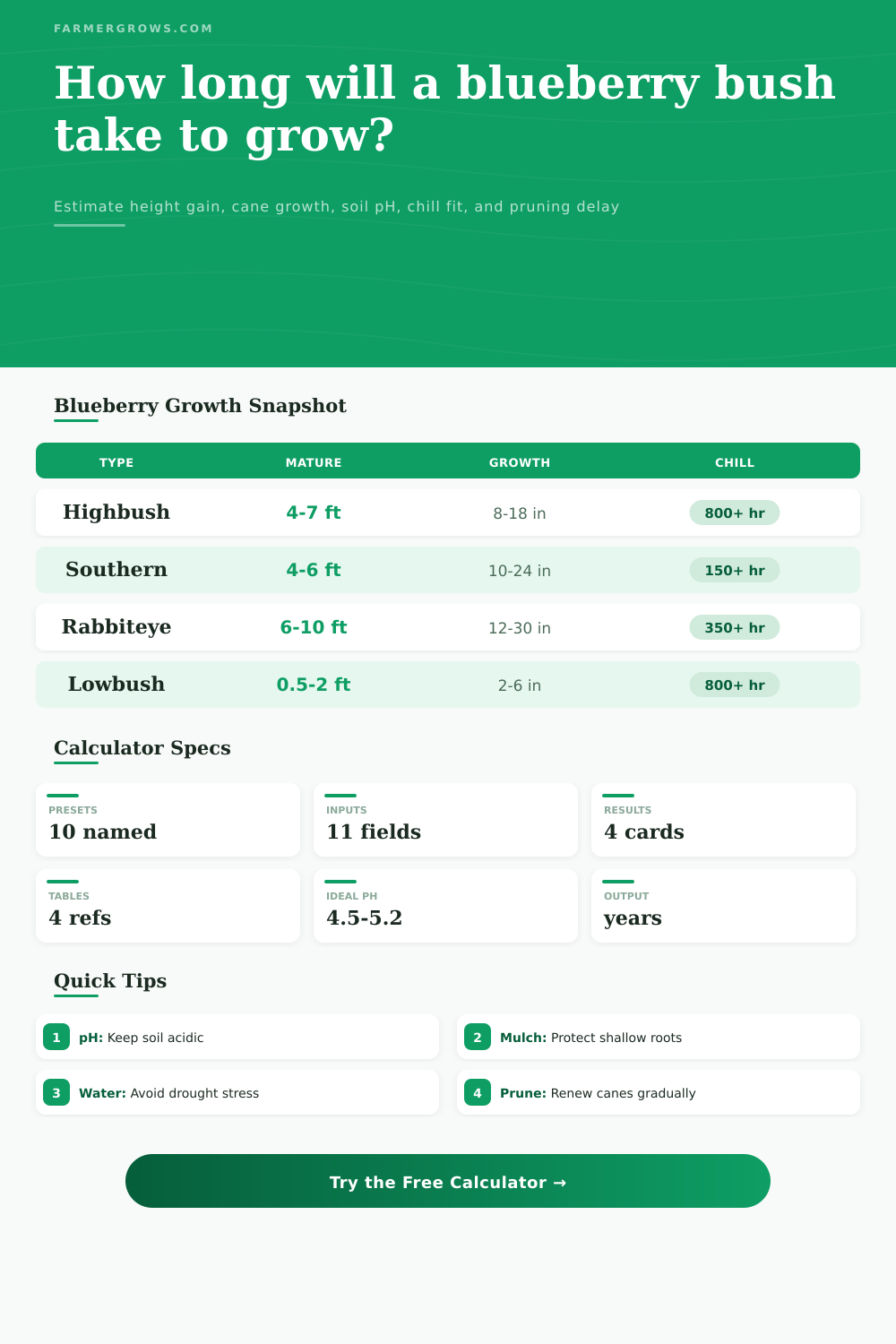
Blueberry Bush Growth Time Calculator
Estimate how long a blueberry bush needs to reach a target height using current height, cultivar type, soil pH, mulch and irrigation, pruning severity, chill fit, USDA zone pressure, and observed annual cane growth.
Load a realistic blueberry planting, then tune the height, pH, water, mulch, pruning, and chill match to your site.
Blueberries grow fastest in acidic soil. High pH blocks iron and nutrients, so cane growth can stall even when fertilizer is present.
A cool, moist mulch layer protects the fine root system that fuels new basal shoots and summer cane extension.
Light renewal keeps young canes coming. Hard renovation lowers height at first while the bush rebuilds productive wood.
A cultivar outside its chill or winter range may leaf poorly, bloom unevenly, or lose new wood to cold injury.
Your Blueberry Growth Estimate
Adjust the inputs to estimate the height timeline.
| Cultivar type | Typical mature height | Annual cane growth | Growth timing note |
|---|---|---|---|
| Northern highbush | 4 to 7 ft | 8 to 18 in | Often establishes for 1 to 2 years, then builds height steadily in cool climates. |
| Southern highbush | 4 to 6 ft | 10 to 24 in | Fast in mild regions, but growth drops when chill is too low or heat is severe. |
| Rabbiteye | 6 to 10 ft | 12 to 30 in | Usually the tallest home-garden type; allow room before using a low target. |
| Half-high | 2 to 4 ft | 6 to 14 in | Cold hardy and compact, so target height should stay below highbush goals. |
| Lowbush | 0.5 to 2 ft | 2 to 6 in | Spreads by rhizomes more than vertical cane height. |
| Container dwarf | 1.5 to 3 ft | 4 to 10 in | Root volume and summer watering control most of the growth pace. |
| Factor | Fast growth condition | Slow growth condition | Calculator effect |
|---|---|---|---|
| Soil pH | pH 4.5 to 5.2 | pH above 5.8 or below 4.2 | Adjusts cane growth strongly because nutrient access depends on acidity. |
| Mulch and irrigation | 2 to 4 in organic mulch and even moisture | Drought swings, bare soil, or wet feet | Changes the shallow-root moisture multiplier. |
| Pruning | Light renewal of old canes each year | Hard renovation or no renewal on old bushes | Adds a short rebuilding delay when cane wood is removed. |
| Chill and zone | Cultivar matched to local winter chill | Low chill, winter dieback, or heat stress | Reduces growth reliability and target-date confidence. |
| Stage | Typical timing | What changes height | Practical target |
|---|---|---|---|
| Establishment | First 1 to 2 years | Root growth, mulch, and watering matter more than fertilizer. | Protect roots and avoid heavy cropping on tiny bushes. |
| Frame building | Years 2 to 4 | New basal canes and upright shoots set the final shrub structure. | Keep pH correct and remove weak twiggy growth. |
| Productive height | Years 3 to 6 | Balanced pruning keeps height while adding young fruiting wood. | Most highbush plants settle around 4 to 6 ft. |
| Renewal cycle | After year 5 | Old cane removal can temporarily lower height but improves vigor. | Replace a few old canes instead of cutting the whole bush. |
Check pH before adding fertilizer. Blueberries can look hungry in alkaline soil because roots cannot access nutrients well. Sulfur or acidic organic matter works slowly, so retest instead of guessing.
Mulch is part of the growth engine. Pine bark, pine needles, leaf mold, or wood chips keep shallow roots cool and moist, which helps new canes extend through summer.
Target height should match the cultivar. A lowbush or patio blueberry may never become a 5 ft shrub, while rabbiteye types can quickly outgrow small garden spaces.
Hard pruning resets the clock. Renovation pruning is useful for old bushes, but it shifts energy from height gain to fresh cane replacement for at least one growing season.
This calculator estimates vegetative height growth, not guaranteed yield. Crop load, pests, root damage, salt, herbicide drift, and local weather can change the result.
When you plant a blueberry bush, you hope it will get up quickly and go tall, right? Wrong. It will more likely stay small for a couple of years, making the gardener wonder why he didn’t just buy his berries at the store to begin with. No, no. Blueberries are not sprinters; they put down their roots first then go upwards. Knowing the timetable can help you work with the plant in a planned way different than one of worry.
Enter the approximate size of your current bushes and their desired mature height (the calculator does the rest). Then, you will know what to expect from their genetics and how to match them to the right space. Because again: soil chemistry talks back to the plant, bargaining with its genetics to grow or not grow. In good conditions (good soil), a northern highbush variety will add as many as eighteen inches of cane growth each year. It can only do this if it has a healthy root system.
Why Your Blueberry Bush Grows Slowly
Nutrients becomes locked away if you let the soil pH creep upward (above about 5.8). Even if there are nutrients in the dirt, the plant cannot see or use them. And then you blame the plant for being slow because you didn’t plant it well, or because weather was bad. Vigor is also driven by soil acidity. Ideal soil pH for blueberries are between 4.5 and 5.2. That makes iron and manganese available to create healthy green leaves and good wood.
If you input pH as the first variable in the tool, you’re telling it whether the roots will feed themself. If the pH is alkaline, the calculator figures your plant will grow more slowly because it are struggling to get nutrients from soil. It is not pessimism, but realism. Fertilizer won’t fix bad pH.
Water management is the same. Blueberries has fibrous, shallow root systems that spread rather than dig deeply. Their roots dry quickly compared to those of most other garden shrub. Mulch is important, a thick layer provides a thermal blanket that holds soil moist and cool in summer’s heat wave. You’ll modify your choice of mulching material (and irrigation) in the calculator to account for how consistently it hold moisture. As with all plants, drought stress stop immediate cane extension. To conserve energy for survival, the plant ceases to grow vertically. Heavy feeding isn’t what counts; consistent water is.
The timing changes dramatically with how you prune. For many gardeners, pruning equals controlling size… But with blueberries, renewal is what it’s really all about. Young canes bears fruit. And where do those young canes originate? Basal shoots grows from the base of the plant. As the bush ages and becomes too dense, it will cease to make this kind of new growth near the ground. Heavy pruning may knock down its height temporarily…but it kicks off the cycle of vigorous new wood. Depending on whether you’re renovating hard or just keeping things maintained lightly, timing changes; and so does the tool.
Nor can climate fit be ignored. If you’re in a mild southern zone, a cultivar requiring 800 hours of chill isn’t going to do well for you. This isn’t something your soil condition can remedy. You’ll have an uneven bloom and the leaves will grows in slowly. It won’t be able to put on new wood very well. The calculator takes into account this chill match to provide a good estimate. If the zone’s off, it slow the rate of growth as the plant struggles with its biological clock.
Which brings us to the last ingredient: patience. For the first couple of years they’re building their root systems belowground on most bushes. There’s not much to look at up top, but that’s what they do. When they finally have a solid footing (a root system), the upward growth picks up speed quickly for a couple years before entering mature-maintenance mode. That’s when the tool set reasonable expectations.
Instead of fretting over a small stall here or there, you can enjoy gradual gains with confidence. You thought you were going to see a surge, but now you’ve got yourself a dependable partner who repays your hard work in kind. It’s a plant that rewards you over time. You should of seen the growth coming!