
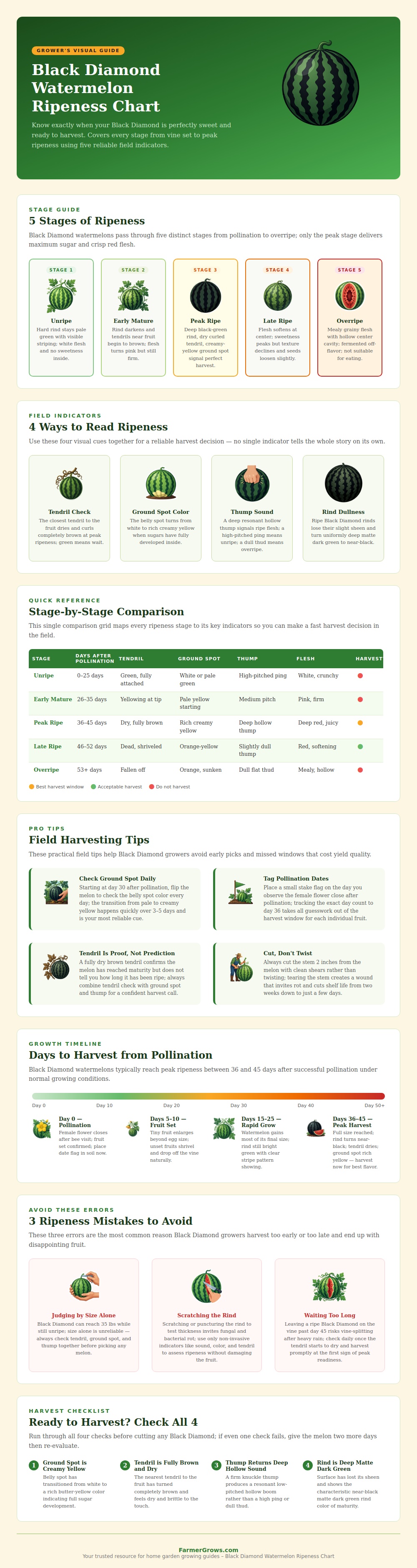
When it comes time to evaluate if your Black Diamond watermelons are ripe, don’t just go by size. There is subtler visual signs of ripeness, so it’s best to have a checklist to double check yourself. Doing this make a stressful harvest decision quick and painless. You won’t have to open up a melon to discover the flesh is pale and unripe.
And never trust the scale more than your vine,’ adds growers’ lore. ‘Even if it weighs thirty-five pounds, a Black Diamond watermelon could still be unripe on the inside.’ That’s because size is deceptive: The melon fills with water quickly, then starts turning it to sugar.
How to Tell if Your Watermelon is Ready
Don’t judge by bulk, look at the tender little curl where the melon’s stem joins the vine. It’s called a tendril, and it’s like a natural shut-off switch for nutrients flowing in. As long as the tendril remains green, the sugar hasn’t yet moved fully into the fruit. Wait. Once it browns, dries and goes brittle, the plant have ceased to feed that particular melon.
A second big factor is timing. When do you know they’re ripe? In general, these watermelons will be at their sweetest about 36-45 days after pollination. That is a relatively small window. If you miss it, they’ll go from being crisp and juicy to mealy and hollow in only a few days.
After day 30, when the melon gets close to ripeness, check daily. It shouldn’t be a slow progression; rather, there should be an obvious shift to cream-colored in the ground spot. Once the sugar has developed enough, belly patch (the area closest to the ground) will be yellow different than white. It goes from white to rich creamy yellow when the sugars are all developed. This happens on the underside where you would place the melon on the ground. Even as the rest of the rind stays dark, this is the best indication and the one sign I rely on most of all.
With experience comes the other layer of assurance: sound. When you knock on a ripe one there’s a deep, echoing “thump-thump” sound; not a high-pitched ping or a dull thud. It’s as if you’re taking a drum test. That low boom? Air-filled melon. Watery flesh still tight? Sharp ping. Structure on the inside breaking down? Flat thud. Use sound to confirm what the eye suspects but doesn’t tell you outright.
The final assessment is the texture of the rind. By this time of development, the slightly shiny outer rind are replaced with one that’s dull, dark green (or nearly black) with a matte finish. This indicates that the rind has hardened to enclose the growing flesh within. The outer waxy coating has also changed from shiny to dull. A glossy looking rind say the melon needs more time to ripen.
Not only is there a right time, but also the proper way to handle it. Never pull the melon off the vine. Doing so will tear the tissue on the stem which leaves an open wound and invites rot. This damages the stem, drastically reducing the fruit’s shelf life. To preserve the natural seal, simply snip with a clean pair of shears about two inches from the fruit. The flesh stays fresh for weeks rather than days.
It’s not as if there’s one instant when it happens: There are tiny changes happening physically. The spot yellows, the tendrils dry up, and the sound alters. If all those clues line up, then yes, you’re good to go. That system will serve you well, so you don’t end up picking an unripe fruit. You should of checked because the melon has crisp red flesh. Done.