
It’s common knowledge that a red bell pepper is simply an older form of its green cousin. Botanically speaking, yes. Culinary-wise? They is a world apart. And no, it has nothing to do with looks alone; it’s all about sugar content.
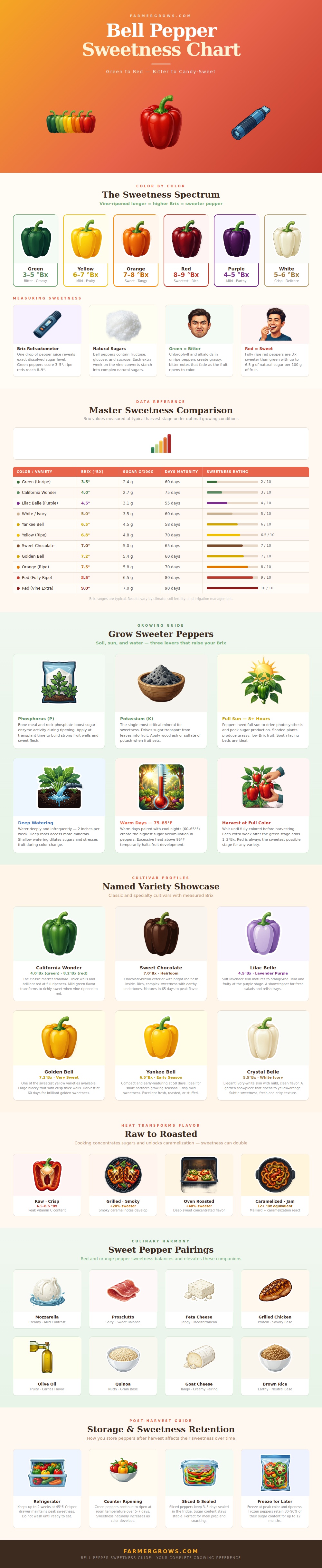
Take a look at the color chart. You can see exactly how the sweetness grows as it matures on the vine. You can also see why waiting longer results in a less grassy vegetable and a more fruit-like treat.
Why Red Peppers Are Sweeter Than Green Ones
That’s the point: How to cook it better. Bitter: Green peppers’ bitterness comes from alkaloids and chlorophyll. These are protective substances that the plant makes to keep itself safe in its early life stage. They also impart a peppery, almost-grassy bite that’s great in a stir-fry. If you’re topping your veggies with thick sauce, you may enjoy the crunch, but the bittering compounds mellow out over time, as the pepper ripens and turns red.
Instead, the plant transforms its starchy reserves into its own kind of sweet: sugars. This is why a ripe red pepper can be up to three times sweeter then its green counterpart. Look at the chart; it spans from the richness of a dark red to the earthy taste of purples. It’s not just tasty, it’s measurable.
Why all the sweetness? It’s simple science. Peppers contains fructose, glucose, and sucrose. The plant needs the right growing season. The longer you wait for the pepper to ripen on the vine, the more dissolved sugar it will have, which is called its Brix level. According to the data, green peppers are at the bottom of the list, while fully ripe red ones top it off.
Why does this matter? We not only prefer sweet, but it’s also one of the foundations of flavors. The rich fat of a mozzarella is cut by a sweet pepper, balancing salty feta cheese or prosciutto. It adds depth to an otherwise plain grilled chicken breast. Sweetness isn’t just a matter of preference; it makes up part of the overall flavor mix without which it stays flat.
This all happens with the help off sunshine, photosynthesis makes the magic happen to produce the energy that shows up as sugar. That’s why grassy peppers don’t go away even if you wait forever, and you should of waited longer if you’re growing your plants in shade.
Another way to help is using water. Watering should be deep to encourage roots to grow down for minerals, but done less often. This also support transporting sugar up into the developing fruit. Dilute the flavor by stressing the plant with shallow watering.
There’s more: the nutrients in the soil matter, especially potassium which supports getting sugars up from the leaves and into the developing fruit. Add some rock phosphate or bone meal at planting time to build strong cell walls and produce juicy, meaty pepper.
That brings us back to when most of us home gardeners go wrong: at harvest time. We harvest our peppers when they’re first full-grown (when they’re still green). But those extra weeks on the plant add so much sweetness. Wait until the color changes if you’re growing them for eating raw or in salad. This is even more pronounced with stuffed or roasted peppers.
Roasting caramelizes the natural sugars, concentrating their flavors. Roasting caramelizes the natural sugars, concentrating the flavor. Oven-roasted peppers have been known to be noticeably sweeter than raw ones, according to the infographic. The heat causes the water to evaporate, leaving just the sugar behind. It is a simple chemistry lesson that makes the ingredient pop.
That sweetness is also preserved through storage. At room temperature, green peppers will still go on to change color if left on your countertop. Slowly they’ll progress from yellow to orange to finally red. All the while their sugar level will increase. When they reach full color, put them in the fridge. The coolness will stall the decline of flavor.
If you slice them, be sure to pack them tightly in a container so no moisture escapes. Or better yet: Freeze at peak ripeness. Peppers frozen like this keep much of their sugar intact for months. They become a handy pantry item to use in cooking all winter long.
So what does this mean? Well, it means knowing sweetness alters cooking. It means no longer reaching for any old pepper to throw into a pot because they’re all just vegetables. Green’s for heat and crunch; red’s for depth, for balance. Next time you face a row of them in the garden or at the market, go beyond color, and consider what waits there: Sugar. Let the flavor develop, let the pepper ripen. Your dish will be not only brighter but more complex, and that’s the reward.