Bean Seeds Per Hole Calculator
Estimate how many bean seeds to plant in each hole, station, row space, or teepee pocket using bean type, germination, field emergence, target plants, spacing, depth, and stand reliability.
Beans are large seeds, so one seed can be enough when soil is warm and seed is fresh. This calculator shows when a second seed is worth the thinning work, and how hill, teepee, lima, fava, dry bean, and edamame plans change the count.
Bean Seed Drop Results
Choose a preset or enter your bean planting details.
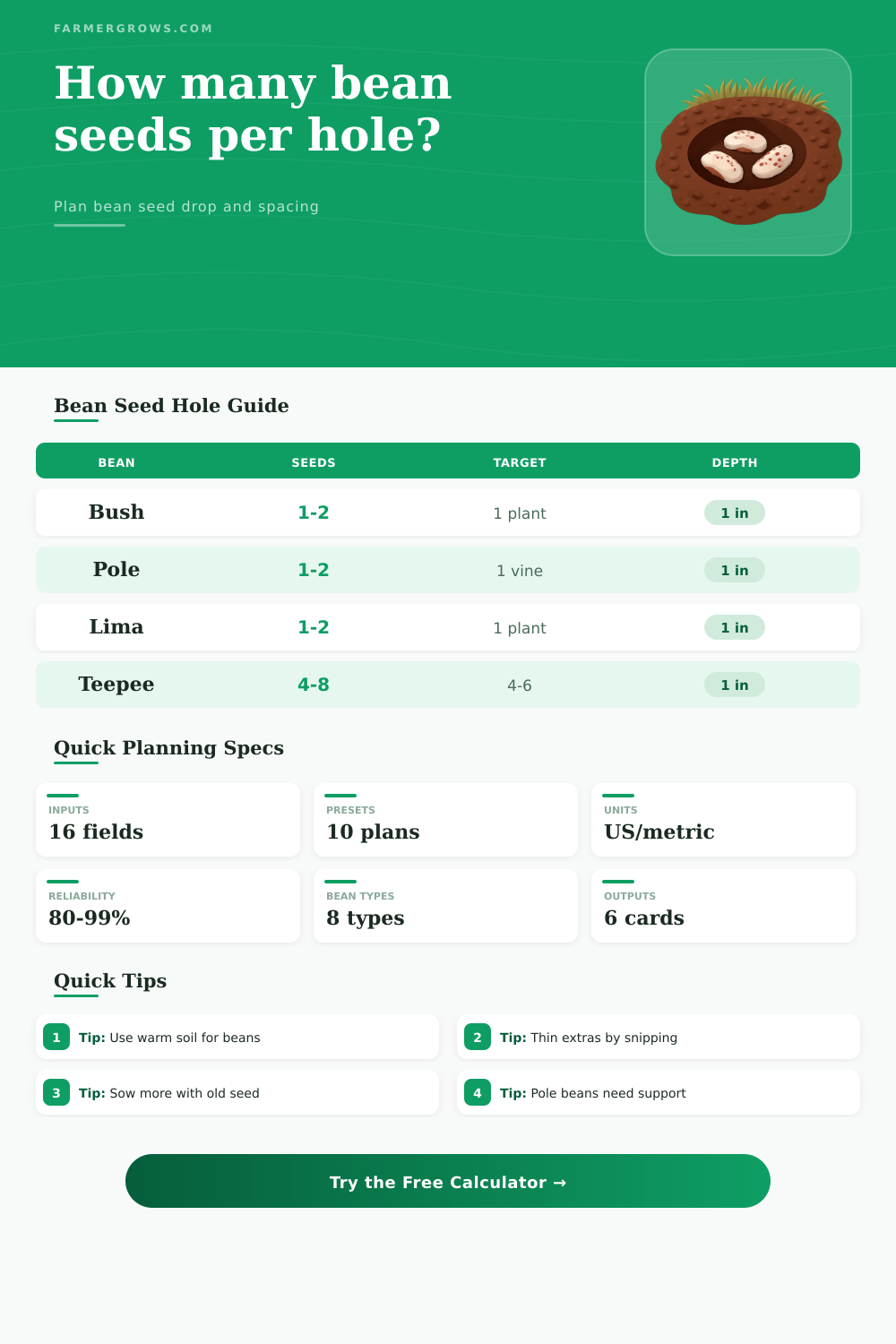
| Bean plan | Common seed drop | Final target | Typical spacing | Depth |
|---|---|---|---|---|
| Bush snap beans | 1-2 seeds | 1 plant | 4-6 in | 1 in |
| Pole snap beans | 1-2 seeds | 1 vine | 6-8 in | 1 in |
| Dry bush beans | 1-2 seeds | 1 plant | 3-5 in | 1-1.5 in |
| Lima beans | 1-2 seeds | 1 plant | 6-10 in | 1-1.5 in |
| Fava beans | 1-2 seeds | 1 plant | 6-8 in | 1.5-2 in |
| Teepee or hill pockets | 4-8 seeds | 4-6 vines | 30-48 in groups | 1 in |
| Live seed odds | 1 seed succeeds | 2 seeds succeed | 3 seeds succeed | Best bean use |
|---|---|---|---|---|
| 95% | 95.0% | 99.8% | 99.99% | Fresh seed in warm soil |
| 85% | 85.0% | 97.8% | 99.7% | Normal direct seeding |
| 75% | 75.0% | 93.8% | 98.4% | Cool or uneven beds |
| 65% | 65.0% | 87.8% | 95.7% | Old seed or crusting risk |
| 50% | 50.0% | 75.0% | 87.5% | Test the seed lot first |
| Layout | Dimensions | Row spacing | Hole spacing | Approx holes |
|---|---|---|---|---|
| 4 x 8 ft bush bean bed | 8 ft x 4 ft | 18 in | 5 in | 51 |
| Pole bean trellis row | 12 ft row | Single row | 6 in | 24 |
| Dry bean block | 20 ft x 4 ft | 15 in | 4 in | 150 |
| Lima bean row | 18 ft row | 30 in | 8 in | 27 |
| Teepee pockets | Manual groups | 36-48 in | Group count | 4-12 |
| Condition | Depth tendency | Emergence effect | Calculator setting |
|---|---|---|---|
| Warm loose soil | 1 in | Fast emergence | Higher field factor |
| Cool spring soil | 0.75-1 in | Slower, more misses | Lower condition factor |
| Dry surface soil | 1-1.5 in | Moisture seeking | Watch crusting |
| Heavy clay | 0.75-1 in | Push can be uneven | Use lower emergence |
| Fava beans | 1.5-2 in | Large seed handles depth | Set depth separately |
Use warm soil as the real trigger. Beans can rot or stall in cold wet beds, so a later sowing with fewer seeds often beats an early sowing with many backups.
Thin for airflow and support. Extra seedlings are insurance, not the final plan. Keep the strongest vines and match crowded pole beans to a sturdy trellis.
The weather breaks and soil starts warming, so you decide it’s time to sow those beans. With confidence, you drop in the seed, trusting that they will sprouts. Days turn into weeks, and then you go out to check on things. A neat row of baby green plants? No. There are gaps where nothing grew at all. Maybe groups of three tiny stems struggles to fill empty spots in the row, each claiming to be the one plant. Ugh. What was supposed to be an easy crop has become a guessing game.
Usually it isn’t about you having any less of a green thumb; it’s just poor math masquerading as instinct. Because beans are big seeds (unlike lettuce or carrots), they’re not ones that you can toss around by the handful and expect everything to work out naturaly. Planting too little means accepting holes in your ground and wasting precious growing time. Planting too much can result in a jumbled mass that you then has to spend hours carefully thinning out. Sometimes, this mean ripping at the roots of desired plants in the process. Every seed is an investment of growing space and soil resources.
Stop Guessing: How to Plant Beans Correctly
You enter your soil conditions and bed dimensions into the calculator and let it do the math for you. You will no longer have to guess the odds of emergence and germination rate. Sounds like overkill on vegetable-planting, doesn’t it? But think about it: Seed packets are a bit of a sell. They promise 85 percent germination under optimal lab conditions. That’s not your garden. Maybe the soil’s still cold. Or maybe it rains this spring and crusts over. All those factors reduces your emergence rate in real life a lot.
Plant one seed per hole assuming perfect circumstances…and then you’ll probably have a spotty stand. We tend to believe what’s written on the seed packet label, it is not the reality of our soil. So the tool adjusts for reliability targets and field emergence. It says you may want to plant two seeds per station, even though you’ll need to thin later, just so that you know at least one emerge.
Thinning is A skill that most gardeners fear. Pulling out the extra sprouts messes around with the tender roots of the one that will remain, and besides, you can’t just pull them out anyhow. To remove them safely, use your fingers or scissors to cut the weaker-seeming seedling down at ground level. Its root system won’t be disturbed. Now it has room to grow without competition. Knowing that makes it easier to plant more than one seed, and knowing why, too. You’re not causing trouble; you’re insuring yourself in case things don’t go right.
The table below shows how different types of beans should of been treated. Pole beans takes up more space different than bush beans do, for example. You can also plant multiple vines on a teepee.
Another invisible variable is the soil temperature. Beans are a warm-season crop, and they don’t like to sit in cold, wet soil. Germination gets slower and the seeds is more prone to rotting or other fungal problems if the soil’s still cool in spring. In these cases, it’s dicey going with just one seed per hole. The calculator will show you how to lower your emergence factor and what impact that has on the outcome. Maybe it says add a buffer seed; maybe it says increase the total number by a bit to make up for the tougher growing conditions. This isn’t because you’re wasting more of something, but because the colder soil require a greater margin of safety. When the ground heats up again, one per hole can be just fine, though. But when it comes time to plant early, do things different.
All of this adds up to one thing: Gardening is an exercise in variables that we don’t always get to choose. We can’t will the sun to come out when it wants, or make the rain go away when we need it to go. But what we can do is decide how much seed to sow, and where. Moving past guessing and into a clear strategy (one rooted in probability and space), takes the angst out of sowing. What we learn to rely on is planning, not hope, and in that way we’re no longer wishing upon a star; we’ve got our hands in the dirt.
Full rows of beans are great, sure, but even better: a garden that doesn’t feel like a happy accident. There’s more satisfaction in eating those freshly picked beans in high summer knowing you didn’t leave any of your harvest to chance. The work we did first, before we got our hands dirty, the tedious math of it all, is what gave each of those seeds its best possible chance to become a meal.