Barn Door Size Calculator
Size sliding or swinging barn doors from rough opening width and height, overlap, track clearance, stiles, rails, panel count, equipment clearance, animal clearance, and wind bracing allowance.
Enter the rough opening, choose sliding or swinging hardware, then tune overlap, track clearance, board width, rails, stiles, panel layout, and the minimum clear opening needed for animals or equipment.
Barn Door Size Results
Enter the rough opening and door style to size the slab and hardware space.
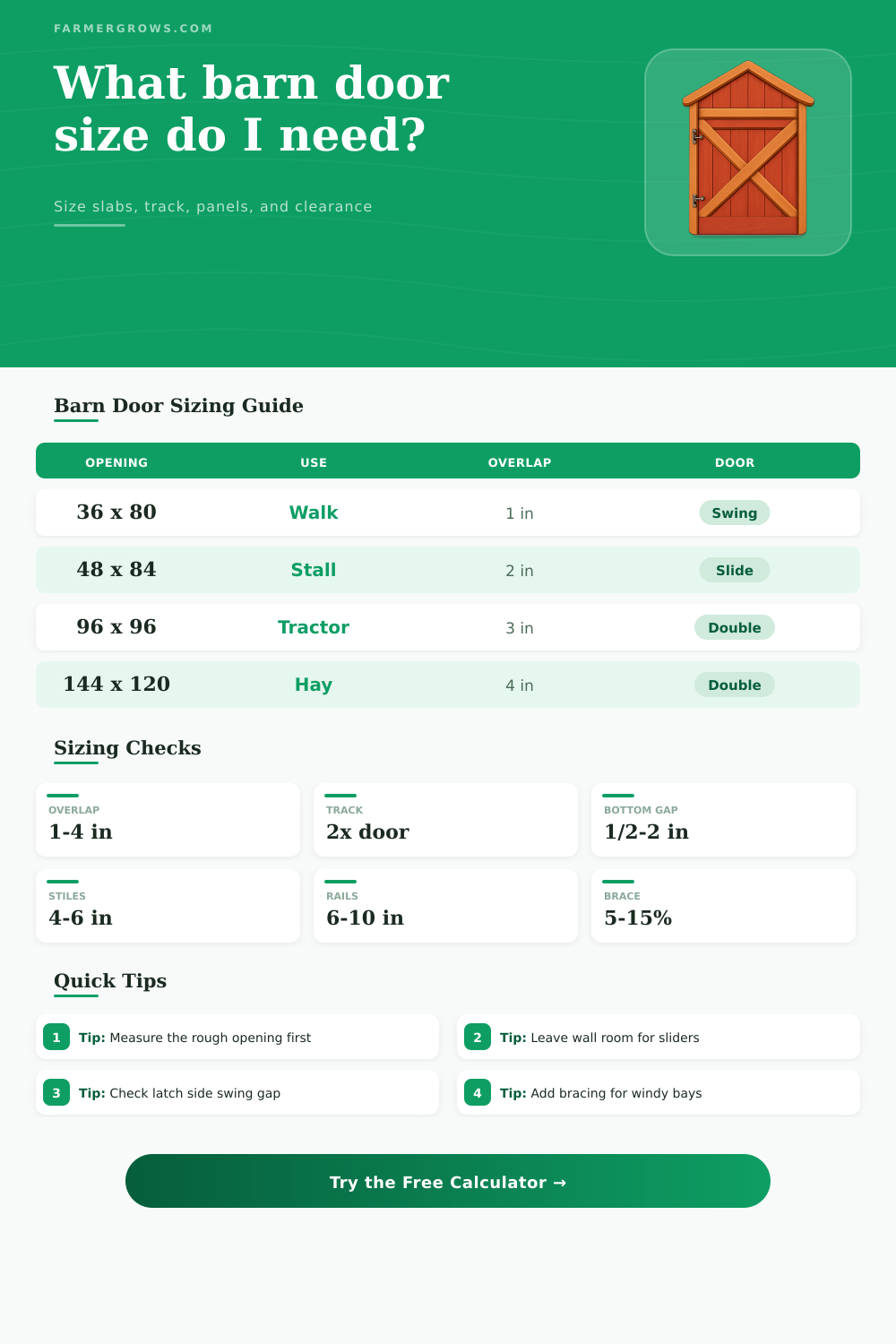
36 x 80 in opening
Single swing or slider
People42 x 78 in opening
Goats, sheep, carts
Light48 x 84 in opening
Sliding door common
Stall108 x 108 in opening
Double slider common
Machine| Door type | Leaf width formula | Leaf height formula | Best field use |
|---|---|---|---|
| Single sliding | opening width + 2 x side overlap | opening height + top overlap - bottom gap | Horse stalls, tack rooms, shed entries. |
| Double sliding | opening width / 2 + 1.5 x side overlap | opening height + top overlap - bottom gap | Wide bays where each leaf parks to one side. |
| Single swinging | opening width - 2 x reveal gap | opening height - top reveal - bottom gap | Small rooms, poultry houses, garden sheds. |
| Double swinging | (opening width - 3 x reveal gap) / 2 | opening height - top reveal - bottom gap | Traditional pair doors and animal pens. |
| Check | Rule used | Why it matters | Field note |
|---|---|---|---|
| Single sliding track | 2 x leaf width + side travel clearance | Lets the slab fully uncover the opening. | Confirm wall space beside the opening. |
| Double sliding track | opening width + 2 x leaf width + side travel clearance | Gives both leaves enough travel and stop space. | Use heavier header backing on wide openings. |
| Swinging header | rough opening width plus casing allowance | Track is not required, but frame stays square. | Check hinge blocking and latch-side reveal. |
| Hardware line height | opening height + top overlap + track clearance | Checks if the barn wall has room above the opening. | Some rollers need more than the default 6 inches. |
| Clear opening | rough opening minus stops or hinge swing limits | Compares real passage to animal or equipment need. | Measure handles and guides that project into the path. |
| Material item | Calculator formula | Count or length | Planning note |
|---|---|---|---|
| Panel boards | ceil(inner leaf width / board face width) x leaves | Board count | Use actual coverage, not nominal board width. |
| Vertical stiles | (outside stiles + panel dividers) x slab height | Linear length | Panel dividers use the same width as stiles. |
| Horizontal rails | (rows + 1) x leaf inner rail span x leaves | Linear length | Top and bottom rails plus row dividers. |
| Diagonal wind brace | leaf diagonal x leaves x wind allowance | Linear length | Add more when a door faces prevailing wind. |
| Use case | Common opening | Door style | Clearance concern |
|---|---|---|---|
| People and tack room | 32 to 42 in wide, 78 to 84 in high | Single swing or single slider | Wheelbarrows and saddle racks often need more than a house door. |
| Goats, sheep, calves | 36 to 48 in wide, 72 to 84 in high | Swinging or sliding | Keep latches reachable and protected from rubbing animals. |
| Horse stall front | 48 to 60 in wide, 84 to 96 in high | Single sliding | Bottom guides should not catch hooves or bedding. |
| Compact tractor or ATV | 84 to 120 in wide, 96 to 108 in high | Double sliding | Include mirrors, ROPS, implements, and snow buildup. |
| Hay or machine bay | 120 to 180 in wide, 108 to 144 in high | Double sliding or large pair swing | Wind load and header stiffness matter more on wide slabs. |
This calculator gives planning dimensions. Confirm local loads, hardware ratings, latch details, guide style, and framing capacity before building a large exterior barn door.
Getting the size of a barn door correct are an important task and one that is necesary before cutting a single board for the barn door. Small mistake made in measuring the size of a barn door will cause problems every time that the door is used. Many people will measure the rough opening in which the barn door will sit, order a door slab and track based on these measurement, but often find that the barn door bind on the floor or does not allow for proper clearance between the door and the barn structure.
This calculator will provide the number necesary to create a barn door that have the correct size and allows for proper clearance of all component of the barn door. You will need to enter the framed width and height of the opening into which the barn door will be installed. You will also need to select whether you would like to use sliding hardware or swinging hardware.
How to Measure and Size a Barn Door
Based on your selection, the calculator will allow for adjustment to the overlap, the bottom gap, and the track clearance. Based on these parameters, the calculator will provide the size of each slab needed for the barn door, the length of the track in which the barn door will slide, and the number of barn door board that will be required for the panels. Finally, the calculator will ensure that the sized opening will allow for your largest animal or equipment to pass through the opening.
The formulas that is used in this calculator are the same as those used by the carpenter in the field. Thus, if you build the barn door according to the specifications from the calculator, the measurement will match those that are built. Many people will begin to measure the opening between the post in the barn.
In this case, the opening will be measured. However, the opening that is measured is not the same than the size of the barn door. If the barn door is a sliding door, the width of the opening has to be increased on each of the sides of the opening in order to allow the barn door to clear the jambs of the opening.
If, however, the barn door is a swinging barn door, then there must be a gap in the door to allow for the door to not bind to the barn structure when the wood within the barn door swell. This calculator accounts for these difference and removes any guesswork in determining the size of the barn door slab. The overlap of the barn door is another measurement that many individual will underestimate when constructing a barn door.
Nevertheless, this is a critical measurement to ensure that the barn door will be functional. An overlap of one inch, for instance, will increase the size of the barn door if other gap are included for the bedding of the door on the floor and to hide any daylight under the barn door. Additionally, if the barn door is a double barn door, then the meeting edge of those two barn door will need to feature an overlap to prevent wind from passing through the center of the double barn door.
The overlap can be adjusted with this calculator, and the calculator will calculate the track length accordingly. The length of the track for the barn door is another measurement that people will be surprised at the size of the track. Each panel of a single barn door will require approximately twice the width of the barn door panel in length for the track.
If, however, the barn door is a double barn door, then the length of the track will be greater than that of a single barn door to allow each of the two panel to park in its proper location. Any obstruction beside the barn door will prevent the barn door from being able to park in its fully open position. Thus, the calculator will let the individual know if the length of the track is appropriate for the amount of space beside the barn door.
The frame members that will make up the barn door are important to the size of the barn door. The width that is made available for the panel boards of the barn door is dependent upon the size of the stiles and rail that will make up the frame. Thus, if the stiles are made wider with the intention of increasing the size of the barn door, then there will be less space for the panel boards and an increase in the number of barn door board that are required.
An input for wind bracing will prevent the large barn door slab from flexing in the wind. If the barn door is to be built as a sheltered stall door, then a low percentage can be entered for the amount of wind bracing that is desired. However, if the barn door is to be built as a machine bay door that face the pasture, for instance, then an increase in the amount of wind bracing will ensure that the door does not flex in the wind.
The diagonal length of the barn door will be multiplied by the factor that is entered to determine the length of the bracing that should of been ordered. The final parameter is the amount of clearance that is provided by the barn door. This calculation will determine whether the opening of the barn door will allow for the largest animal or object to move through the opening.
Any negative margin for clearance will require an adjustment of the width of the opening or the change in type of barn door. While the calculations performed in this calculator are reliable, there are some complication about the barn that the calculator cannot see. For instance, if the barn floor slopes down in a specific direction, then adjustments may need to be made to the bottom gap of the barn door.
Snow drifts may also prevent a barn door that has a low track from moving in its required path. Additionally, the animals that live in the barn may rub against the latches for the barn door or even eat the bottom rail of the barn door. The header panels may also sag when the door is hung from the header.
These specification are to be determined when the barn door is to be constructed, but when building the barn door, it is also important to walk the site to make sure that the measurements calculated by the calculator will also match the measurement of the constructed barn door. Regardless of whether you are constructing a single barn door for a stall or a pair of sliding barn doors for a hay barn, the same logic will apply. First, measure the opening of the barn door.
Next, decide in what manner the barn door will move. Finally, use the calculator to determine the sizes of each of the board that are to be constructed and the size of the track for the sliding barn doors. Thus, regardless of the size of the barn door, when the calculations are followed, the barn door will open and close smooth and will be out of the way when needed.