
You might buy an avocado tree, wait, and sometimes never get any fruit on it, only bare branches in springtime. Chances are it’s not your fault (and no, you didn’t buy from a “bad” tree), nor was it bad luck. Instead, it’s typicaly just a matter of timing.
Avocados has their own internal clocks telling them when to be ready as pollinator and when to let go with pollen themselves. Get to know the clock, and you will go from a sorry-looking branch to bearing success. How? That is how system works: The daily cycle turns based off what kind of tree(s) you have.
Why Your Avocado Tree Has No Fruit
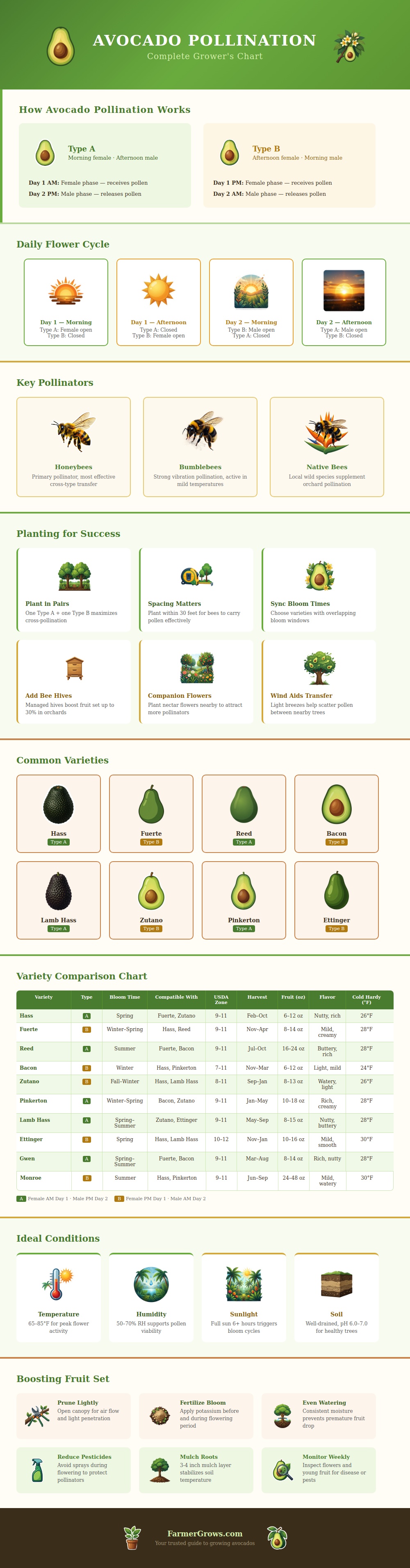
With Type A trees, flowers open first thing in the morning to accept pollen, then close again until late afternoon (releasing pollen in between). With Type B trees, opposite happens: They open up after lunchtime to accept pollen, and the next morning they release it.
That staggered pattern means that there’s a built-in bottleneck; if all you have is one kind of tree, there could be pollen available right at the time when flower is closed. Even if your neighbor has same tree, the pollen might arrive while your flower is closed. So yeah, it’s a little bit of a logistical detail, but hugely important to fruit set.
But cross-pollination isn’t necessarily about being located next door to someone. It is more a matter of timing. You might plant two trees, both Type A or both Type B, that bloom at roughly the same time. This means during their peak, when one is shedding pollen, the other are ready to recieve it.
Though honeybees are good pollinators, there are no miracles here: If the flower is shut to them, they can’t move any pollen. Getting the most overlap between male and female phases mean planting compatible pairs. In warmer regions, for instance, Type A common varieties like ‘Hass’ paired with another common Type B variety like Bacon or Fuerte would of been a good match.
Which trees will play nicely together? How do you know without guessing? The chart lays it out.
The finicky flower parts also depend heavily on weather. Temperature extremes… Whether too warm (over 85 degrees) or too cold (during blooming time), will cause avocado flowers to close up shop altogether. Humidity also help the pollen stay alive, which can be blown off by strong wind before reaching its match. Finally, the pollination process will go haywire if there’s too much hot-and-humid midday action in springtime where you live.
That’s why some Type A trees has trouble setting fruit during intense midday heat waves: the pollen simply doesn’t gets distributed well before the flowers snap shut again. Moderating microclimates with shade cloth or careful placement of plants can make all the difference in keeping those love-making parts working.
Weather and genetics aside, you also want to promote presence of pollinators who do appear. To be clear: nectar-loving bees don’t just like avocados, they crave them. The more food around them, the more inclined those bee will be to spend their days in your yard, not buzzing off to the next field across town.
If you grow companion flowers that match timing of your avocado’s blooms, then you give the bees a reason to stick around. In other words, you’re creating a place where getting pollinated happens all the time, rather than hardly ever. Don’t spray any pesticides during this time. Killing off the insects you want will ensures you have another year of leafy branches with no fruit on them.
Consistent watering will also affect flower production from that point onward. Trees are smart; when there’s an abrupt change in dryness (such as during a drought), they’ll shed blossoms. They do this to save water, knowing that they can’t waste important resources growing fruit if their own roots aren’t getting well hydrated. That’s why mulch is such an important factor. It holds moisture in the ground and stabilizes soil temperature, making the tree confident enough to hang onto its flowers. The whole tree must feel secure enough to spend energy producing fruit, versus defending itself against other ills.
The best combinations begin with selecting the right varieties, varieties whose blossoms will overlap so they provide a staggered window to harvest, but also ones that is suitable to our climate zone. This means having an ever-changing supply of avocado month after month rather than week after week after week. It’s all about coordinating geography and biology. So when it lines up, those narrow windows open for only minutes or hours in the early morning and late afternoon, but are just the beginning of a highly productive season.