Begonia Bulb Bloom Time Calculator
Estimate when tuberous begonias will sprout, harden off, move outside, and show first flowers based on start date, frost date, growing warmth, tuber size, and variety style.
Begonia "bulbs" are usually tubers. This planner estimates timing for tuberous begonias grown in pots, hanging baskets, window boxes, or shaded beds where frost timing and indoor warmth strongly affect bloom date.
Begonia Bloom Schedule
Timing estimate for tuber sprouting, transplant readiness, and first flowers.
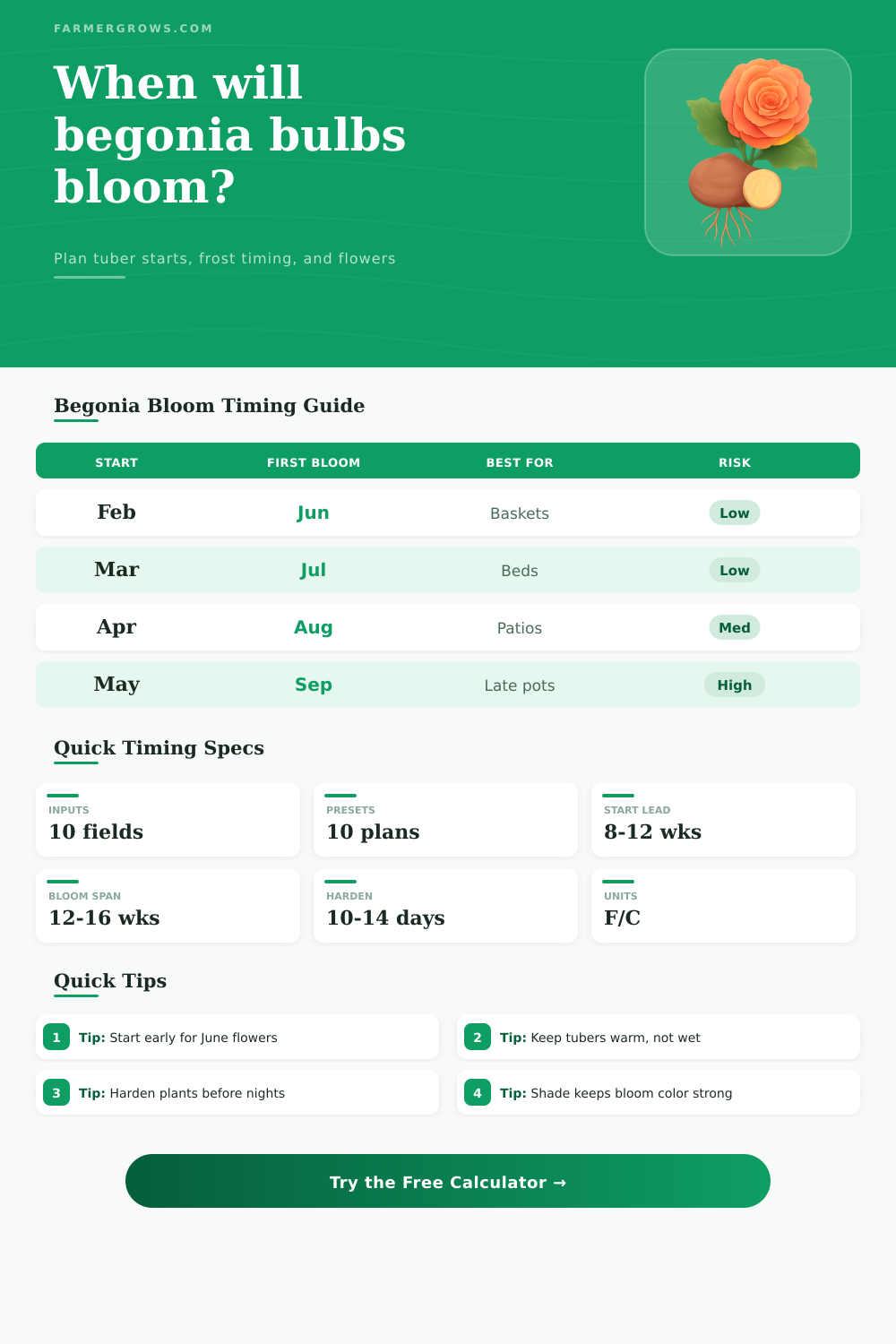
| Start month | Usual first bloom | Best use | Timing note |
|---|---|---|---|
| February | June | Show baskets, early patios | Needs bright indoor space and careful watering |
| March | Late June to July | Most northern containers | Good balance of early bloom and manageable plants |
| April | July to August | Shade beds, backup pots | Works where frost ends late or indoor space is limited |
| May | August to September | Late patios, frost-free areas | Bloom may be short in cool fall climates |
| Average start temperature | Sprout pace | Bloom effect | Watch point |
|---|---|---|---|
| Below 60 F | Slow, 35 to 45 days | Adds 10 to 18 days | Avoid wet mix around dormant tubers |
| 60 to 64 F | Moderate, 28 to 35 days | Adds 4 to 9 days | Use patience before watering more |
| 65 to 75 F | Steady, 18 to 28 days | Baseline estimate | Bright indirect light after shoots appear |
| Above 78 F | Fast but stress-prone | Can be early, not always better | Prevent lanky growth and dry pots |
| Begonia style | Bloom habit | Timing adjustment | Best placement |
|---|---|---|---|
| Upright tuberous | Large, showy blooms | Baseline | Protected porch pots and shade borders |
| Trailing basket | Arching stems with many flowers | Add 3 to 6 days | Hanging baskets with morning light |
| Large double flower | Big blooms, slower build | Add 5 to 10 days | Display containers out of hard wind |
| Multiflora compact | Smaller blooms, more flower count | Subtract 4 to 7 days | Window boxes and smaller patio pots |
| Nonstop style | Container bloom focus | Subtract 2 to 5 days | Bright shade containers and tubs |
| Schedule task | Calendar target | Why it matters | Calculator field |
|---|---|---|---|
| Wake tubers | 8 to 12 weeks before frost | Gives roots and shoots a head start | Start date |
| Watch for shoots | 2 to 6 weeks after start | Confirms the tuber is active | Sprout window |
| Begin hardening | About 10 to 14 days before move-out | Reduces shock in wind and outdoor light | Hardening days |
| Move outside | After frost and mild nights | Begonias are tender and dislike cold soil | Frost date and night temp |
| Expect first flowers | 12 to 16 weeks after start | Shows whether a target event date is realistic | Bloom goal |
Before sprouts appear: Keep the tuber barely moist in a warm spot. Overwatering a dormant tuber is one of the fastest ways to lose the bloom schedule.
Before moving outside: Harden plants gradually and keep them out of cold wind. Begonias bloom best when the transition is steady, shaded, and frost-free.
It’s late february, the type of panic time when you look at A shriveled-up begonia tuber and think: It’s DEAD. Or maybe not? It is a sleepy thing. I want to have flowers by Memorial Day. So which is it? There is a push-pull between botany and impatience.
It’s springtime, but still months off. Most gardeners simply treat tuberous begonias as though they were “normal” bulbs, digging them out in fall and replanting them come spring. But tuberous begonias don’t do that; they are tender tropicals with no taste for chilly ground. Plant too soon, and they rot; too late, and by the time frost ends the show you’ll enjoy only three weeks of bloom.
How to Grow Tuberous Begonias Successfully
The secret lies in knowing what exactly is happening all those dormant days indoors. Plug in what sounds good to you and your local frost date into the calculator above, and it will do the math. No more guesswork on whether March is pushy enough for where you live. It factors in things that other guides don’t.
It considers the temperature of the room where tubers sits until they are ready. A cool basement will prolong dormancy, while a heated greenhouse bench will speed things right along. A difference of sixty or seventy days changes the first bloom day by a month or so. That’s the part where everyone goes wrong. They assume it’s all about light; it’s really about warmth. There are no leaves to do their work till the tuber gets steady heat. Photosynthesis doesn’t count without leaves.
The timeline also shifts depending on the variety you choose. Double-flowered giants spends time gathering energy to produce these big blooms. Compact multifloras, it seems, just blow up in an instant and are colorful practically immediately. The tool takes all of those biological facts into account. For instance, it will tell you that if you sow a big show begonia in April, you’ll be looking at leaves when your fellow gardeners’ baskets is filled with hot-colored blooms of red and pink.
Trailing varieties introduce an additional wrinkle, since they grow more vigorously before flowering. That means you need a little more time to get them rooted without them getting long and thin. You get bigger blooms or faster, but not both. It is a tradeoff.
That’s usually where the schedule goes awry: the part about hardening off the plant. Tubers will sprout just fine in your house, but they will go into shock when moved outside if they’re set out there too soon. Make the transition gradually. Give those tender shoots time, two to ten weeks… To get used to direct sun and wind. Otherwise, they will flop over when stressed outdoors, throwing the bloom clock way back weeks.
The page’s reference table explains it all. It illustrates why starting with a late May date postpones flowering until September, and then what? There is not enough time in most climates. You don’t want to hurry the end game, you want to make the most of that summer show.
Managing water in the sprouting period is crucial. Don’t treat your dormant tubers like they’re swimming. A dormant tuber needs barely moist media, not a swamp. Water too much, and you’ll lose your investment faster than anything else. After the sprouts come through, begin to add water slowly as leaves emerge. The calculator doesn’t monitor water levels. However, it provides the dates so you can tell when to move from cautious to caring.
When will sprouting occur? When should you harden them off? When will you finally transplant them outdoors? It’s not just about flowers; it’s about a long season of color. Get your roots started (but don’t risk any cold shock), eight to 12 weeks before final frost. Can’t make that time frame? Don’t freak out. Accept a slightly later peak (or go fast with some varieties) and you’ll still get bloom.
Remember: Tubers need warmth to wake up, light to grow, and patience to live. That lump of brown in February? Just waiting for you to get the timing right, and the math’s flexible if you have too-high hopes.