Canna Bulb Bloom Time Calculator
Estimate when canna rhizomes will send up shoots, open the first flower, and need lifting before frost based on soil warmth, pre-sprouting, depth, eyes, sun, and growing site.
Bloom Timing Breakdown
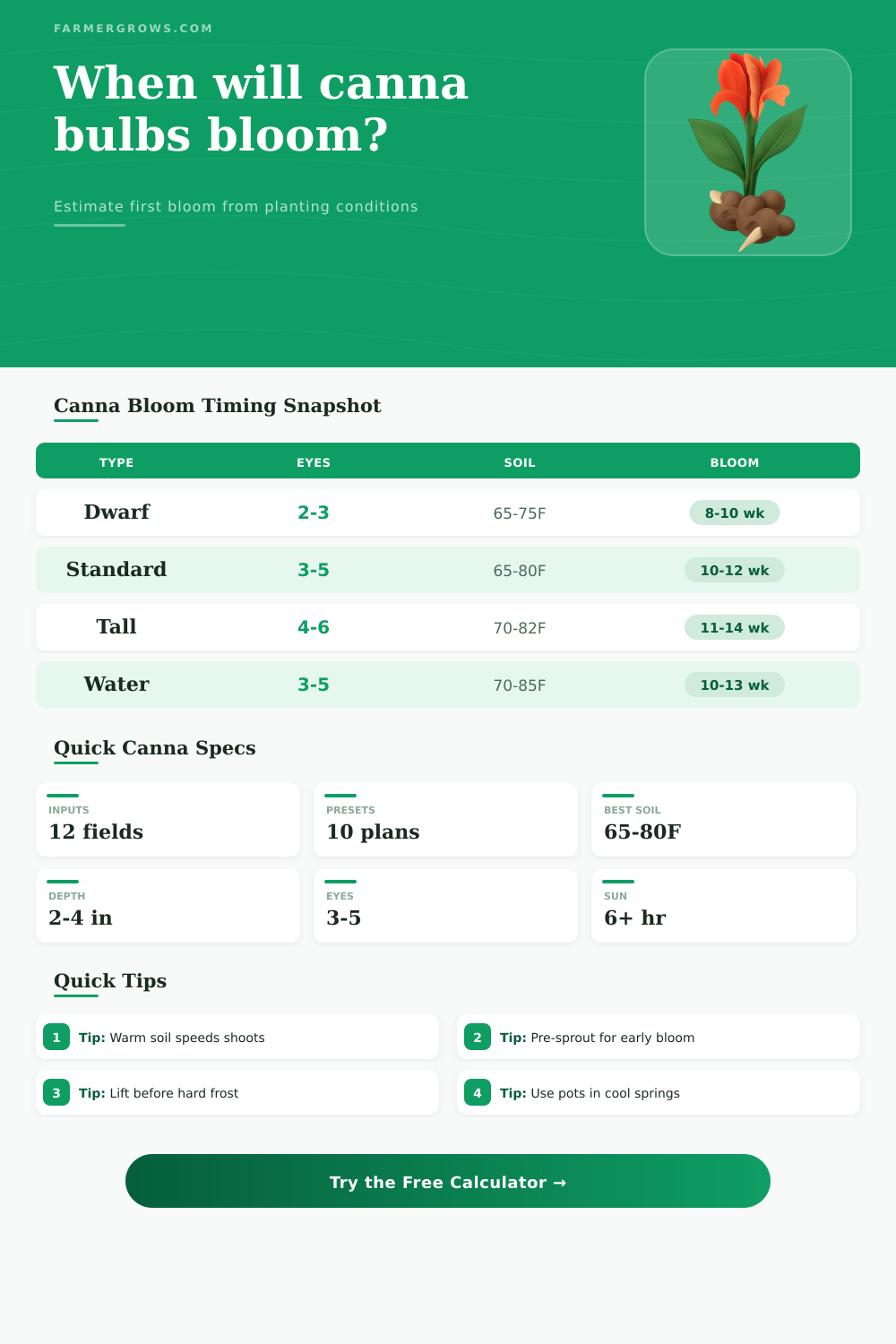
| Canna type | Best rhizome start | Soil temperature | Typical first bloom |
|---|---|---|---|
| Dwarf border canna | 2 to 3 firm eyes | 64 to 78°F | 8 to 10 weeks in warm beds or pots |
| Standard garden canna | 3 to 5 visible eyes | 65 to 80°F | 10 to 12 weeks from outdoor planting |
| Tall tropical canna | 4 to 6 eyes on a large division | 70 to 82°F | 11 to 14 weeks, faster if pre-sprouted |
| Foliage-heavy hybrid | Large stored rhizome with active points | 68 to 82°F | 12 to 15 weeks because leaf mass comes first |
| Water canna or pond margin | 3 to 5 eyes in a basket or bog pot | 70 to 85°F | 10 to 13 weeks once water is warm |
| Seedling or small liner | Rooted young plant, not dormant bulb | 70 to 80°F | 14 to 18 weeks depending on plant size |
| Soil temperature | Rhizome response | Sprout estimate | Bloom effect |
|---|---|---|---|
| Below 55°F | Rhizomes sit nearly dormant and may rot if wet | 3 to 5 weeks | Add 3 to 4 weeks |
| 55 to 59°F | Slow rooting, common in early spring beds | 2 to 4 weeks | Add about 2 weeks |
| 60 to 64°F | Safe but not fast for tropical growth | 12 to 21 days | Add about 1 week |
| 65 to 72°F | Good balance of rooting and shoot extension | 7 to 14 days | Normal timing |
| 73 to 80°F | Fast tropical growth with steady moisture | 5 to 10 days | May trim a few days |
| Above 85°F | Fast but can stress dry containers | 5 to 9 days | No gain if roots dry out |
| Condition | Best use | Timing change | Watch point |
|---|---|---|---|
| Pre-sprouted rhizome | Short seasons and cool spring gardens | Often 2 to 3 weeks earlier | Harden off before full sun and wind |
| Container start | Patios, cold climates, prized divisions | About 1 to 3 weeks earlier | Large pots need steady water and feed |
| 2 to 4 inch depth | Most outdoor canna beds | Baseline timing | Set eyes upward and avoid deep burial |
| Over 5 inch depth | Loose soil or very hot beds only | Add 1 to 2 weeks | Deep cold soil delays emergence |
| One weak eye | Small saved pieces | Add about 1 week | Flowering may wait for more leaf area |
| Five plus eyes | Large divisions for display beds | Can trim several days | Divide if crowded or old center is woody |
| Fall condition | Action timing | Storage target | Reason |
|---|---|---|---|
| No frost expected | Leave growing while warm | Keep watered and fed | Warm zones can bloom for months |
| Light frost forecast | Cut foliage after it blackens | Cure clumps in shade | A light nip signals dormancy |
| Hard freeze forecast | Lift 7 to 14 days before | Keep rhizomes 45 to 55°F | Frozen rhizomes turn soft in storage |
| Container canna | Move pot before freezing nights | Store dry or keep barely moist | Pots freeze faster than ground beds |
| Wet autumn soil | Lift earlier and dry carefully | Use airy peat, coir, or paper | Wet stored rhizomes rot easily |
| Short season bloom risk | Dig after frost if bloom is missed | Save the firmest divisions | Rhizome size still improves next year |
Tropical plants like cannas want heat, not springlike weather, and that’s what slows their start. Although you’ll have planted them after frost danger has passed, in reality they’re likely to appear lifeless and dormant for many weeks while other flowers comes into their own. No, they aren’t dead; they’re merely awaiting the warming of soil. Here, where human impatience meets tropical biology, we clash. Cannas don’t read calendars; only temperatures matters to them.
After entering your specific conditions, calculator does all the math for you. It’s keyed to soil temperature, not air temperature, because that is where the roots live. That makes a difference in your planting plan based off of it. Just because it might be a sunny day doesn’t mean the soil will be warm; warm soil is what wakes up the rhizome, and only then do they begins to work again. The estimate of bloom time are tied to when their roots really kick into action.
How to Grow Canna Plants
Another factor is pre-sprouting indoors. An early start with eyes means a headstart. And the math accounts for this by shaving off some of the time. Does it matter what depth they are planted? How fast will they grows? Digging deeper than about 4 inches mean they have to expend more energy pushing up, and less on flowering. Two to four inches of soil over the rhizome (not too little, not too much) will keep their eyes near surface where they can warm themselves without being dry enough to die off. Deeper planting only delays the date. The tool accounts for that; you don’t have to guesstimate whether deep planting is bad or merely prolonged. It is most often just delayed more then expected.
Speedy blooming requires sunlight. A minimum of six hours a day of direct sun is necessary for cannas. Partial shade might keep the foliage green, but it will drasticly reduce flowering time. The calculator use your sun exposure input. Without photons, the plant will be slow. How each type respond to light and heat is shown in reference table on the page. Taller ones also tend to be slower to mature, all things considered. It is often disappointing to add shade to the tall ones.
It’s affected by water management, too: Water keeps the plant’s metabolism running smoothly and maintains its bloom time. When soil dries out completely, the rhizome “stresses,” stopping growth until water comes again. Rot from overwatering are more of a risk if the soil is cool. To compensate for this, the tool take into account your pattern of moist and dry days to tweak its estimates. In areas where spring rains aren’t consistent, calculator shows how such delays may delay the start of your first flower.
Spring brings winter plans, such as when to stop feeding and start preparing for dormancy. Remember… Don’t wait till it gets really cold, or you’ll lift too soon and kill them. You should of prepared earlier. Calculate your frost date, then enter that here to find out when to dig and stash the rhizomes. They will be good for next year’s use if stored in cool air (around forty-five degrees F.). It’s all about managing the heat-and-cool time from first sprout to last frost.
I have said before: growing cannas is more about encouraging them to grow than forcing them to do so. Give them what they need (a root zone protected from shock) and a warm place in which to go to work. Trust the inner clock of the plant. If you’re willing to let it go on its own time and accept the fact that it’s a tropical plant, it will repay you with an early-summer feeling like the one you see in photo at top, but only once the conditions are right for bloom. It’s moddern plants that need this care. The luxurios colors dissapears if you dont watch them. They can absorbs more water when it is hot.