Carolina Reaper Pepper Growth Time Calculator
Plan Carolina Reaper seed starting, high-heat germination, long transplant age, first pod set, full red ripe harvest, container limits, greenhouse extension, and frost risk.
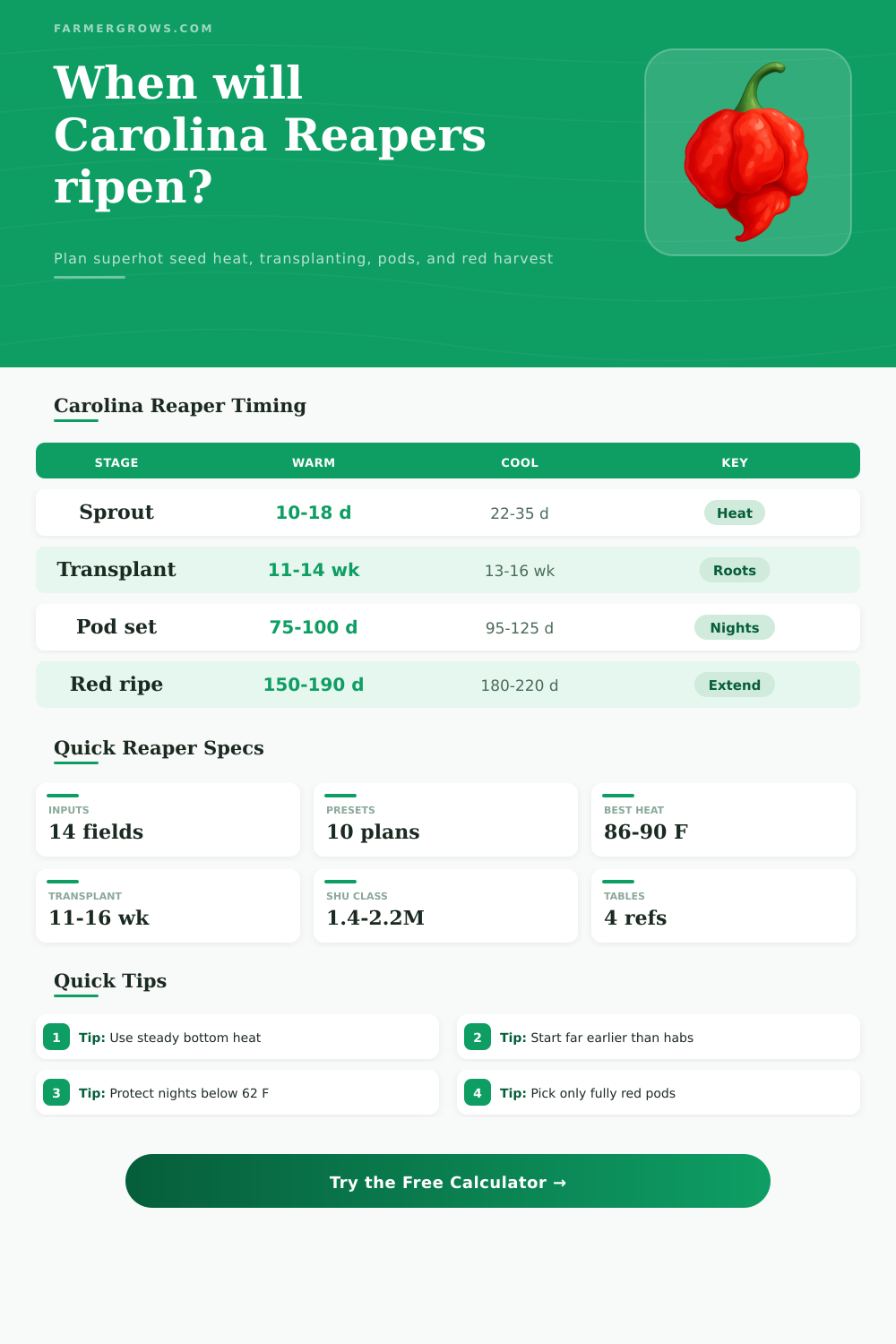
Carolina Reaper is a very long-season Capsicum chinense superhot. It usually needs a warmer seed tray, an older transplant, steadier nights, and more fall protection than habanero, cayenne, jalapeno, or many ghost pepper plantings.
📋Carolina Reaper Presets
🔥Reaper Stage, SHU, And Ripening Grid
🌶Why Reapers Need Separate Timing
Reaper seed is less forgiving of cool media than most sweet, jalapeno, cayenne, and many habanero starts.
Flowering is not enough; stable nights and active roots decide whether early blossoms become bumpy pods.
Full-size green Reapers can still need weeks to wrinkle, cork, and finish red or chocolate.
Containers, tunnels, and greenhouses can turn a green-pod crop into a red ripe harvest.
🌱Long-Season Inputs
Carolina Reaper Growth Timeline
Your calculated Reaper calendar will appear here.
📅Calculated Stage Summary
🔬Reaper Stage, SHU, And Ripening Reference
| Reaper type | Typical heat class | Transplant to ripe | Ripening cue |
|---|---|---|---|
| Classic Carolina Reaper red | About 1.4M to 2.2M SHU class | 120 to 170 days | Full red skin, bumpy shoulders, curved tail, and slight softening. |
| Bumpy tail phenotype | Extreme superhot class | 125 to 180 days | Tail and rough pod texture develop before final red color. |
| Chocolate Reaper type | Extreme superhot class | 130 to 185 days | Brown ripe color comes late and can look muddy before finished. |
| Peach Reaper type | Extreme superhot class | 125 to 175 days | Peach color must be even; pale green shoulders mean wait. |
| Yellow Reaper type | Extreme superhot class | 120 to 165 days | Golden yellow finish is usually earlier than chocolate types. |
| Seed-saving red pods | Extreme superhot class | Red ripe plus 7 to 14 days | Hold perfect pods longer on a healthy, isolated plant. |
🌡Seed Heat And Transplant Timing Table
| Seed-zone condition | Likely sprout window | Nursery response | Reaper-specific note |
|---|---|---|---|
| 86 to 90°F, fresh seed, dome vented daily | 10 to 18 days | Move to strong light at hooks | Best practical range for Carolina Reaper seed trays. |
| 80 to 85°F, fresh seed | 14 to 24 days | Keep media evenly warm | Often acceptable, but slower than ideal for Reapers. |
| 72 to 79°F room tray | 22 to 35 days | Watch damping-off risk | Too slow for dependable short-season red harvests. |
| Older seed at any temperature | Add 3 to 14 days | Sow extras and label trays | Reaper seed lots vary; patience helps avoid discarding live seed. |
| Direct outdoor sowing | Unreliable | Only for very warm climates | Usually a poor match for red ripe Carolina Reapers. |
🏡Container And Greenhouse Extension Table
| Setup | Useful extension | Container or bed target | Best use |
|---|---|---|---|
| Outdoor field row | None | Warm, mulched soil | Best in long summers with hot nights. |
| Raised bed with mulch | 0 to 1 week | 18 to 24 in spacing | Warmer roots and easier early cover than flat ground. |
| Outdoor container | 1 to 3 weeks | 7 to 15 gallons | Move before cold nights; avoid tiny root-bound pots. |
| Low tunnel or row cover | 1 to 3 weeks | Vent on hot days | Helps early pod set and protects first fall chills. |
| High tunnel | 4 to 7 weeks | Stake heavily | Strong choice for northern red Reaper harvests. |
| Greenhouse or hoophouse | 6 to 12+ weeks | Large pot or permanent bed | Best for late red pods, seed saving, and mother plants. |
🧭Superhot Comparison Table
| Pepper class | Relative season | Typical ripe cue | How Reaper differs |
|---|---|---|---|
| Habanero | Long | Orange, red, peach, or chocolate | Reapers usually need hotter starts, older transplants, and more days to red. |
| Ghost pepper | Very long | Red, peach, yellow, white, or chocolate | Reapers often set fewer pods and need more protection for a full red finish. |
| Scorpion pepper | Very long | Red or yellow with stinger tail | Reaper timing is similar, but bumpy pod fill and red ripe wait are emphasized. |
| Carolina Reaper | Extreme long | Full red or selected color, wrinkled pod, tail | Use the earliest seed start and the strongest extension plan. |
| Overwintered superhot | Shorter second crop | Early flowers on old wood | Reaper mother plants can ripen earlier if roots wake up warm. |
💡Reaper Timing Tips
Start with heat: For Carolina Reapers, a heat mat with a thermostat is not just convenience. It keeps the seed zone in the narrow warm band that prevents a month-long stall.
Protect the finish: If full-size green pods appear late, prioritize night cover, moving containers, or greenhouse space. Red ripe Reapers often need the extra weeks after frost.
Carolina Reaper cultivation is more akin to running a controlled experiment than ordinary gardening; the key is to do it in a patient, deliberate way. Most people don’t realize that’s what it takes, and they often fail because they misunderstands the timeline! I used a little spreadsheet to chart the journey from seedling to red-ripe fruit, and plot the point on your own frost date map to get an idea how well your growing season might support any heat.
The trick with Reaper is that its seeds requires high temperatures to really germinate well. This means if you’re living in an area where soil hasn’t hit seventy-five degrees, you can expect to be waiting a month or longer for those hooks to emerge. This burns up valuable days from your season before you’ve even pushed the thing aboveground.
Plan Your Carolina Reaper Garden Early
This is why the tool asks for your seed-zone temperature and allows you to adjust the sprouting window to account for it. Those couple degree of warmth are what separate getting started in January versus having to push out to March. And those couple months really matter: these things don’t rush themselves during veg, and will want to develop strong roots before they try to support any heavy fruit loads come summertime.
Another weak spot is transplant timing, which means most of us push our baby plants into the earth at first chance, once the soil warms up. Not good. It never goes superfast here (Reapers aren’t a fast grower). Plan on longer in the indoor nursery: The calculator will help you time out how long until the day you’ll be transplanting… Often extending past fourteen weeks after sprouting.
A full-grown plant with a tight mass of roots will face outside challenges far better then a scrawny thing you stuck into garden beds without any preparation. Properly hardened-off babies won’t shock your system when you set them free outdoors. You also don’t want to send them out their first day fully equipped with big leaves but roots still barely beginning to function.
Then it’s time for the real work: setting and ripening those pods. And that’s where it gets tricky. Just because a plant has flowers doesn’t necessarily mean it’ll bear any; they drop off if nights are too cold when the fruits develops. If your usual nighttime temps aren’t helpful for steady blooming, the tool assumes as much (and so should you).
It also takes into account just how long (realistically) until the first hard frost arrives in your area. That time frame is narrow if you live in a cool climate, though a greenhouse or high tunnel can add a couple of weeks to the growing season, turning an all-green-pod crop into a bumper crop of ripe red fruit.
The final hurdle is color change. A Reaper may well get all grown up in a deep green hue, then wait around for weeks not changing color at all. You’ll have better flavor and more heat if you harvest it earlier, but not as much as you will if you let the pod turn completely red at the end. The calculator will help you figure out whether your season is long enough for such patience.
If you know the first frost date will come before the pods are ready to cook themselves off the plant, the math may tell you to use some kind of protection (like row covers) or move things into pots to get another couple of weeks. It makes you face facts early in the planning game. You can’t feed a Reaper faster by watering it or fertilizing it (these are growth-supportive inputs; they don’t alter its natural schedule).
You should of planned for this. That’s why planning, making a map of what you’ll do, and when, isn’t just hopeful: It eliminates the possibility of being dissapears later on, when the reaper hasn’t yet reaped, no matter how long you wait. And that’s why planning, mapping out the who/what/when in advance of purchasing seed, isn’t optional; it’s ensuring you succeed through preparation rather than hope.
When summer turns to fall, then, what you get to do is simply be patient, using your own data to guide that process…and reap, exactly on schedule.