Purple Sprouting Broccoli Growth Time Calculator
Estimate transplant establishment, winter survival, chilling, spear initiation, first harvest, side-shoot flush length, and plant spacing for long-season purple sprouting broccoli.
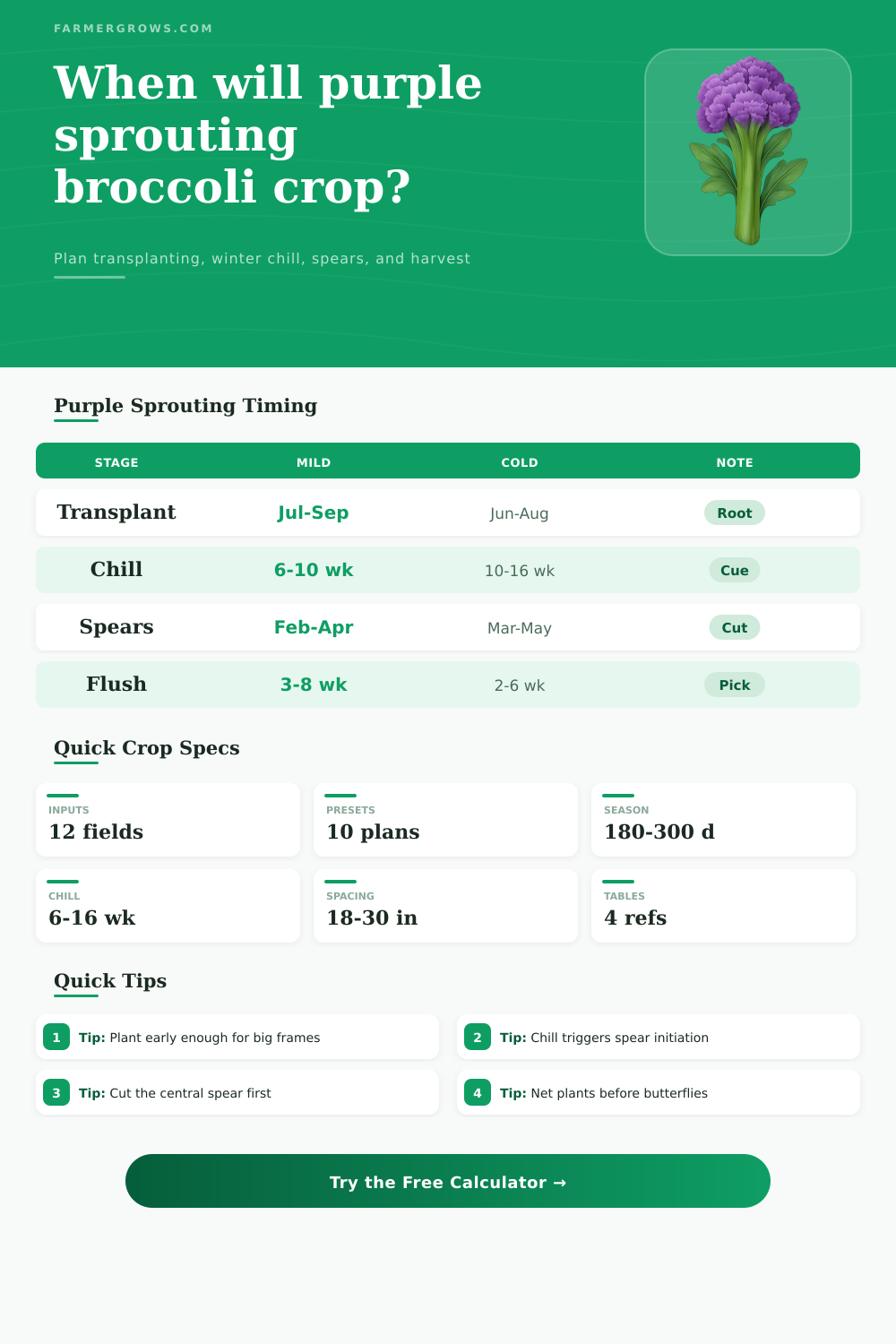
Purple sprouting broccoli is a long-season crop grown for spring spears after winter chilling. This calculator is built for purple sprouting types, not heading broccoli, broccolini, or quick summer broccoli.
Purple Sprouting Broccoli Schedule
Transplant, winter chill, spear initiation, and harvest flush timing will appear here.
| Variety type | Typical season | Winter fit | Spear pattern | Planning note |
|---|---|---|---|---|
| Rudolph or early PSB | About 180 to 230 days from transplant | Mild to cool winters with protection in colder sites | Earlier central spear followed by smaller side shoots | Best when transplanted early enough to build a broad frame. |
| Santee hybrid purple sprouting | About 190 to 240 days from transplant | Useful in mild and cool maritime beds | Compact plants with repeated purple spears | Good for smaller gardens where full late PSB is too large. |
| Claret or classic mid-season PSB | About 220 to 270 days from transplant | Strong overwinter candidate in Zone 7 style winters | Heavy central spear plus side-shoot flush | Needs enough spacing and winter leaf health for spring yield. |
| Late Purple Sprouting type | About 250 to 310 days from transplant | Best in mild climates with long spring harvest weather | Later, longer side-shoot season | Plant only where winter survival and spring space are realistic. |
| Mixed or unknown PSB | About 220 to 285 days from transplant | Use conservative hardiness assumptions | Variable spear start and flush duration | Scout individual plants; maturity can spread over several weeks. |
| Protection | Best use | Typical survival lift | Spear timing effect | Handling note |
|---|---|---|---|---|
| No cover | Mild sites, sheltered beds, hardy large plants | 0 to 5 percentage points | Normal to slightly later | Check wind rock and stake tall plants before storms. |
| Root mulch | Cold soil swings and exposed crowns | 4 to 10 percentage points | Little direct speed change | Keep mulch off wet stems if rot is a concern. |
| Frost cloth or mesh cover | Repeated frosts and butterfly exclusion | 8 to 16 percentage points | Can advance spears a few days | Vent during mild wet spells to reduce disease pressure. |
| Low tunnel or hoops | Cold gardens pushing PSB beyond its comfort range | 14 to 24 percentage points | Often advances first spears | Open when days warm so buds do not stretch and soften. |
| High tunnel or unheated greenhouse | Market growers and severe wind sites | 18 to 30 percentage points | Earlier initiation and longer harvest | Water actively because winter roots may keep growing. |
| Chill condition | Likely plant response | Calculator adjustment | Field sign | Grower action |
|---|---|---|---|---|
| Less than 6 weeks below 45°F | Weak or delayed spear initiation | Pushes first harvest later | Leaf growth continues with few visible buds | Keep feeding light and wait for a cooler cue. |
| 6 to 9 chill weeks | Early hybrids may initiate | Small delay unless variety is early | Central bud starts swelling in mild late winter | Begin close scouting and protect from hard snaps. |
| 10 to 14 chill weeks | Strong cue for many PSB types | Baseline spring spear timing | Purple buds thicken at the crown and leaf axils | Cut central spear promptly to release side shoots. |
| More than 15 chill weeks | Enough chill if crowns survive | May advance spears but increases cold-risk penalty | Damaged leaves with live central growing points | Remove mushy leaves and protect the crown. |
| Spacing | Best fit | Frame effect | Flush expectation | Harvest note |
|---|---|---|---|---|
| 15 to 18 in | Compact hybrids, small raised beds | Smaller frame and tighter picking | Shorter flush, more competition | Pick often so spears do not overmature in crowded canopies. |
| 20 to 24 in | Most garden purple sprouting broccoli | Balanced leaf frame and side shoots | Good 3 to 6 week flush in spring | Works well with every-2-day harvests. |
| 26 to 30 in | Large classic and late PSB plants | Large plants, stronger branching | Longer side-shoot season if weather stays cool | Allow room for air movement through winter. |
| 30 in plus | Market bunches and very long-season types | Maximum frame and access | Long flush but fewer plants per bed | Useful where each plant is expected to carry many cuts. |
Grow the frame before winter: Purple sprouting broccoli crops best when transplants are established and leafy before hard cold. A small plant can survive yet still give a thin spring flush.
Harvest changes the schedule: Cut the central spear as soon as it is usable, then return every 1 to 3 days. Regular picking keeps side shoots tender and lengthens the useful flush.
The purple spring broccoli seedlings are planted in the garden here with a certain expectation: summer optimism. But then you have to wait until spring takes out the winter, and then some. The crop waits patient. Impatient growers want what they want when they want it. So you set out the transplant in late August or September. And then they grows strong, leafy frames, as if ready to go. Except they don’t. Not yet. They stand idle in December and January; the rest of garden goes dormant. The crop requires patience.
Trust the biology, not cajole with heat from the greenhouse. Know why a bit of winter cold primes the harvest trigger. This isn’t a hurry-up-and-wait crop. It’s a timing crop. You cultivate it so the thing comes along just right: mature enough to withstand the frost, yet not too far along to bolt before going into reproduction mode.
Why Your Broccoli Needs Cold Weather
This longer arc is mapped by the calculator above. It links the number of chill hours required by the variety you select with actual day of your transplant date. If the broccoli is exposed to cold, most common varieties will bolt, sending up a fat flowering stalk and destroying the head in the process. Purple sprouting types are not like that. Instead, they need a prolonged period of cold to flip into their vernalization phase, when plant goes from growing leaves to making those tight purple buds we seek at harvest time.
The process is called vernalization, and it has to happen or there won’t be good yields. Without enough hours below forty-five degrees Fahrenheit, the plant get confused and keeps growing leaves instead of making bud. A milder winter may seem like a good thing. But too warm can wreck the whole crop. This doesn’t give the plant the signal to start producing spears.
Variety choice also makes a big difference. Each has their own internal clock. Some start earlier than others: for example, Rudolph starts faster (with less chilling). That makes it a safer bet if you live in a milder coastal climate where severe frosts aren’t common. Others (like Claret) need more and longer chilling before triggering strong spear formation. They’ll wait until after that cold treatment, giving you a longer season to harvest, but exposing you to greater risk if you have a particulary brutal winter. With the tool, you can weigh those trade-offs. You dial up or down the amount of winter weather you expect by entering both the coldest temps and the longest cold snap you anticipate. This helps the model predict just when side shoots will finally emerge.
A broccoli plant doesn’t know what the heck the calendar says; it’s still tallying its chill hours. Space is everything. It is one of the biggest factors in success, but many garden growers fail to understand how important proper spacing really is. Remember: You want these plants to establish strong, broad frames before hard frosts occur (or even snow). If they’re crowded, air circulation will be impaired. That means more rot and mildew will create a damp environment, weakening the plant just when it expected to survive freezing nights. When planting them at least two feet apart, they has room to grow efficiently, storing up their carbohydrate reserves for next spring.
And wider spacing facilitates easy picking: You’ll have elbowroom to reach into the center of the plant to snip out the occasional side shoot every few days. Choked beds mean competition for both nutrition and light. Spears will be thin. That flush of harvest will come to an abrupt end instead of gradually tapering off throughout April.
The goal is not so much warming the plant as protecting its form from physical damage and drying winter winds. Low tunnels or frost cloth should of significantly improve their survival rate. The leaf surface doesn’t dry out when the wind’s teeth are biting. Wind can kill plants even if the ground isn’t frozen solid. But too-tight coverings may block enough chilling accumulation for the plants to begin trying to grow. You don’t want to stop that; you just want to protect them from wind. Let the cold penetrate enough to stimulate bud formation. But don’t let it stay so cold that the plants wait weeks longer or never reach harvest. There’s a fine line to walk between exposed and covered. Don’t lean too much toward warmth.
The bottom line is that the harvest plan determines how many spears per stalk. Right away cutting back the center spear tells it “go for the sides now,” extending the season an additional few weeks. The longer you wait (and the bigger the main head gets) the less likely the side shoots will develop. You’ll have just one big dish instead of ongoing meals through springtime. Keep picking regularly and the plant stays in production mode; it will continue to branch out as long as there is still cool weather and lengthening days.
Respect this crop’s schedule and it rewards you with a colorful feast that spans the gap between summer garden overabundance and winter slumber.