Wild Garlic Growth Time Calculator
Estimate timing for ramps, ramsons, field garlic, and other edible Allium patches from seed, bulbs, cloves, or divisions through leaf emergence, dormancy, restrained harvest, and patch expansion.
This planner is for wild garlic, ramps, ramsons, field garlic, and naturalized alliums. It is not a bulb garlic, elephant garlic, or garlic scape calculator. Avoid wild harvesting where prohibited, and confirm plant identification before eating any wild allium.
Wild Garlic Growth Timeline
Your wild garlic timing estimate will appear here.
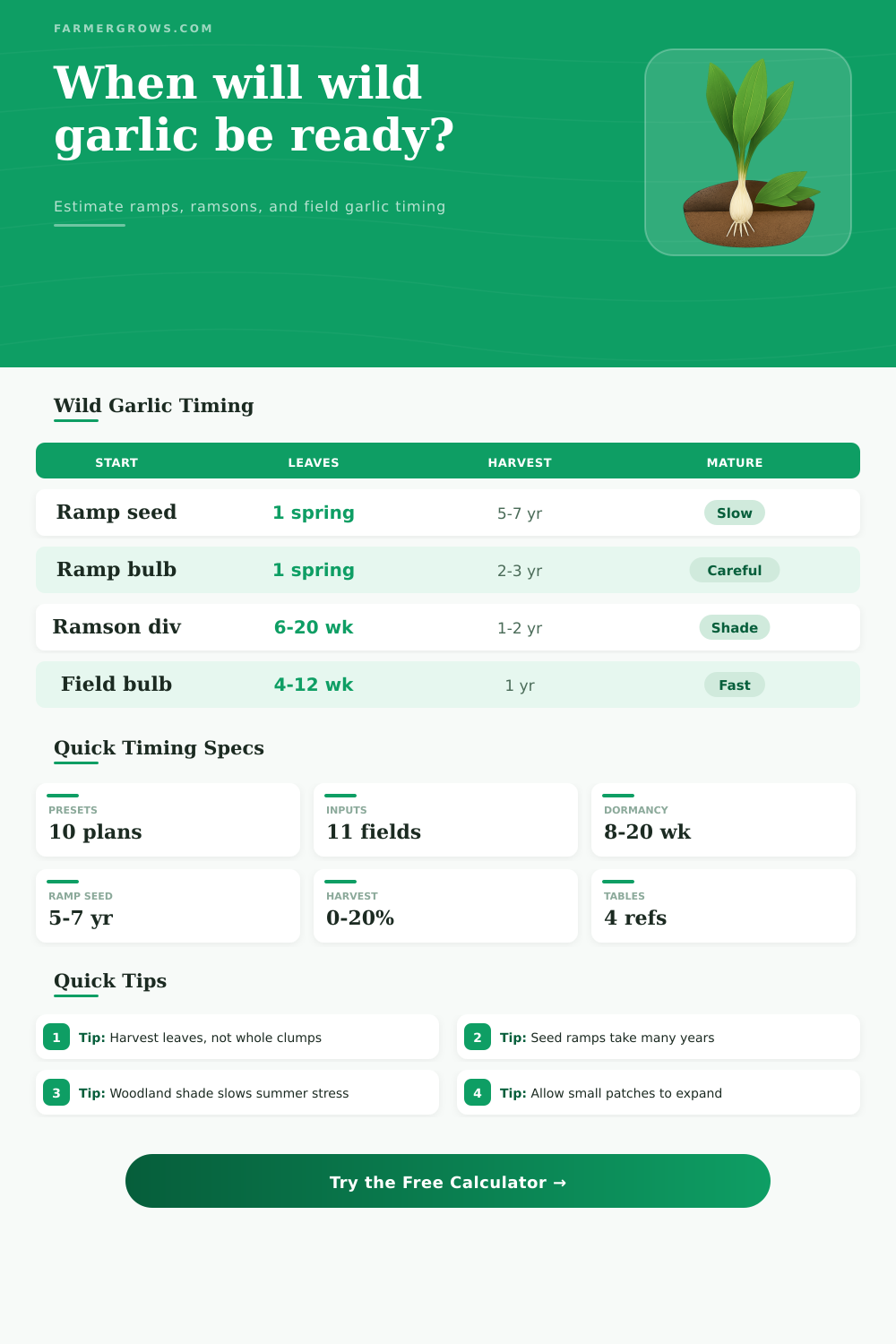
| Wild garlic type | Best start | Typical first harvest | Important timing note |
|---|---|---|---|
| Ramps / wild leek | Fresh seed, bulbs, or divisions | Seed: 5-7 years; bulbs: 2-3 years | Slow woodland perennial; harvest leaves sparingly and avoid digging small patches. |
| Ramsons / bear garlic | Fresh seed or rooted divisions | Seed: 2-4 years; divisions: 1-2 years | Spring leaves fade into dormancy after flowering and seed set. |
| Field garlic | Bulbs, cloves, or aerial bulblets | Often usable in 1 year | Fast naturalizer; edible but can spread aggressively in lawns and margins. |
| Three-cornered leek | Bulbs or divided clumps | Usually 1-2 years | Vigorous in mild climates; manage spread and local invasive rules. |
| Starting material | Leaf emergence | Reliable harvest | Patch expansion behavior |
|---|---|---|---|
| Fresh seed | Usually after seasonal dormancy cycles | Slowest; years rather than weeks | Best for long-lived restoration patches and genetic diversity. |
| Dormant bulb | Next spring in cold climates, faster in mild beds | Wait at least 1-3 growing seasons | Bulb removal sets the patch back unless offsets remain. |
| Clove or side bulb | Often 4-16 weeks depending on chill | Field garlic fastest; ramps much slower | Good for offsets, not the same schedule as culinary garlic. |
| Rooted division | Fastest if roots stay moist | Often the next season for ramsons, later for ramps | Least disruptive when divided after dormancy or early spring. |
| Site condition | Timing effect | Best use | Risk to watch |
|---|---|---|---|
| Deciduous woodland | Natural spring flush and summer shade | Ramps, ramsons, restoration plantings | Slow growth if tree roots dry the soil. |
| Shaded garden bed | Warmer soil can speed early rooting | Ramsons, divisions, monitored patches | Too much summer heat can shorten leaf season. |
| Food forest understory | Good leaf litter and moderate expansion | Mixed perennial edible beds | Competition from dense groundcovers. |
| Turf or meadow edge | Field garlic develops quickly | Field garlic and wild onion patches | Spread into lawn or pasture may be unwanted. |
| Harvest level | Good for | Recovery time | Recommendation |
|---|---|---|---|
| 0% harvest | New seedling or restoration patches | Fastest expansion | Allow plants to flower and seed before any harvest. |
| 5-10% leaf-only | Established ramps and ramsons | Usually sustainable if patch is vigorous | Take one leaf from selected mature plants, then stop. |
| 10-20% greens | Large, dense ramson or field garlic patches | Moderate setback | Rotate zones and leave flowering plants untouched. |
| Whole bulbs | Managed field garlic or planned thinning | Longest setback for ramps | Avoid bulb harvest from small ramp patches. |
| Patch status | Annual change | Visible signal | Management move |
|---|---|---|---|
| Establishing seedlings | Little harvestable growth | One small leaf, then dormancy | Mark the bed and avoid hoeing after leaves vanish. |
| Young bulb patch | Slow clump increase | Two leaves on stronger plants | Mulch with leaves and keep foot traffic out. |
| Established woodland patch | Steady offsets and seedling recruitment | Flowering stems and scattered seedlings | Harvest lightly from different parts each year. |
| Vigorous field garlic | Rapid bulbs and top-sets | Dense narrow leaves and aerial bulblets | Harvest or contain before it spreads too far. |
Harvest restraint: For ramps, the calendar is less important than patch strength. If plants are few, non-flowering, or recently planted, skip harvest so they rebuild underground reserves.
Dormancy marking: Wild garlic can disappear completely after spring. Use labels, leaf mulch boundaries, or a map so summer weeding does not destroy sleeping bulbs.
Wild garlic (also called ramps or ramsons) are recognizable from their wide spring-green leaves. This plant is highly prized for its unique taste and is enjoyed by numerous cook. But be patient if you want to cultivate it: Their timeline isn’t like other garden vegetables. To get this treasure, you must be mindful off the rhythm. Gardeners assume that wild garlic will conform to behavior of garden crops. That is frustrating; the wild alliums follows a woodland schedule.
The page’s calculator uses your site conditions to turn them into likely time frames. It figures in such factors as soil moisture and shade. Ramsons are more tolerant of deeper shade than ramps, which require full sun before trees out-compete them for it. Getting the light wrong may kills the plants (or lead you to believe they’re dying).
How to Grow Wild Garlic
Depending on what you’re starting with, it takes time, and it will take longer then if you plan to plant seeds (five to seven years for ramps to produce). If your goal is to create instant sustenance, not restore a landscape, bulbs or division speed things up considerably. Within a year or two, established clumps can yields. According to the reference tables, field garlic spreads more rapidly than woodland types via aerial bulblets.
Many fans make mistake of harvesting too aggressively. Taking just one leaf is a better strategy that allows bulb to survive and continue expanding underground. Instead, harvest just one leaf per plant. This leaves enough for bulb to survive and grow larger underground. By adjusting this method, you’ll protect the colony from dying out. Enter the percentage of the harvest here to see how it impact future yields.
After bloom, wild garlic goes dormant, with foliage disappearing entirely. This means that in summer, it’s dangerous to weed the beds without marking them, since ground appears empty. With the calculator, I get an idea of when they’ll go dormant. That way, I don’t wreck the roots with my tool work, and by letting the soil rest at this time, I maintain a healthy patch for following spring.
In the leaf mold of shady areas, especially those that stay cool and moist, offsets multiply and gradually extend the patch. It won’t happen fast (as it does with weeds). Over years, you’ll just have more flowers. Or maybe just a thicker clump. This slow development works best if you protect those young seedlings early on. That’s how they grow naturaly; mulch covers ground to hold moisture around the shallow roots, mimicking their home.
Instead of making things happen, you’re building a home for something (curating), creating a place in which wild garlic will thrive season after season because their habitat is right for them. You should of planned ahead. The estimated times are intended to help you set reasonable expectations based off what’s biologically possible. When you approach it like that, waiting actualy adds to the fun of it all. Seeing those beloved green leaves reappear reminds you how much time has passed. It marks each passing season.