Asparagus Growth Time Calculator
Estimate asparagus spear emergence, first safe harvest, full-production year, crown count, bed spacing, and expected yield from planting date, crown age, zone, soil temperature, and fertility.
Asparagus is a perennial crop, so timing is more than days to maturity. The first springs should protect crown reserves; strong fern growth in summer is what pays for the next harvest.
Jersey, Millennium, and Guelph types put more energy into spears and fewer volunteer seedlings.
Mary Washington is easy to find and resilient, though rows can carry male and female plants.
Purple Passion and Pacific Purple often size nicely but need careful cutting in hot springs.
Atlas and UC 157 suit mild winter areas where harvest may begin much earlier than northern beds.
Mature crowns can carry a long harvest, but stop when spear diameter drops and fern quality matters.
Asparagus Growth Estimate
Results combine crown age, soil temperature, zone timing, establishment year, spacing, fertility, and a conservative harvest cap.
| Bed plan | Common spacing | Crowns for 25 ft row | Planning note |
|---|---|---|---|
| Home side-row | 18 in in-row, 48 in rows | 17 crowns per row | Easy to weed and harvest from both sides. |
| Intensive raised bed | 12 in in-row, 30-36 in rows | 25 crowns per row | Works best with rich soil and careful fern airflow. |
| Market garden row | 15 in in-row, 54 in rows | 20 crowns per row | Leaves space for wheel hoes and harvest bins. |
| Wide permanent row | 18-24 in in-row, 60 in rows | 13-17 crowns per row | Lower plant count, easier long-term weed control. |
| Soil or system | Starting crown depth | Backfill method | Why it matters |
|---|---|---|---|
| Sandy, well-drained soil | 7-8 inches | Cover 2-3 inches first, fill as ferns grow | Deeper crowns stay protected and stable in loose soil. |
| Loam garden bed | 6-7 inches | Gradual backfill through early fern growth | Good balance of emergence speed and crown protection. |
| Heavy clay | 4-6 inches on a raised ridge | Improve drainage before planting | Cold wet crowns rot more easily than slightly shallow crowns. |
| Raised bed or high tunnel | 5-6 inches | Keep crown trench loose and weed-free | Warmer soil speeds emergence but dries faster. |
| Establishment year | Harvest guidance | Typical duration | Stop when |
|---|---|---|---|
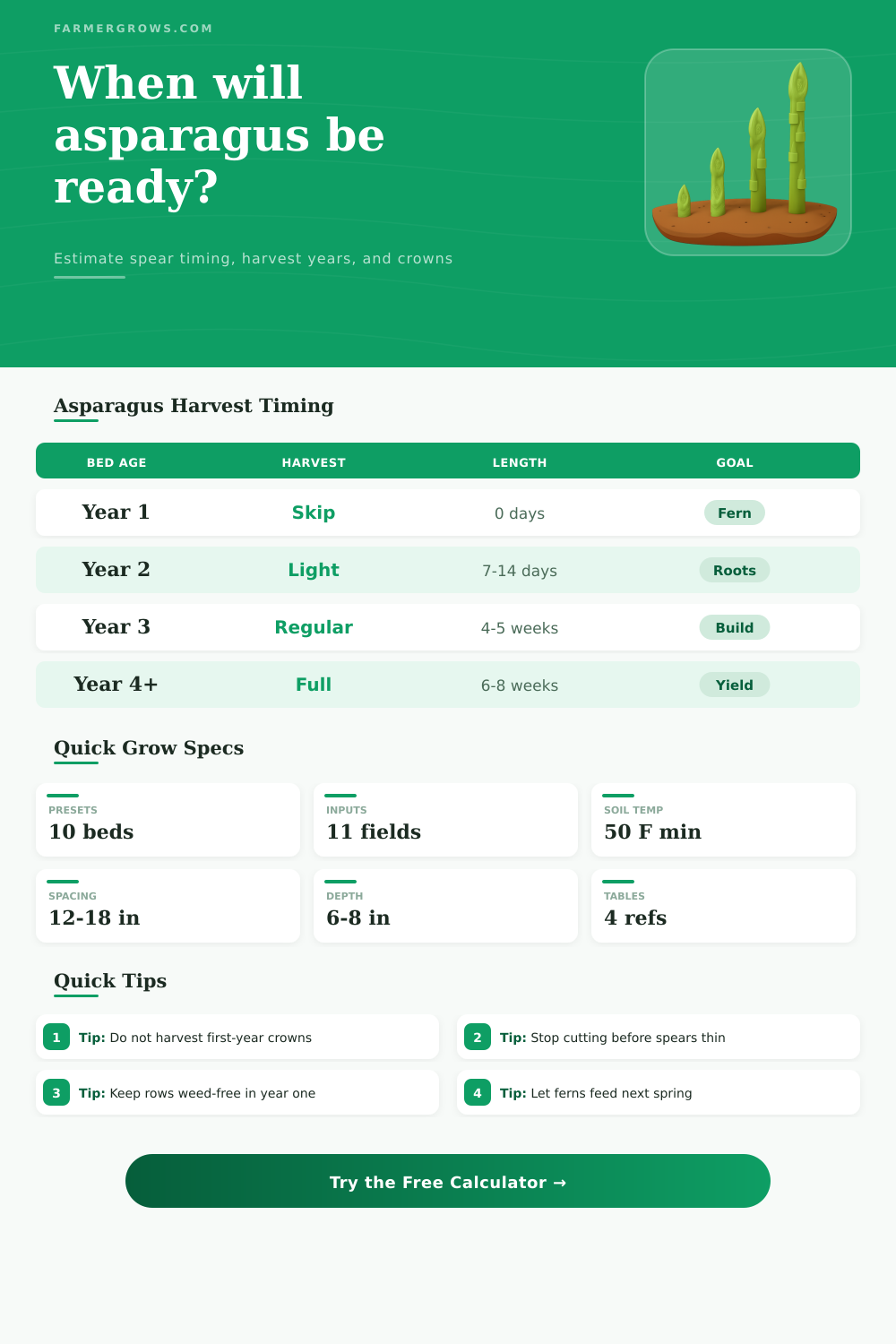
| Year 1 | Do not harvest; grow ferns all season | 0 days | Any spears appear - allow fern growth. |
| Year 2 | Very light cutting only if crowns are strong | 7-14 days | Spears thin below pencil diameter. |
| Year 3 | Regular but still conservative harvest | 28-35 days | Daily spear size drops or weather turns hot. |
| Year 4 and older | Full harvest from vigorous beds | 42-56 days | New spears become thin, loose, or slow. |
| Variety/type | Best-fit zones | Typical strength | Timing note |
|---|---|---|---|
| Millennium | Zones 3-6 | Cold tolerance and strong fern | Often a little later, but steady in northern springs. |
| Jersey Giant / Supreme | Zones 4-8 | Productive all-male hybrid rows | Good general timing for field and garden beds. |
| Mary Washington | Zones 4-9 | Traditional open-pollinated patch | Moderate timing, but volunteer seedlings may appear. |
| Atlas / UC 157 | Zones 7-10 | Warm-climate adaptation | Can start early where winter soil warms quickly. |
| Purple Passion / Pacific Purple | Zones 4-8 | Tender, sweeter purple spears | Harvest gently in heat to protect spear quality. |
Year-one spears are solar panels, not dinner. Let them fern, keep weeds down, water during dry spells, and topdress after ferns yellow back.
The calendar gives a target, but the bed decides the finish. Stop cutting when new spears turn thin, loose-headed, or slow after warm weather.
Growing asparagus is more about patient feeding of the crowns over time; time for them to focus their energy underground on establishing a robust, long-lived root system rather then rushing out to the earliest spears. In that first year, it are storing carbohydrates underground while photosynthesizing. This process turns sunlight into storable food belowground. Every choice you make during the first few months either uses up this stash or helps build it.
That’s why with growing asparagus, timing issue is more important than many realize when they initialy set their crowns in the soil. First, plug in the year you are establishing, fertility level, and spacing. Then, enter crown age and the soil temperature at the time of planting (your Zone). The calculator does the rest for you.
Why Timing Matters for Asparagus
Every variable affect when the bed becomes strong enough to sustain yield without compromising crown strength. The tool expresses those variables as a realistic first-harvest window, not just some arbitrary date on the calendar, so a plug set in cold zone 4 on clay soil produces spears weeks later than one in a warm soil in zone 7.
Soil temperature is especially important. It affects how deeply asparagus roots stays dormant, as they will not warm up until ground near the crown reaches about fifty degrees. Too-early planting and the spears could sit and rot; too-late planting mean a curtailed fern season that pays the rent for the coming spring.
Same story with fertility setting: A soil rich in compost and consistent moisture promote a longer, safe harvest period, but too much nitrogen can promotes lush fern at the expense of weaker-than-you-think crowns beneath, hidden from view. The calculator figures all these tweaks automaticly… Not requiring you to guess what each does to the season’s lengthening or shortening.
How you space your plants… Yes, also impact timing (indirectly). A crowded row reduce air movement around ferns, shortening their productive period in a humid summer. Widely spaced rows allow each one to establish a larger root system leading later to fuller spears and longer harvest period. The tool includes such tradeoffs in its projection of current-year yield, and of when the bed will be at maximum production in years to come.
The common mistake made by most beginning growers: they treat year one as if it were just another vegetable crop. When their plants appears healthy, they cut a few spears, but then wonder why the bed never gets stronger. Year one is deliberately marked with a zero-day harvest. Only those ferns will store sufficient energy for the crown to live through winter and come back again.
Missing this season are the single largest factor in determining whether your bed will be around for ten years (or struggle after three). The “stop when” rule remains in effect all along: Harvest until new spears begin coming up loosely and thinly headed, at which point surrender to a sea of ferns. In older beds (year four or beyond), that may be as many as six to eight weeks longer than during their first year.
You don’t want to accidently pull your plants below their recovery point, and that’s why the calculator stops harvest length at exactly this point with younger beds. These figures let you match your work to the true state of the crown without guessing, and they help you stop pretending that bed is going to feed you if it isn’t, at least not yet.
A conservative schedule in year three ensures there are still enough roots remaining to sustain a full season next spring; a well-timed light harvest in year two boost confidence (and doesn’t cost us the crop to come). And that restraint is what makes a handful of asparagus plants into a dependable patch, yielding reliably for a decade or longer.