
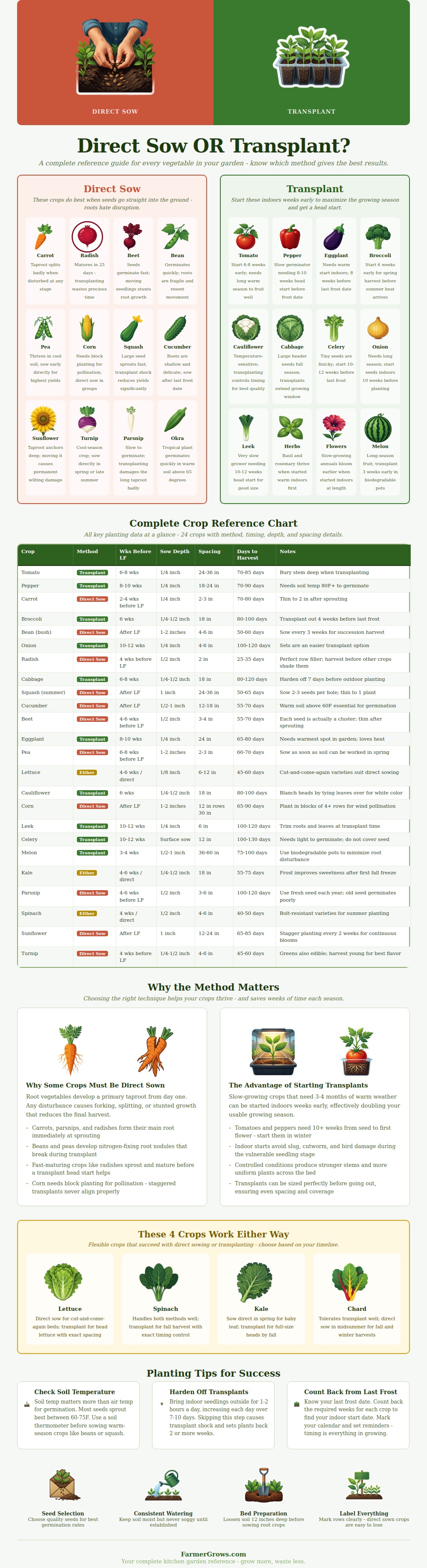
Vegetable gardening require different methods for planting vegetables due to the different requirement for the growth of different vegetables. For instance, some vegetables are best grown through direct sowing, while other vegetables is best grow through transplanting. Direct sowing is the method of placing the vegetable seeds directly into the soil in which the vegetables will grow.
Transplanting is a method of starting the vegetables with the seeds indoors, and then moving those young plants to the soil outdoors at a later date. Each vegetable has different requirements for how it will be planted, and how that planting method will impact the vegetables that are harvested. Some vegetables develop long taproot when they grow.
Which Vegetables to Sow and Which to Transplant
Examples of vegetables with long taproots include carrots, beets, and parsnips. If a gardener transplants these vegetables from indoor to outdoor soil, the taproots of these vegetables may become forked or stunted in their growth. Because these vegetables have such delicate taproots, direct sowing of these vegetable seeds allow for their taproots to fully develop in the ground.
Additionally, vegetables like beans and peas also requires direct sowing of their seeds. Beans and peas form nodules on their roots that enable them to fix the nitrogen in the soil. However, if the transplanting process breaks these nodules, the beans and peas will not be able to perform this critical function to enable the plants to grow.
Some vegetables are better suited to direct sowing than transplanting because of the quick growth of these vegetables. Radishes, for instance, take only about one month to mature. Starting radish seeds indoors will require a period of time to begin growing and hardening off the radish plant.
By the time the radishes are started in the ground outdoors, they will have grown far beyond the time necessary to allow them to mature. Similarly, corn is another vegetable that is more better performed through direct sowing. This is because to plant corn in blocks, as the plants require, if transplants are started indoors they may not emerge in the proper planting pattern for corn to perform adequate pollination of the plants to produce seed.
Transplanting method allow for a head start on slow growing vegetables. Vegetables like tomatoes, peppers, and eggplants are slow growing. The growing season outdoors is typically not long enough to allow these vegetables to establish themselves and produce their harvest after the last frost date.
Starting these plants indoors will allow the plants to begin establishing themselves before they are transplanted outdoors, and will extend the growing season for these plants. Additionally, other vegetables like members of the cabbage family, broccoli, cauliflower, and cabbage, are slow growing at the beginning of their life cycle. If a gardener sows these vegetables directly into the ground, weeds and insects may overtake them while they are still young.
Starting the plants indoors allow them to be transplanted into the ground once established. Some vegetables can be started both through direct sowing and through transplanting methods. Vegetables like lettuce, spinach, kale, and chard are examples of plants that will establish themselves through transplanting methods.
However, they can be started through direct sowing methods as well. If starting through direct sowing methods, the plants will grow to the size of baby leaf. However, if starting through the method of transplanting, the plants can be allowed to grow to the size of heads of vegetable plant.
Timing is important in the sowing of vegetable seed. Additionally, there are specific dates when those vegetables should be planted, and some factors must be considered in the decision of when to begin planting the seeds. For instance, the date of the last frost date in the growing season will help to determine when to begin sowing the seeds.
If the vegetable requires eight week of indoor growth, eight weeks will be counted backwards from the last frost date. However, if the vegetable is to be direct sown into the ground, the period of time will be counted forward from the last frost date. Additionally, the temperature of the soil will affect how long the seeds take to sprout from the ground.
For instance, warm season vegetables like beans and squash will not sprout in soil that is too cold. However, cool season vegetables like peas will sprout in cooler soils. Many mistakes are made with vegetable planting.
For instance, root vegetables are started in trays indoors, simply because there are trays available. However, carrots will often grow in a twisted shape if the roots are transplanted. Additionally, tomatoes are also often direct sown into areas with short growing season; the tomatoes will not have time to produce ripe fruit before the frost will arrive.
In both of these instances, the use of a planting chart for vegetables will allow individuals to make certain that each vegetable starts using the correct planting method to maximize the growing potential of that vegetable. In addition to using a planting chart for the individual vegetables, individuals who choose to use the method of transplanting their vegetables will have to perform a process called hardening off of the plants. Hardening off is the process of exposing the young indoor vegetable plants to outdoor conditions.
If plants are transplanted directly from a warm indoor location to the outside, the sun and wind may shock the plants. Exposing the plants to outdoor conditions gradually over the course of one week will prevent shock to the plants roots and leaves. However, individuals that choose to direct sow their vegetables will only have to ensure that the soil is kept moist to the depth of one inch in the soil.
The seedlings will need to be watered until they emerge from the ground. Once they have true leaves, the roots has established themselves enough to handle normal watering. By matching each vegetable to its proper planting method, individuals will be able to increase their efficiency in the vegetable garden.
By matching each vegetable to its proper planting method, individuals will not waste either time or space on vegetable planting methods that will not allow the vegetables to thrive. Additionally, matching vegetables with appropriate planting methods will ensure that the vegetables are planted within the time frames in which they will grow best. Therefore, by making these determinations of each vegetable’s requirements throughout the season, individuals will experience increased harvests and avoid disappointments in their vegetable gardens altogether.