
Rabbit cross breeding involve pairing two different breed of rabbits together with specific goals in mind. People use cross breeding because cross breeding can lead to offspring that contains the benefits of hybrid vigor. Offspring from two different breed of rabbits will grow more faster than there parents and have better resistance against disease.
However, if a person breeds these rabbits back to other hybrid rabbits without introducing fresh blood into the herd, the advantage of hybrid vigor will dissapear. To avoid this, a person must maintain and track the lineages of each breed of rabbit that they use in their cross breeding program. A person can use a chart that depicts which breeds of rabbits to pair together for which purpose.
How to Cross Breed Rabbits
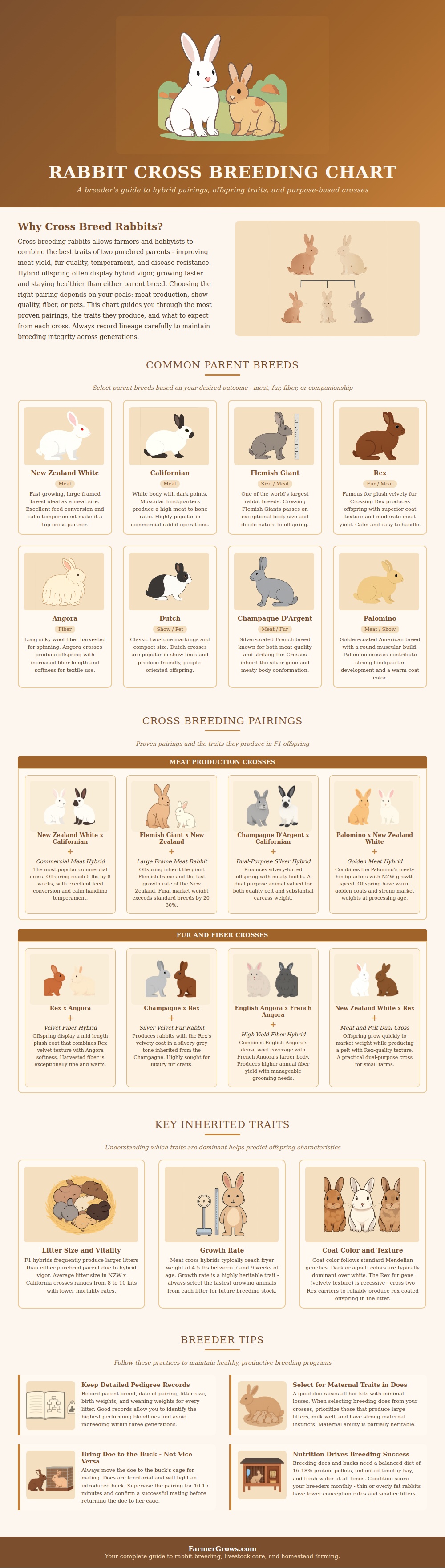
The chart can make it more easier for a person to determine which breeding of rabbits will result in offspring with the desired traits. People use New Zealand White and Californian breed for meat production because these breeds gain the most weight from the feed that they consume. Flemish Giants will produce more meat but may not gain the same amount of weight as the New Zealand White rabbits.
Rex and Angora breed will produce the proper amount of fiber in their pelts. To obtain meat from rabbits, cross breed a New Zealand White and an Californian breed of rabbits. These two breeds will produce offspring that reach processing weight the earliest.
Breeding a New Zealand White or a Californian breed with a Flemish Giant will produce offspring with a larger body size. Breeding a Champagne D’Argent and a Californian or Rex breed of rabbits will produce rabbits with both meat and pelt. These two breeds has the best genetic makeup for these traits.
For people who would like to produce rabbits with fiber for commercial use, a different breeding strategy is required. Breed Rex and Angora breeds of rabbit to produce plush, mid-length coats. The fiber from these breeds is softer than normal rabbit fur but more easy to harvest than Angora wool.
Breed two different variety of Angora breeds together to increase the amount of wool that the rabbits will produce each year. However, ensure that the rabbits are bred with the proper length of fiber and body size to avoid difficulties in harvesting the fibers from the rabbits. Rabbits will have different growth rate and litter sizes when crossed with other breed of rabbits.
Cross breeding rabbits for the purpose of obtaining meat will make the rabbits reach fryer weight in between 7 and 9 week of age. The reason for this is that both parents used for breeding will contain the genes to grow at the best rate. The litter size will also increase from cross breeding rabbits because of the benefits of hybrid vigor.
Offspring will have more kit at birth and more kits that will survive until weaning. The color of the kits will have specific pattern, and the dark colors will be born more often than white colored rabbits. Additionally, a velvety Rex breed will only appear if both parent rabbits has the gene for this feature to be displayed.
To continue the breeding program, a person must pay attention to the maternal instinct of the does (female rabbits). The does will determine if the kits will survive their first year. Some does will produce enough milk and take care of their kits better than others.
The daughters of the does with the best maternal instincts should be used for breeding later on. Bucks (male rabbits) is important for breeding as well but for different reasons. The qualities of bucks will be seen in the growth rate and the temperament of each litter.
The doe should be moved to the cage of the buck instead of the other way around to avoid any fight between the bucks and does. Both sexes of rabbits require clean water, proper housing, and the same level of protein in their diet for their health. To produce the best results for cross breeding rabbits, a person must keep breeding record.
Many people do not keep proper records of their breeding program for the rabbits. People will eventually find that the quality of their rabbits begins to decline. A person should of keep breeding records for the birth weight and the weaning weights of the kits.
Additionally, keep records of the different breeding pair that produce the best growth rates for the kits and the calmest kits. Breeding records will allow a person to breed the correct number of rabbits to produce the best outcome. However, a person must pay attention to each individual rabbit’s trait to produce the best results from cross breeding programs.