🐇 Rabbit Feed Calculator
Estimate rabbit pellets, grass hay, nursing litter support, feed bags, hay bales, and water needs from rabbit count, class, body weight, pellet rate, hay allowance, kits per litter, feeding days, and waste buffer.
Pick a named herd situation to fill the form. Each preset sets rabbit count, class, average body weight, pellet rate, hay allowance, kits per litter, feeding days, waste, and water estimate.
This calculator supports practical rabbitry planning. It does not replace veterinary advice, ration balancing, or gradual feed transitions for rabbits with digestive sensitivity.
Rabbit Feed Output
Pellet, hay, litter, and water planning totals from the values above.
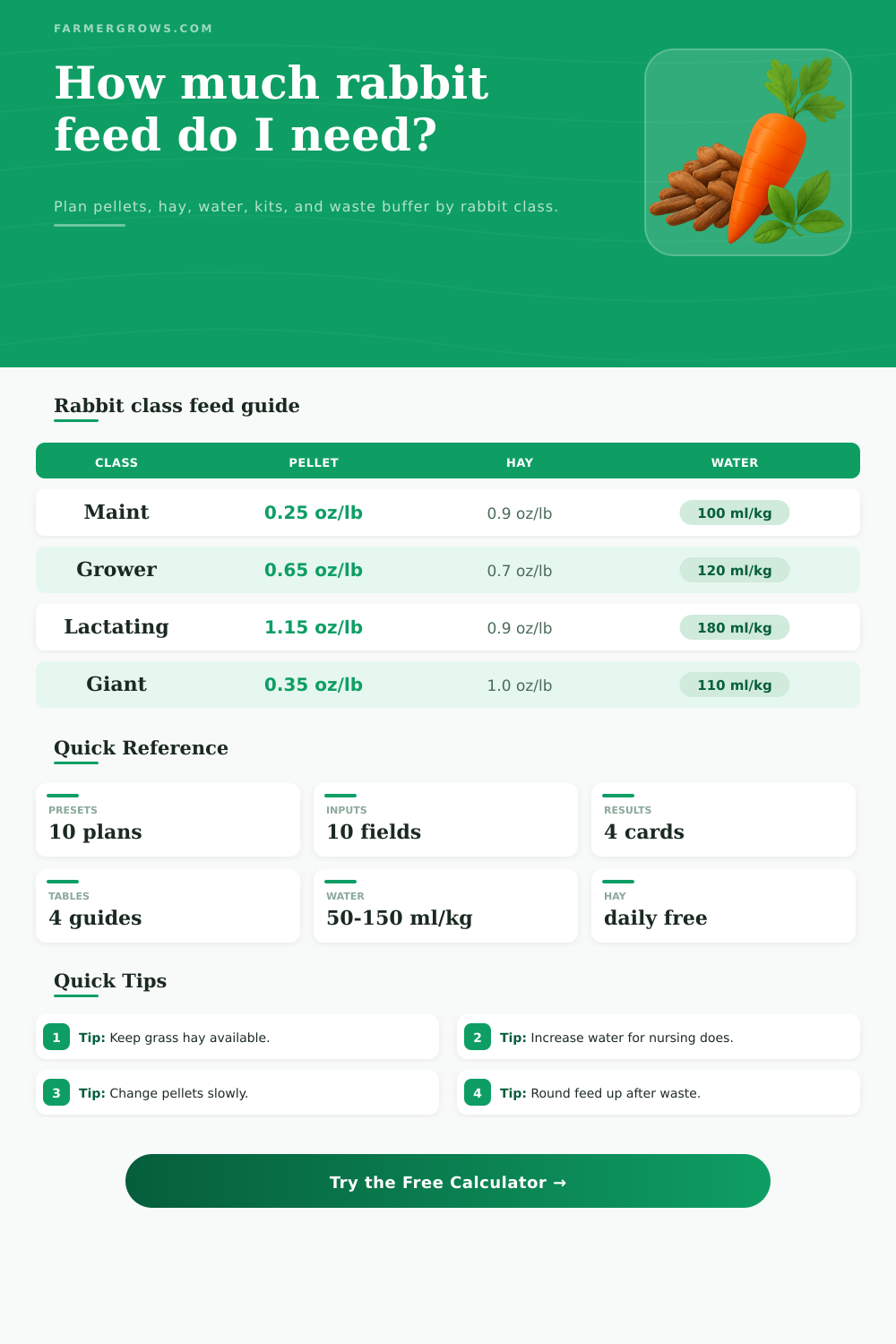
| Class | Pellet planning rate | Hay planning rate | Water planning cue | Practical note |
|---|---|---|---|---|
| Maintenance adult | 0.20-0.35 oz pellets per lb body weight daily | 0.8-1.1 oz grass hay per lb body weight daily | 80-120 ml per kg body weight daily | Best for steady adults, bucks, dry does, and pets with strong hay intake. |
| Grower or fryer | 0.55-0.85 oz pellets per lb body weight daily | 0.5-0.9 oz grass hay per lb body weight daily | 100-140 ml per kg body weight daily | Growth pens use more pellets; keep fiber available to protect gut movement. |
| Lactating doe | 0.90-1.40 oz pellets per lb body weight daily plus kit support | 0.8-1.2 oz grass hay per lb body weight daily | 150-220 ml per kg body weight daily, often higher in heat | Nursing does commonly need heavy pellets, unlimited hay, and constant clean water. |
| Giant maintenance | 0.25-0.45 oz pellets per lb body weight daily | 0.9-1.2 oz grass hay per lb body weight daily | 90-130 ml per kg body weight daily | Large breeds can look underfed by pellet volume alone, so track body condition. |
| Breed or size group | Typical adult weight | Maintenance pellet example | Hay storage cue | Water cue |
|---|---|---|---|---|
| Dwarf breeds | 2-3 lb | 0.5-1.0 oz pellets per rabbit daily | 2-3 oz hay per rabbit daily for planning | 0.10-0.18 L daily at 100 ml/kg |
| Small breeds | 3-5 lb | 0.8-1.5 oz pellets per rabbit daily | 3-5 oz hay per rabbit daily for planning | 0.14-0.23 L daily at 100 ml/kg |
| Medium breeds | 5-8 lb | 1.3-2.5 oz pellets per rabbit daily | 5-8 oz hay per rabbit daily for planning | 0.23-0.36 L daily at 100 ml/kg |
| Large breeds | 8-11 lb | 2.0-3.8 oz pellets per rabbit daily | 8-11 oz hay per rabbit daily for planning | 0.36-0.50 L daily at 100 ml/kg |
| Giant breeds | 11-16 lb | 3.0-6.0 oz pellets per rabbit daily | 11-16 oz hay per rabbit daily for planning | 0.50-0.73 L daily at 100 ml/kg |
| Planning item | Useful formula | Good default | When to adjust |
|---|---|---|---|
| Daily pellets | Rabbits x body weight x pellet oz per lb | 0.25 oz/lb for maintenance adults | Raise for growth, late pregnancy, lactation, cold weather, or thin condition. |
| Kit support pellets | Nursing does x kits per litter x 0.45 oz | Only active in lactating class | Raise slowly if large litters pull condition down or pellets empty early. |
| Daily hay | Rabbits x body weight x hay oz per lb | 0.8-1.1 oz/lb as a storage estimate | Use more if hay is leafy, loose, wasted heavily, or fed free choice. |
| Waste buffer | Dry feed total x buffer percent | 5-12 percent for most small rabbitries | Raise for open hay racks, dusty pellets, damp storage, or young kits. |
| Ordering units | Total feed divided by bag or bale weight | Round up to whole bags and bales | Keep an extra margin when roads, weather, or delivery timing are uncertain. |
| Situation | Water estimate | What changes demand | Chore cue |
|---|---|---|---|
| Cool maintenance | 50-90 ml per kg daily | Lower temperature, moist greens, modest pellets | Check bottles and crocks at least daily. |
| Normal maintenance | 80-120 ml per kg daily | Dry pellets, dry hay, normal room or barn temperatures | Use this as the calculator midpoint. |
| Grower pen | 100-150 ml per kg daily | More pellets, active growth, crowding, warmer days | Increase drinker space as feed intake rises. |
| Lactating doe | 150-220 ml per kg daily or more | Milk production, litter size, heat, dry ration | Always keep nursing does supplied with water. |
| Hot weather | Add 25-50 percent reserve | Shade, airflow, crock size, bottle flow rate | Inspect flow and refill more than once daily. |
Planning for the feed for your rabbits requires that you understand the nutritional needs of rabbit. Rabbits has different nutritional needs based off a variety of different factors. For instance, a maintenance adult rabbit have different nutritional needs than a nursing doe.
Additionally, a nursing doe has different nutritional needs than growing rabbit kit. Many people use rough guesses to try and determine the amount of hay or water that their rabbits will need for the day. However, using rough guesses for the amount of hay or water that rabbits will consume can easily lead to the rabbits outgrowing there feed or water before the owner is prepared to replace the water or feed for the rabbits.
How to Plan Food and Water for Your Rabbits
In order to determine the amount of feed that the rabbits will need for the day, there are a variety of different factor that the owner or caretaker of the rabbits must determine. For instance, the owner must first identify the class of rabbit that will be being fed. Second, the owner must determine the average weight of the rabbits and the number of nursing doe.
Third, the number