
It’s tuesday morning, and there it is: a splash of bright yellow on dark-green parsley foliage. Will that be friend or foe? The truth is often in the striping, which is why knowing what you’re looking at will not only save your sanity but also your plants.
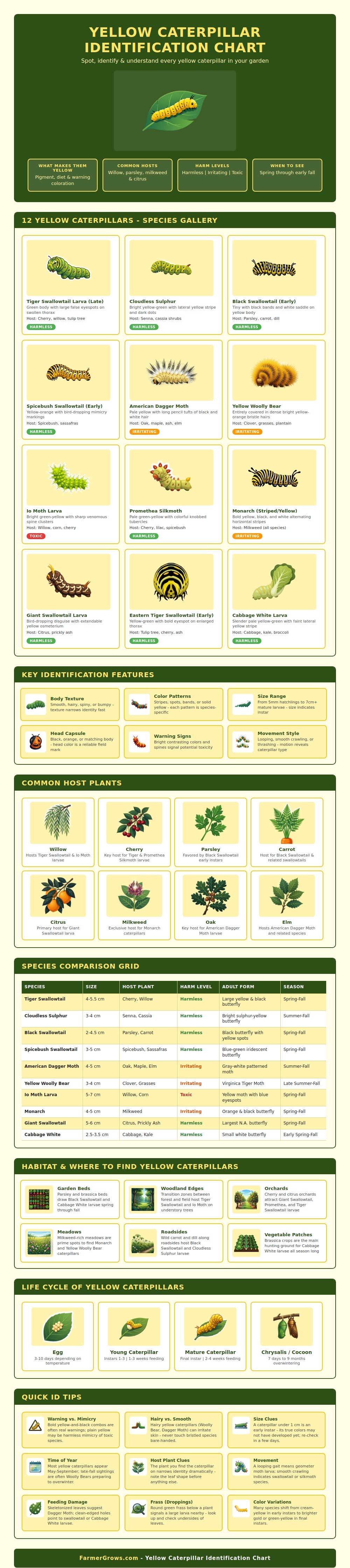
Caterpillars is more than just eaters; they are living biological puzzles. Twelve common species is identified by their color patterns. If you have a yellow-bodied caterpillar with bold white saddles and black bands across it, for example, it’s probably an early instar of the Black Swallowtail (above). It doesn’t resemble its future all-green, all-striped self; most swallowtails mimic bird poop in their youth to elude would-be predators. That trick is plain to see in the Spicebush Swallowtail page, which has that very trick in common.
How to Tell Yellow Caterpillars Apart
Yellow isn’t always harmless. Caterpillar color are important, and texture is also very important. If it’s pale and smooth and on your kale, it’s likely the Cabbage White larvae. They’re voracious eaters, but pose zero threat to human flesh. On the other hand, if it’s pale and furry (like the Yellow Woolly Bear or American Dagger Moth), don’t pick it up: its hairs will wreak havoc on bare skin. Thankfully, this chart makes clear which ones are safe (and which are just irritating), or downright toxic (such as the venomous-spined Io Moth larva). Knowing the difference between a fuzzy texture and a bristly one prevents unnecessary medical trips to the pharmacy. Fuzzy would of saved you at least one trip to the pharmacy.
You can also confirm it by looking at host plants. If that bane of your existence show up as a big yellow-green caterpillar with false eyespots (above) on a cherry or willow, chances are it’s a Tiger Swallowtail. Those larvae may be an impressive sight, but they’re harmless; they only eat what is on their preferred host list and don’t attack anything else. But if you encounter a black and yellow-striped caterpillar on milkweed, you have a Monarch in residence. This is a key conservation moment since Monarchs require milkweed exclusively to survive. The infographic details those host-plant relationships so gardeners can know who to say hello to, and whom to turf.
Then there’s timing: Most yellow caterpillars emerges between spring and early fall. If you see one in late fall, it’s probably getting ready to overwinter. Many species, including Woolly Bears, are most commonly encountered in the cooler months looking for protected areas where they’ll spend the winter. Folklore says the color pattern on their rings might tell us something about how severe winter will be. But science isn’t convinced. Myth or not, knowing these guys are around tells me that something has changed seasonal.
Observe first, react second: Looking at the plant it’s on will help you identify it. It can also give you clues if it’s not one to squash. For instance, seeing a yellow thingy that bristles with irritating hairs or eating only certain leaves would tell you it’s probably okay.
So when you spot something all yellow in the garden, stop right there, because chances are you’re watching the birth of the next butterfly…or maybe not? Identify those larvae correctly so you know where to intervene. Also, enjoy all of nature’s little critters, even the ones that aren’t beautiful but keep things in balance based off here in the garden.