
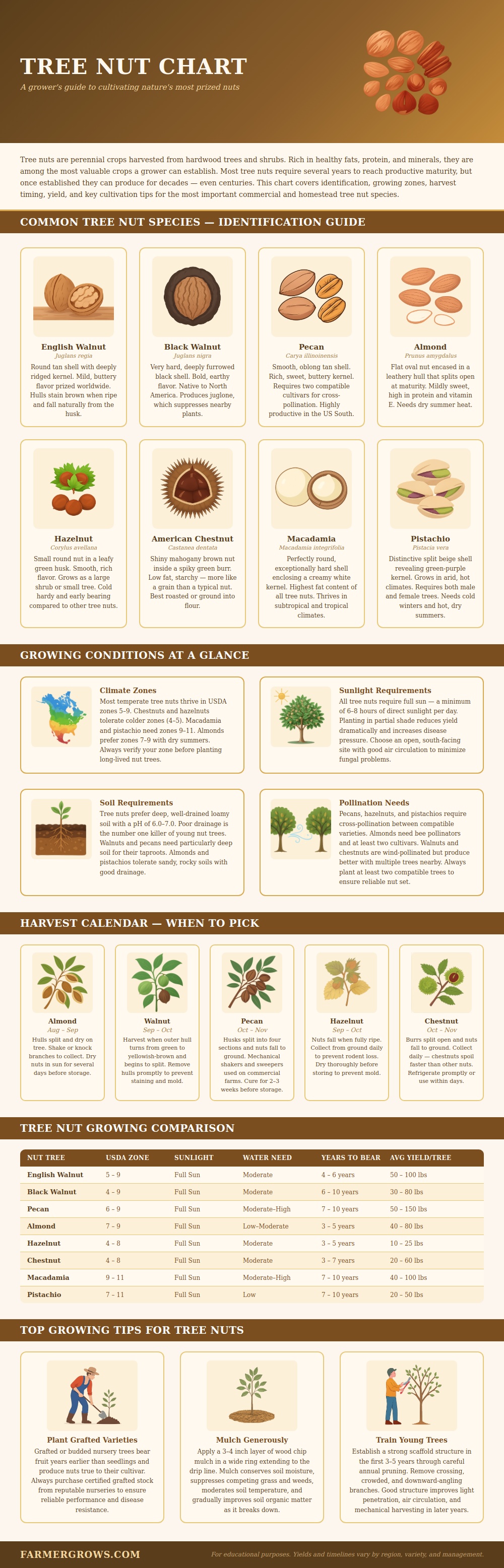
Tree nut take a long period of time to grow, yet they provides a harvest for many decades after the nut tree is establish. Due to the long period of time it take for the trees to begin producing the nut that they are known for, the use of reference chart is essential for making informed decisions about which type of tree nut species to cultivate in your specific area. The reference chart allow for you to understand which tree nut species will thrive in your climate, as well as how long it will take for the tree to begin producing it crops.
Within the reference chart, there is an identification section for each type of tree nut species. Each type of tree nut species have its own unique characteristics that allow individuals to recognize which nut species is which. For instance, English walnuts will drop from their husks easy, but black walnuts will stain objects that they come in contact with.
Choosing and Caring for Nut Trees
Additionally, pecans requires two different variety of pecan trees to be planted together to ensure that they are pollinated, but almonds require a certain amount of dry heat during the summer to cause their hulls to split. These characteristics should of been learned prior to purchasing trees of any type to ensure that you are not purchasing tree nut species that will not be able to survive in your local climate. The growing condition section of the reference chart allows for individuals to determine the growing conditions that each type of tree nut species requires.
Many types of tree nut species requires full sun exposure and deep soil from which they can drain. Tree nut species like chestnuts and hazelnuts can handle cold winter, but others such as almonds and pistachios cannot. Macadamia tree require subtropical climate to grow well.
Additionally, each type of tree nut species has different water need. For instance, walnuts and chestnuts requires moderate watering, while pecans requires additional watering if the soil is sandy in their growing area. The harvest section of the reference chart allows individuals to prepare the area and individuals to prepare for the harvest of these nut from their trees.
For instance, growers harvest almonds in the late summer, but chestnuts and pecans is harvested during the fall. Additionally, chestnuts spoil quick when exposed to the elements, so they must be harvested every day. Additionally, the walnut hull can cause mold on the nut, so the hulls must be removed from the nuts as soon as possible.
By planning the harvest in accordance with the information provide in the reference chart, individuals can prepare their area for drying, as well as prepare the labor that will be required for the harvest of these nut from their trees. Another important factor to consider in determining which type of tree nut species to cultivate is the amount of time that it will take for the species to reach its production age. Species like hazelnuts and almonds reach their production age at a faster rate then pecans or macadamias.
However, hazelnuts and almonds will produce fewer nuts than pecans and macadamias. Additionally, walnuts will take between four and six year to reach their production age, but will produce large amounts of walnuts once they reach maturity. Therefore, while some species will allow individuals to enjoy the harvest of their nuts at a faster rate than others, those who choose the latter will enjoy more higher returns from their individual tree nut species over a long period of time.
During the first few years that the trees is establishing themselves, individuals will have to care for the tree nut. Grafted nut trees produce more nut than seedling trees because they have the genetics that allow them to produce nuts, and they reach production age at a younger age. Additionally, you can place mulch around the tree to keep the roots of the tree cool and moist, as well as to prevent the grass from taking the nutrients from the soil that belongs to the tree.
Finally, the canopy of the tree should be trained to allow the nutrients to reach the nut, as well as to make it easier for individuals to harvest the nuts that grow on the tree over time. Additionally, another requirement for the individual trees is pollination. Some species are pollinated by the wind, but others require another type of nut tree to provide the pollen that is required for the nut trees to produce their nuts.
Other nut species require the presence of bee to perform the pollination of their flowers during bloom season. These individual specifics must be researched beyond the information provide in the reference chart. Finally, once the trees have matured, they will be able to care for themselves.
Their deep roots will be able to extract the nutrients from the soil, as well their extensive canopies will provide microclimates for other plants to thrive within those area. Additionally, reference charts can help individuals to determine which nut species will best flourish in their individual climate. Those with small homestead may opt for hazelnut species because of their ease of management, but individuals with larger homesteads can enjoy the benefits of pecan and walnut trees.