
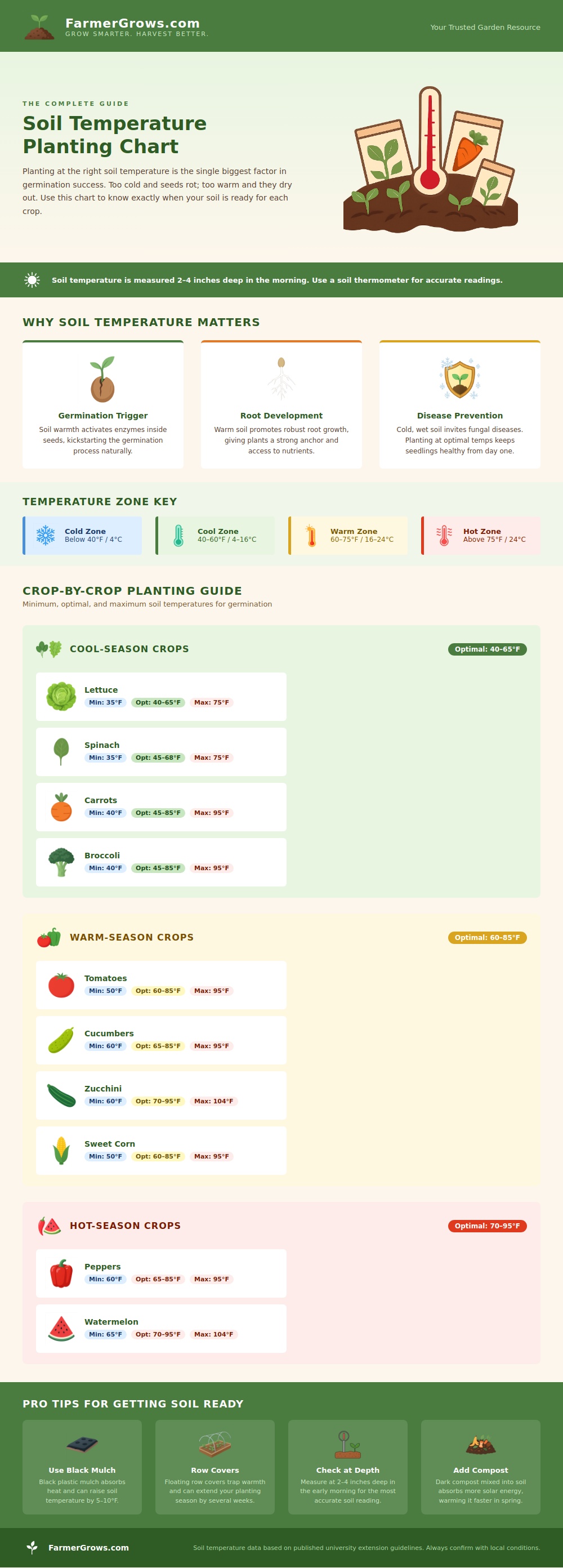
Soil temperature seriously affects when you plant seeds and transplants. Although the last frost date or average air temperatures help guide you, the most reliable way to know whether it is already time to sow or transplant plants is to check the soil. Although lack of soil water commonly gets discussed, the temperature of the soil is also important for starting germination.
For nitrification, growth of plants and planting the best range is 65 to 86 degrees Fahrenheit. For most plants you need 65 to 75 degrees Fahrenheit in the soil. Both night and day soil temperatures matter.
Check Soil Temperature Before Planting
In spring the soil commonly lags behind the air in days or weeks, because it and the collected moisture slowly warms by means of sun after the winter cold.
Cool-season crops handle lower soil. Spinach germinates at least 38 degrees, while lettuces, onions and peas like 42 to 43 degrees. Potatoes do best in 45 degrees.
If you plant lettuce seeds in 30 degree soil, they grow very slowly and appear after a month. Wait until the soil reaches the 40s, and everything goes faster.
Corn requires 50 degrees for germination. Soybeans also germinate at that level, but the appearance is slow and can last three weeks. For warm-season plants the soil should have at least 60 degrees.
Tomatoes like 65 to 70. If you start some crops indoors with heated soil at 80 degrees, germination speeds up, and you can transplant outside when the temperature goes above 40 degrees for earlier harvest.
In cold regions garden soil never reaches 80 degrees, and even if it did, crops will not mature before frost. For warm-season vegetables before enough warming of the soil, protection helps floating row cover, individual glass or plastic cloches, alike milk jugs with top cut off and turned upside down over plants.
Soil thermometers are the usual tool for checking soil temperatures. A meat thermometer will work, but special soil thermometers cost eight dollars at a garden center. To measure, insert the probe at the depth of seeds or roots.
Take the reading daily at the same time during at least three days at two inches depth. A good soil thermometer saves time, effort and money. Plants planted later in warmth quickly catch up with those from cold thanks to active microbes in thesoil.