
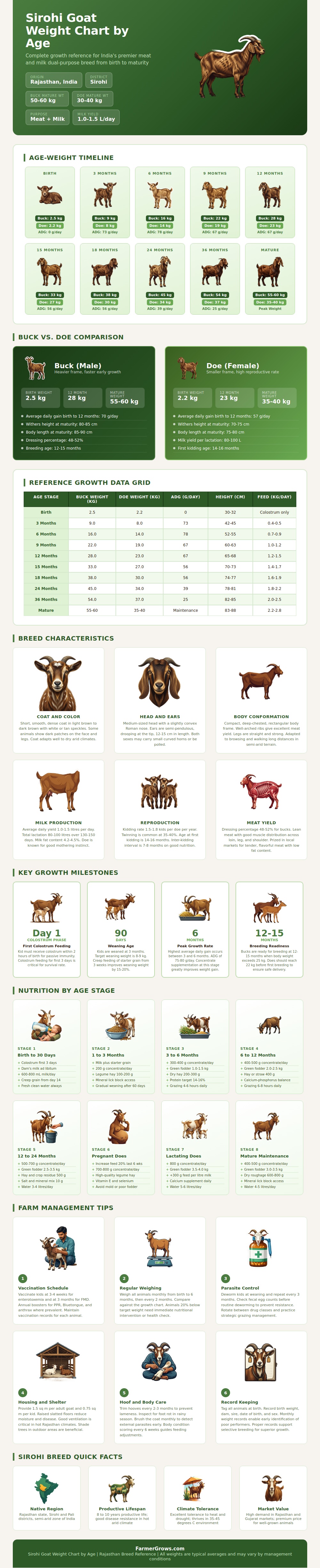
The Sirohi goat also do great in tough environments, providing not just milk but meat as well. Feed decisions is based of weight-to-age tracking. That means no more guesswork. If an animal are ahead of schedule or behind it, you’ll know exactly what’s happening. You can see that pattern of growth in the infographic’s timeline.
Within the first six months, kid gain weight rapidly. As they mature, there growth rate begins to slow. You pay less to reach those initial gains. You pay more for each additional kilogram when your animals hit breeding age. If you watch the curve, you’ll be able to intervene early and avoid having to fix problems down the road.
How to Feed and Care for Sirohi Goats
It’s a buck or it’s a doe. Follow their different paths with side-by-side. Bucks is stronger, more muscular and heavier at maturity. Does are smaller, but they still needs enough body weight to raise offspring. The infographic splits these trails apart, allowing you to establish your own expectations. You no longer have to use an average of all the above. It is a distinction that become important when selling animals vs those used for breeding.
What you feed them depend on their life stage. The infographic’s charts shows that progression. Initially young ones live on milk. As time passes, they transitions toward solid feed. At six months, they consume massive quantities of both fodder and concentrate. This pace continue daily until maturity is achieved.
Follow the growth rate on the chart for matching the feed. If you overfeed it will be a waste of money. If underfed, you’ll see long-term shortfalls in final weight. All of this has to do with health management. The growth curve are protected by regular weighing. Regular weighing, deworming, and vaccination schedules all exists to protect the growth curve.
If an animal falls off the line, then there’s something wrong. Is it poor quality feed? Could it be parasites? That signal on the chart shows you how to take action, letting you see which kid looks smaller than the others and why. In the weight column, Sirohi has some useful strengths as well. These goats adapt to dry conditions and high temperatures quite well. If provided with at least a bit of shade and water, they don’t crash out on growth during the hot part of the year. Under moderate management, their kidding rate remain strong. With no fancy input, a healthy doe can kids multiple times per year.
Over time, I think this is the value of watching these numbers. When you keep track every month, you see animals that is doing better than average, and then you breed from those animals. Then that selection compounds over generations. The chart becomes the baseline for all your other records which become a way to improve.
“This isn’t a rulebook; this is a map. It shows you the expected weights of a normal Sirohi at every age. When it’s off track, it alerts you to potential problems. Use it like that and let the animals speak for themselves.”