
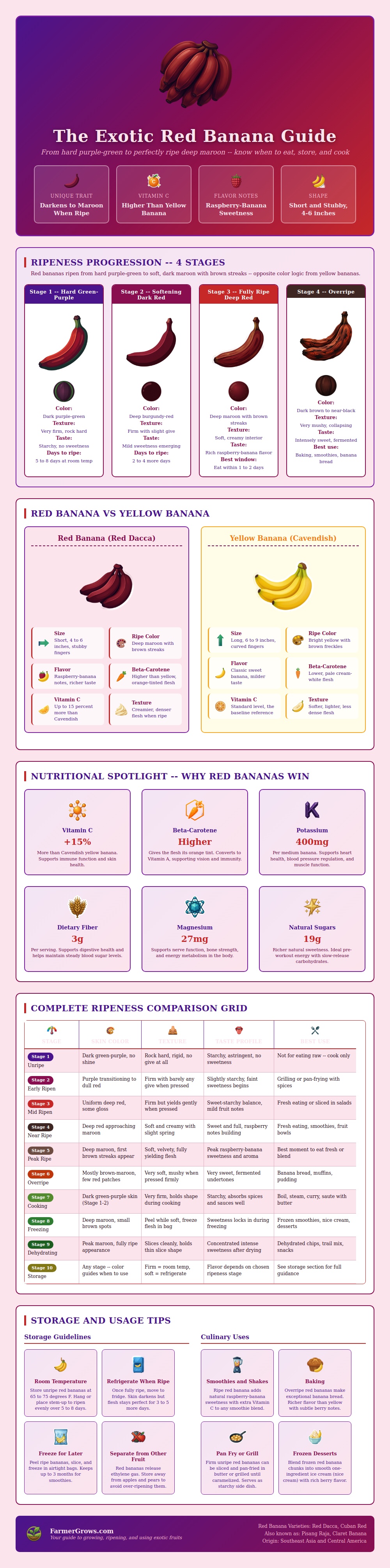
You see a lot of yellow things in the grocery store, bananas included. If you’re not expecting something different, red bananas appears odd due to their dark-skinned appearance (ranging from maroon to deep purple). Curiosity lead most shoppers to purchase them. However, once faced with eating one, many freeze up.
It goes against what the color suggests, meaning you have to adjust your timing based off more than habit alone. As the fruit matures, its outer color changes from a firm green-purple to a tender dark maroon (see chart above). This is why knowing this chart exists: Red bananas don’t go yellow when ripe! They darken further, taking on these brown streaks that tell you they’re at their sweetest moment of all.
How to Know When Red Bananas Are Ready
What’s happened growing up eating conventional Cavendish bananas wouldn’t of serve you here. Don’t look for the skin to lighten or speckle like a regular old banana. If you do, you’ll miss the boat and end up with mush in your hand before realizing it was ripe.
That helps explain why the fruit is stored different. If harvested when unripe, red bananas is still green, though the skin may have a red tint. They are quite starchy, rock hard and pretty bland tasting when eaten out of hand. Time in the house needs to soften them up, get them sweeter, then more time are needed to change their texture from starchy to dense and creamy.
Eat them fresh then, in the deeper maroon stage when the slightest touch of brown appears. The texture is different, and so is the flavor profile. It has a little raspberry taste, some berry notes, and familiar banana flavor. Richer, yes, hence the draw for fans of tropical fruits who’ve gotten to know the variety.
The red version wins on the nutrition front: It’s packed with even more vitamin C than regular yellow bananas, so it support the immune system. It also has greater amounts of beta-carotene (which translates into vitamin A inside your body), resulting in slightly more orange-colored flesh. So yes, this fruit isn’t only delicious, but also functional.
With magnesium for nerve health and potassium for muscle function, you’re getting it all in a package that tastes like dessert. Plus, the fiber will keep your digestive system running smoothly while avoiding the sugar spike common among other high-fructose fruits.
Don’t throw them out if you didn’t get to eat them fresh. Once they’re overripe, red bananas are great for baking: The fermented undertone and super-sweet flavor make for amazing muffins or even bread. They’ll also freeze easly after peeling; use for smoothies (the thick, creamy flesh will blend well with no added thickeners).
Just don’t put them in your fruit bowl with any pears or apples. Like most other fruits, red bananas emit ethylene gas that hastens the ripening of nearby produce. It’s a little thing, but worth knowing if you have hopes of keeping other fruits around longer.
The first time or second time you try and read the skin of a red banana, it will take practice. But then, just like that, it’s intuitive, knowing when to blend, knowing when to pull it off the counter. Don’t let exotic fruit intimidate you. All it takes is some patience and the right visual cues to turn those little stubby fruits into treats in your own kitchen. And now, finally, try one if you ever spy the deep purple color on the shelf again; they may well be your new favorite snack, you just have to get the timing down.