
Use spaces between raised beds, especially while you install garden. The right distance between them helps a lot for comfortable working and good growth of plants Minimumale, leave 12-inch paths between the beds, that suffices for narrow areas where not many folks work together. For better access, plan 18 to 24 inches wide.
The guidelines of Cornell University say that such space gives enough room for care and harvest plants.
How Much Space to Leave Between Raised Beds
Small beds save place, and you can lay them 6 inches to 1 foot apart, but more space allows comfortable walking along the sides. Rather, do not space them too much, becuase that wastes area and adds work when you lay mulch or mow between them.
Between the narrow ends of raised beds, 3 to 4 feet of space give the chance to put an A-frame trellis from one box to the next, good for big vine plants as cucumbers or cherry tomatoes. Two feet between beds are genuinely ideal, because the other bed serves as a good seat while you work in the ground. Ensure enough place for a cart or wheelbarrow.
The bed itself should be 3 to 4 feet wide. More than that, and it becomes hard to reach the center without climbing inside and packing the soil. If you access it only from one side, 2 to 2.5 feet wide is the advice.
For plants who spread out, at least two feet wide are best. Square 4×4 or 4×8 beds work, but 3 or 3.5 feet make it easier to reach the center.
Leave spaces between beds and limits like fences or house walls. Being able to walk around the whole bed is important. Garden planners like to move raised beds and play with different plant layouts inside them.
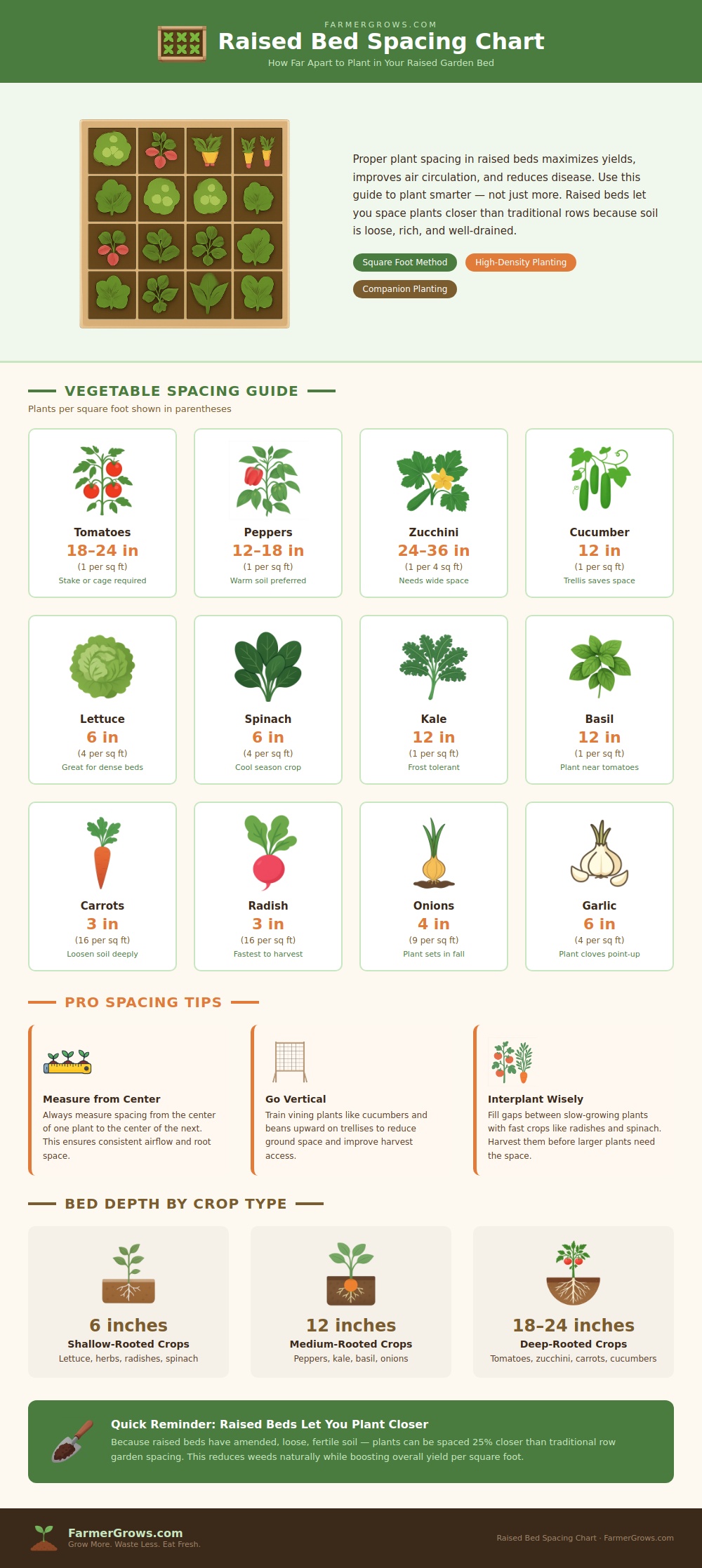
In raised beds, plants can grow more closely than in traditional ground garden. If you change order, a plant of one row sits between two from the other row, which creates almost continuous leaf cover against bad weeds. The square foot method shares the area into 1×1 foot squares, then follows a plan about how many plants or seeds go in each.
Think about height of plants and sun, so that tall do not block light to short. Packages of seeds point the spacing for vegetables.
Place with at least 6 hours of full sun are needed, so that edible plants fully mature and setfruits.