Raised Bed Soil Calculator
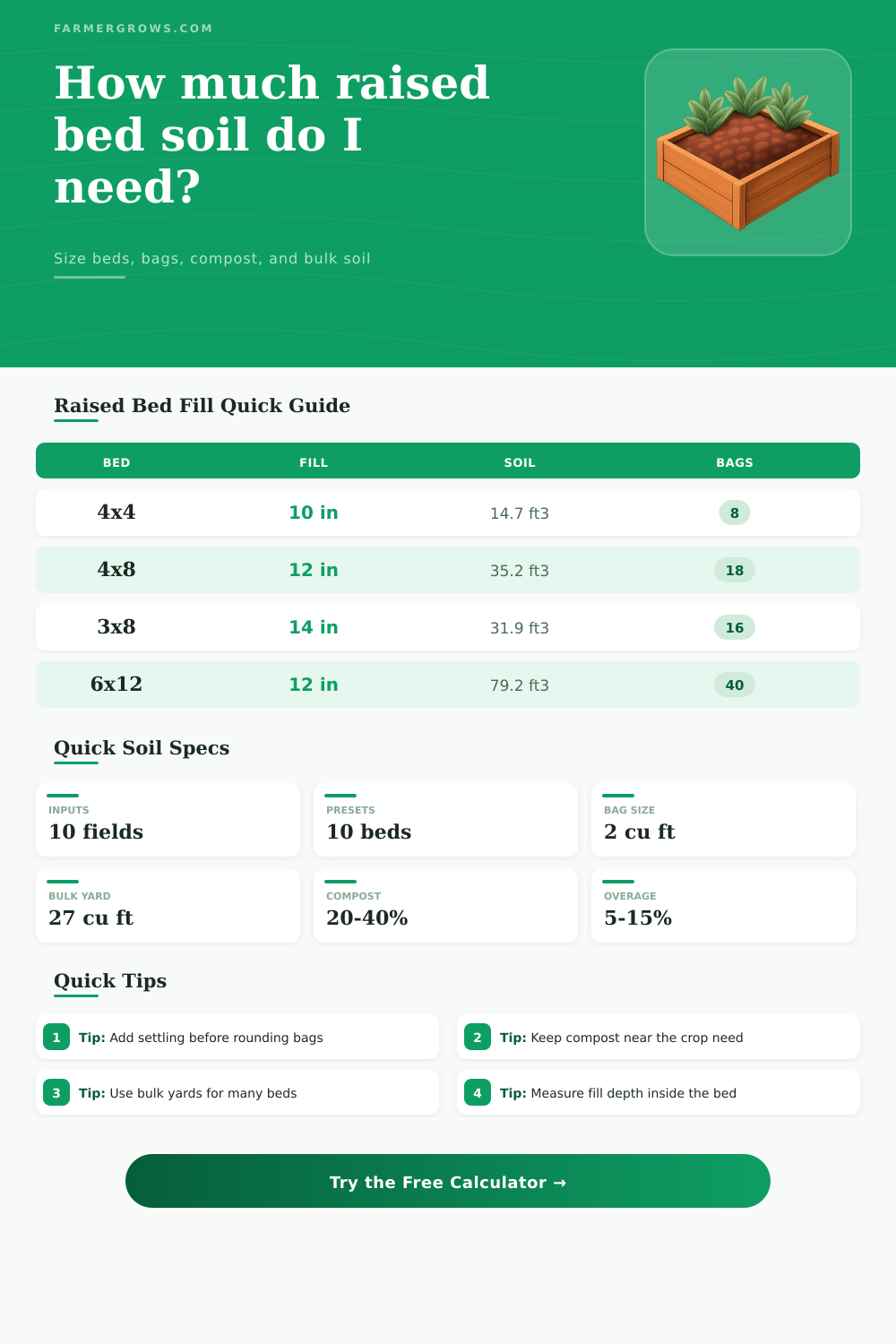
Estimate soil volume for raised beds from length, width, bed height, target fill level, settling, overage, compost percentage, mix parts, bag size, and number of beds.
Choose a named layout to load practical dimensions, fill depth, compost share, overage, bag size, settling allowance, and component ratio.
Raised Bed Soil Results
Your raised bed soil estimate will appear here after calculation.
| Inside Bed Size | 8 in Fill | 12 in Fill | 18 in Fill | Best Use |
|---|---|---|---|---|
| 2 ft x 4 ft | 5.3 cu ft | 8.0 cu ft | 12.0 cu ft | Herbs, greens, patio boxes |
| 3 ft x 6 ft | 12.0 cu ft | 18.0 cu ft | 27.0 cu ft | Compact vegetables and berries |
| 4 ft x 4 ft | 10.7 cu ft | 16.0 cu ft | 24.0 cu ft | Square-foot garden block |
| 4 ft x 8 ft | 21.3 cu ft | 32.0 cu ft | 48.0 cu ft | Classic backyard vegetable bed |
| 4 ft x 12 ft | 32.0 cu ft | 48.0 cu ft | 72.0 cu ft | Long family garden bed |
| 6 ft x 12 ft | 48.0 cu ft | 72.0 cu ft | 108.0 cu ft | Large shared or market bed |
| Bag Size | Cubic Feet | Bags Per Cubic Yard | Coverage at 12 in | Handling Note |
|---|---|---|---|---|
| 25 liter bag | 0.88 cu ft | 30.6 bags | 0.88 sq ft | Small top-up bag |
| 40 liter bag | 1.41 cu ft | 19.1 bags | 1.41 sq ft | Common metric bag |
| 1.5 cu ft bag | 1.50 cu ft | 18.0 bags | 1.50 sq ft | Easy to carry |
| 2.0 cu ft bag | 2.00 cu ft | 13.5 bags | 2.00 sq ft | Common raised bed size |
| 3.0 cu ft bag | 3.00 cu ft | 9.0 bags | 3.00 sq ft | Fewer bags, heavier lift |
| Bulk cubic yard | 27.00 cu ft | 1.0 yard | 27.00 sq ft | Best for several beds |
| Crop Group | Working Fill Depth | Fill Level Tip | Soil Texture | Notes |
|---|---|---|---|---|
| Leaf lettuce and herbs | 6 to 8 in | Leave 1 in below rim | Light and even | Good for shallow boxes |
| Beans, peas, flowers | 8 to 10 in | Fill 85% to 95% | Balanced mix | Works in standard beds |
| Tomatoes and peppers | 12 to 18 in | Fill 90% to 100% | Compost-rich | Deeper roots benefit from volume |
| Carrots and beets | 12 to 16 in | Keep top loose | Fine, stone-free | Reduce coarse chips in root beds |
| Potatoes | 16 to 24 in | Plan extra topping | Loamy, mounded | Use staged fill if hilling |
| Strawberries | 8 to 12 in | Leave crown clearance | Drains well | Avoid waterlogged compost mixes |
| Compost Share | Best Fit | What It Changes | Watch For | Calculator Use |
|---|---|---|---|---|
| 10% to 20% | Existing fertile loam | Small nutrient boost | May need feeding later | Choose loamy bulk fill |
| 20% to 30% | General vegetable beds | Balanced structure | Quality varies by source | Good default range |
| 30% to 40% | Heavy feeders | More organic matter | Can settle more | Add settling allowance |
| 40% to 50% | Fast crop turnover | Higher fertility | May hold too much water | Pair with aeration |
| Over 50% | Special short-term mixes | Very active blend | Shrinkage and salts | Use carefully |
| Finished top-dress | Seasonal refill | Renews surface layer | Do not bury crowns | Use shallow fill depth |
Measure inside: Use inside bed dimensions and the actual fill height, because lumber thickness and an intentional watering lip can change the volume noticeably.
Round after allowances: Apply settling and overage before rounding bags, then compare the cubic yard total when filling several beds at once.
Determining the amount of soil that will be required for a raised bed is a necessary step in growing the plants in the raised bed. Using too little soil will not provide enough room for the roots of the plants to grow, while using too much soil will leave overgrown soil that isnt needed for the raised bed. The volume of soil that are needed can be determined based off the length, width, and height of the raised bed, and soil calculators can make this calculation for a grower.
Another factor to consider when calculating how much soil is needed for a raised bed is the settling of the soil. New soil will compress and settle within the raised bed after it is watered, which means that the level of the soil will drop after the initial few waterings of the plants within the raised bed. Thus, more soil then the calculated volume should be ordered for the raised bed to account for this settling of the soil.
How Much Soil Do I Need for a Raised Bed
In addition to accounting for settling, it is also important to order additional soil for the raised bed to account for soil that may be spill during movement of the soil to the raised bed, or soil that may be required to fill in any low spots within the raised bed. Finally, another factor to consider is the composition of the soil that will be added to the raised bed. Compost is often added to the soil to provide nutrient to the plants that will be grown within the raised bed.
However, adding compost to the raised bed will change how the soil drain and settles within the raised bed. You can use the calculator to adjust the percentage of compost that will be included in the soil mix. The percentage of compost that is used in the soil will determine how light or heavy the soil mix will be; a mix that contains more compost will be lighter in weight than a mix that contains more loam.
You will have to choose between buying soil in bags vs. Buying soil in bulk. Bags of soil is easier for an individual to carry, but bags of soil tend to be more expensive per cubic foot of soil than bulk soil. Bulk soil is a cost-effective choice if you are planting many raised beds and have a place to dump the bulk soil and add the soil to those raised bed.
The calculator shows the cost comparison between bags and bulk soil so that you can make an informed decision about the total amount of soil that will be needed for all of your raised beds. The depth of the soil within the raised bed must match the root depth for the plants that will be grown in those raised beds. For instance, leafy vegetable tend to require only about eight inches of soil depth, while roots for carrots and potatoes require a depth in the soil beyond that of leafy vegetables.
Thus, before building any raised beds, you will have to determine the root depths for the plants that will be grown in the raised bed to ensure that the height of that raised bed will allow for the root system of the plants to lie flat within the raised bed. Finally, there are reference tables in the calculator that allow you to double-check your soil measurements. These reference tables show example size for raised beds and the volume of soil that each size will contain; they also show the amount of soil that will be required by bags of different size and compost percentages.
Use these tables as a point of reference for your calculations, but use the raised bed soil calculator to ensure that you will have enough soil, the proper balance of soil components, and enough extra soil to complete your projects.