Rainwater Soakaway Calculator
Size a garden soakaway, gravel trench, dry well, or modular crate system from roof and hardscape runoff, design rainfall, soil infiltration rate, void ratio, and planned geometry.
Use measured soil infiltration where possible. Local drainage, building, septic, well, frost, groundwater, and property-line rules can override any calculator result.
Soakaway Sizing Results
Calculated from runoff coefficient, design rainfall, infiltration credit during the storm, medium void ratio, and the entered geometry.
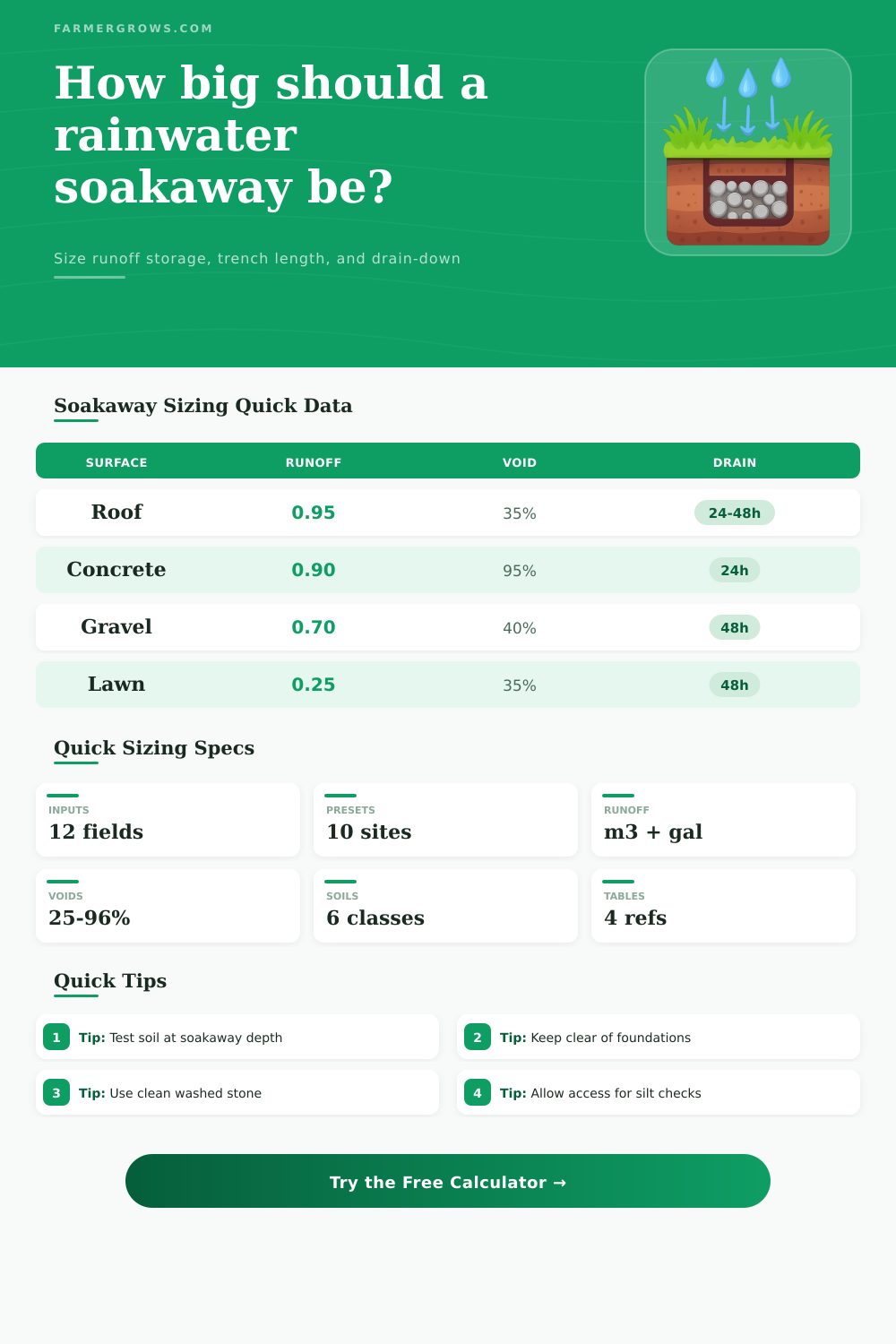
| Surface draining to soakaway | Runoff coefficient used | Typical range | Sizing note |
|---|---|---|---|
| Metal, tile, slate, or shingle roof | 0.95 | 0.90 to 1.00 | Use plan area, not roof slope area, for rainfall volume. |
| Concrete slab or sealed paving | 0.90 | 0.80 to 0.95 | Little surface storage; first flush can carry silt. |
| Asphalt driveway or lane | 0.85 | 0.75 to 0.95 | Use pretreatment where grit can enter the soakaway. |
| Compacted gravel yard | 0.70 | 0.45 to 0.85 | Higher values fit packed, sloped, or clay subbase areas. |
| Permeable pavers on open base | 0.45 | 0.20 to 0.60 | Only use low values when the base is clean and maintained. |
| Lawn, pasture, or garden soil | 0.20 to 0.35 | 0.10 to 0.45 | Clay, slope, compaction, and saturation push runoff higher. |
| Soil at soakaway base | Field infiltration guide | Percolation guide | Design interpretation |
|---|---|---|---|
| Heavy clay or seasonally wet soil | Less than 2.5 mm/hr | Over 50 sec/mm | Usually poor for soakaways without engineered review. |
| Silty clay loam | 2.5 to 5 mm/hr | 35 to 50 sec/mm | Large storage, long trench, and conservative drain-down check. |
| Loam or firm garden soil | 5 to 15 mm/hr | 20 to 35 sec/mm | Moderate infiltration; test after wet weather if possible. |
| Sandy loam | 15 to 30 mm/hr | 10 to 20 sec/mm | Often suitable when groundwater and setbacks are acceptable. |
| Sand | 30 to 100 mm/hr | 3 to 10 sec/mm | Fast drainage; confirm pollutant and well separation rules. |
| Gravelly soil or fractured subgrade | Over 100 mm/hr | Under 3 sec/mm | Very fast movement; groundwater protection matters most. |
| Storage medium | Void ratio for calculator | Gross volume for 1 m³ storage | Maintenance note |
|---|---|---|---|
| Clean washed angular gravel | 40% | 2.50 m³ | Needs geotextile wrap and silt trap upstream. |
| Rounded drainage stone | 35% | 2.86 m³ | Settles less tightly than mixed rubble, but stores less than crates. |
| Clean mixed rubble | 25% | 4.00 m³ | Variable voids; avoid fines, soil, plaster, and clay contamination. |
| Modular soakaway crates | 95% | 1.05 m³ | High storage, but installation quality and load rating are critical. |
| Open-bottom chambers | 90% | 1.11 m³ | Useful where base infiltration and inspection access are desired. |
| Perforated dry well unit | 80% | 1.25 m³ | Compact for downspouts; protect from roof grit and leaves. |
| Siting or geometry check | Common minimum to verify | Why it matters | Calculator use |
|---|---|---|---|
| Building foundation | 3 to 5 m or 10 to 16 ft | Reduces wetting near footings, basements, and crawl spaces. | The setback field flags obvious close placement. |
| Property boundary | 2.5 m or 8 ft where required | Helps avoid sending subsurface flow onto a neighbor. | Check local drainage easements and lot-line rules. |
| Private well or drinking water source | 15 to 30 m or 50 to 100 ft | Protects potable water from fast subsurface movement. | Use stricter local health-department distances. |
| Septic tank, drain field, or mound | 10 to 30 m or 33 to 100 ft | Prevents hydraulic loading of wastewater treatment soil. | Keep stormwater away from septic disposal areas. |
| Seasonal high water table | 0.6 to 1.2 m below base | Storage must drain into unsaturated soil, not groundwater. | Do not count volume below seasonal groundwater. |
| Trench shape | 0.6 to 1.5 m wide, level base | Longer trenches spread flow and increase sidewall area. | The required length result assumes a level rectangular section. |
Before digging: Run a soakage or percolation test at the proposed base depth after the hole has been pre-soaked. Topsoil infiltration can be much faster than subsoil.
Before connecting gutters: Add leaf guards, a silt trap, or an inspection chamber upstream. Fine sediment can cut the useful void ratio and slow infiltration.
A soakaway are a system that manage rainwater. Specifically, a soakaway allow the rainwater to settle into the ground instead of running off the property. Rainwater management is benefit because rainwater can form pool on patios or rush towards the foundations of houses if it isnt managed.
There is various reason to determine the size of the soakaway. For instance, the size of a soakaway depend on numerous factors. The size of the roof does not necessarily mean the size of the soakaway that should of be build.
How to size a soakaway
The type of surface that catch the rainwater influence the volume of the rainwater that will fall into the soakaway. For instance, metal roofs often send the rainwater into the gutters, but rainwater can fall onto lawns and the grass will absorb some of the rainwater. The type of surface will influence how much rainwater is added to the soakaway, so it is important to consider the type of surface.
Additionally, a calculator can be used to calculate the volume of the rainwater. The calculator will use the size of the roof and rainfall data to calculate the volume of the rainwater and remove guesswork. Soil conditions plays a critical role in the functioning of a soakaway.
The type of soil will determine the rate at which the soakaway drain the rainwater that falls into the soakaway. For instance, sandy soil allow the water to move away from the soakaway quick, whereas clay soil holds the rainwater for a longer period of time. If the soil retain the rainwater for more than a few days, the soakaway may fill up with the rainwater when the next storm arrive.
When the soakaway is filled up with rainwater, the soakaway will not be able to manage the rainwater that arrives at the soakaway during the next storm. Testing the soil at the depth where the soakaways base will be placed is the best method of determine soil conditions for the soakaway design. This will give a more accurate reading of soil conditions than testing the soil on the surface of the land.
The storage medium for the soakaway will influence the size of the soakaways hole. For instance, using clean gravel will create space between the stones that will allow the rainwater to occupy. However, if using modular crate, there will be more empty space for the rainwater.
The higher the void ratio of the storage medium, the more space the medium will take up in the ground, and the smaller the size of the excavation site will have to be. Additionally, using modular crates will require wrap the crates and adding silt control measures. However, gravel is more forgiving of any amount of sediment that may enter the soakaway.
Using a calculator will allow individuals to compare storage media option. The calculator will show what changes will happen in the size and shape of the soakaway if a different storage medium is used. Lastly, setbacks for the soakaway is important to consider.
These setbacks define how far the soakaway will be from other structure on the property. For instance, the soakaway should not be build too close to the foundations of the houses on the property. Additionally, the soakaway should not be too close to the wells on the property or the boundaries of the property line.
If too close to the foundations of the houses, the soakaway may send rainwater to the foundations of these houses. Additionally, if the soakaway is too close to the boundaries of the property, the neighbor may begin to accumulate dispute regarding the soakaway. Thus, the soakaway must be constructed with enough room for the rainwater to move away from the soakaway’s location, but not cause any problem to other areas of the property.
Many people makes mistakes when they build a soakaway. One of the most common mistake is underestimating the volume of rainwater. For instance, the size of the roof may be measured from the ground but does not include the overhang of the roof.
Additionally, the amount of rainfall that is use may be the average rainfall for the area instead of the rainfall amount that will fall during a heavy storm. Using a buffer for the volume of rainwater will allow for the creation of a safety margin for the soakaway’s size. This will allow individuals to add a safety margin for the soakaway so that they dont have to guess the amount of space that the soakaway will require for its designated area.
Furthermore, a successful soakaway is simply one that match the conditions of the land where it is built and prevent flooding during periods of heavy rainfall.