Pond Depth Calculator
Estimate pond depth from purpose, climate zone, fish species, surface area, ice allowance, predator and plant shelves, aeration, and evaporation reserve.
Choose a practical pond purpose, then tune the climate, fish species, surface area, shelf choices, aeration, ice allowance, and dry-season reserve.
Pond depth result
The deepest zone should satisfy the largest requirement from purpose, fish, climate, winter ice, predator protection, and evaporation reserve.
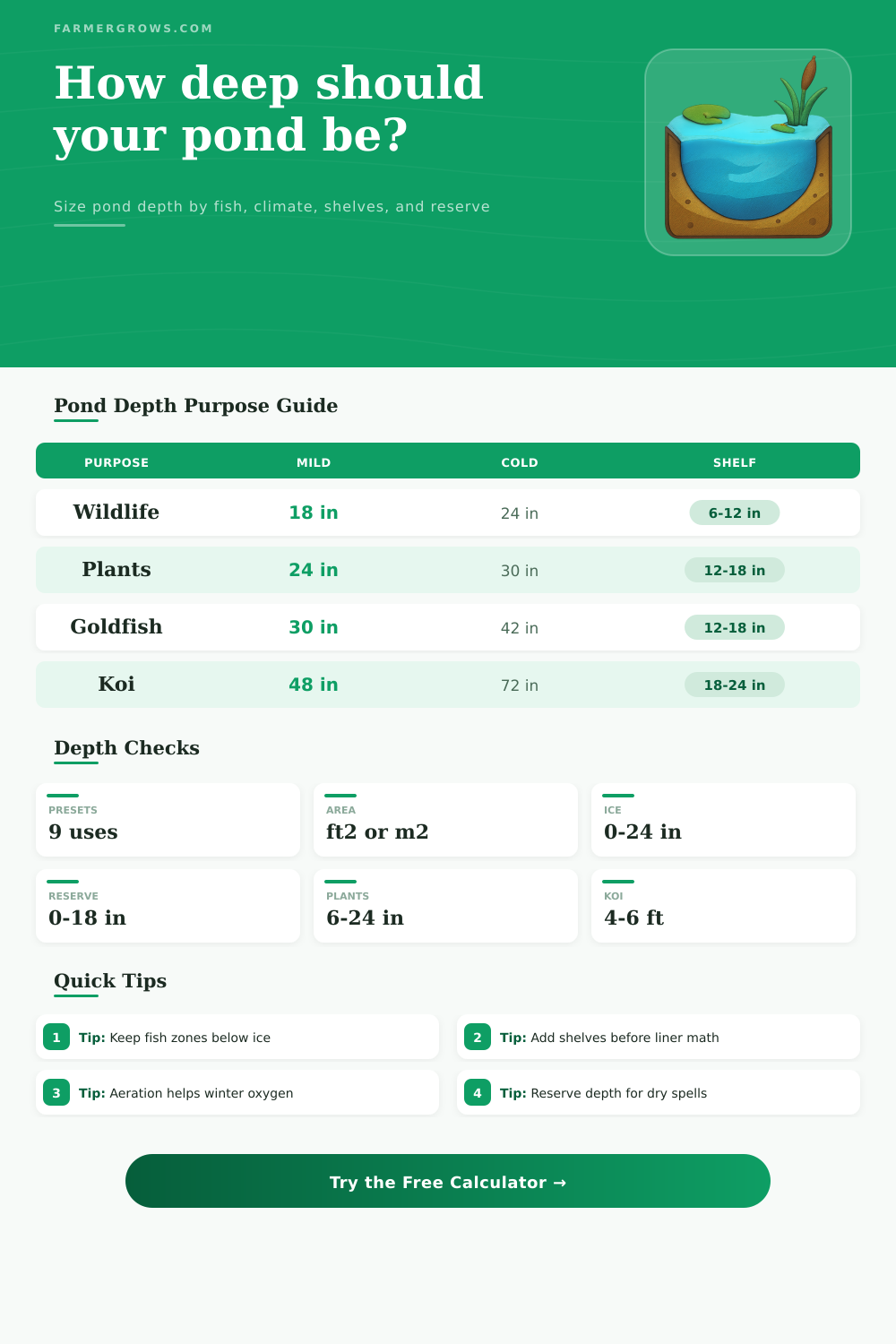
Use this grid to compare common pond purposes before choosing a preset. The calculator still checks climate, fish, ice, shelves, aeration, and reserve.
| Purpose | Mild minimum | Cold minimum | Best depth notes |
|---|---|---|---|
| Wildlife and frog pond | 18-24 in | 24-30 in | Include broad shallow edges and at least one cooler pocket. |
| Water garden plants | 24-30 in | 30-36 in | Most plant baskets sit on shelves, not the deepest bottom. |
| Goldfish pond | 30-36 in | 42-48 in | Use a deeper refuge if the pond freezes or heats hard. |
| Koi pond | 48-60 in | 60-72 in | Koi benefit from deep, steep-sided swimming water. |
| Farm irrigation reserve | 60-96 in | 72-120 in | Depth is often driven by storage volume and drawdown. |
| Climate condition | Typical ice allowance | Aeration effect | Depth planning note |
|---|---|---|---|
| Warm / no hard freeze | 0-1 in | Mostly summer oxygen support | Depth protects against overheating more than ice. |
| Mild winter / brief ice | 1-4 in | Vent hole helps short cold snaps | Goldfish usually need 30-36 in or more. |
| Cold winter / reliable ice | 4-12 in | Winter aeration helps gas exchange | Keep a liquid refuge below ice plus reserve. |
| Severe winter / thick ice | 12-24 in | Aeration helps but does not remove depth need | Koi ponds often target 5-6 ft or deeper. |
| Hot dry summer | 0-2 in | Raises oxygen in warm water | Add reserve depth for evaporation and irrigation drawdown. |
| Fish species | Warm / mild depth | Cold depth | Design caution |
|---|---|---|---|
| No fish / wildlife | 18-24 in | 24-30 in | Prioritize gentle exits and varied shelves. |
| Minnows or mosquito fish | 24-30 in | 30-42 in | Small fish still need cover from heat and predators. |
| Goldfish | 30-36 in | 42-48 in | More depth improves winter survival and temperature stability. |
| Koi | 48-60 in | 60-72 in | Use deeper water and strong filtration for heavy bioload. |
| Catfish or farm fish | 48-72 in | 60-96 in | Plan around harvest, oxygen, and summer stratification. |
| Feature | Common depth | Area share | Calculator effect |
|---|---|---|---|
| Marginal plant shelf | 6-10 in | 10-18% | Adds habitat while reducing average depth. |
| Mixed plant shelf | 10-18 in | 15-25% | Good balance for baskets, lilies, and access. |
| Lily shelf | 18-24 in | 18-28% | Works for deeper plant baskets and broad pads. |
| Predator escape shelf | 12-18 in | 6-18% | Useful for wildlife access, but fish need deeper refuge. |
| Deep fish basin | 36-72 in | 55-85% | Main driver for volume, temperature stability, and wintering. |
Measure the final water depth after liner underlayment, rock, shelves, and normal drawdown. Fish care about the water column that remains usable.
Plant and predator shelves are useful, but too much shallow area warms quickly and reduces fish refuge. Balance habitat with a clear deep-water zone.
Pond depth are a critical factor in the health of the pond. The depth of the pond will determine if the pond remains clear of debris and if the fish in the pond survive the season. If the pond isnt deep enough, then the fish may not be able to survive extreme weather conditions.
For instance, if there is a period of extreme cold weather and the pond is too shallow, then the fish will die due to a lack of oxygen in the water. Therefore, you should consider pond depth carefuly to ensure that there is enough oxygen in the pond for the fish to survive the winter. The depth requirements for a pond will vary depending on the purpose for which the pond is created, as well as the types of animal that will live within the pond.
How Deep Should Your Pond Be
If you create the pond for wildlife habits, then the pond may be relatively shallow since frogs and insects requires such areas. However, if fish are to be added to the pond, then the depth requirements will change. Depending upon the species of fish, different depths is required.
For example, goldfish can live in a pond that is more shallower than a pond that contains koi fish. However, both types of fish require that there is enough water beneath the ice for gas exchange. Gas exchange are necessary for the survival of the fish, so the pond must be deep enough to allow for this process to occur.
Another of the major factor that will impact the depth of the pond is the climate in which the pond will be established. The climate will help determine how much ice will form on the ponds surface. In areas that experience reliable ice cover on the pond, the depth of the liquid water must be beneath the freeze line, but also deep enough to incorporate an evaporation reserve.
The evaporation reserve will ensure that pond levels will not drop due to evaporation during dry periods of the year. While aeration will help to circulate the ponds water, it isnt a replacement for the depth that is required to establish a healthy pond. Both de-icers and diffusers will provide some safety for the ponds fish, but the ponds basin must still be deep enough for sufficient pond depth.
Ponds often incorporate shelves into there construction. Such shelves will impact the average depth of the pond. For example, shelves that are constructed for marginal pond plants and predator escape ledges will reduce the average depth of the pond.
When planning the pond, you should account for the depth of the shelves. If the pond contains too many shallow area, the pond will warm up too quickly in hot seasons. The water may warm too quickly, leaving the fish without areas within the pond to inhabit.
Using a pond depth calculator will help to determine the proper depth for the pond. To perform the calculation, you will need to enter the purpose of the pond, the climate zone in which the pond will be established, and the type of fish that will live in the pond into the calculator. The fish species and the climate zone will impact the depth requirements for the pond.
Additionally, the ice allowance, the evaporation reserve, and the aeration option for the pond can also be entered into the calculator. Based off these variables, the pond depth calculator will tell the pond owner the required depth of the ponds deepest section, as well as the average depth of the pond. One of the mistakes that many pond owners make is to only ensure that the edges of the pond are of sufficient depth.
The fish live in the deepest part of the pond. Therefore, if the deepest part of the pond is too shallow (after considering the depth of any pond shelves and how much pond water evaporates into the air), the pond will have issue. It is recommended that you assess the deepest part of the pond to ensure that it meet the requirements of the species of fish and the climate zone in which the pond will be established.
Additionally, the type of aeration system that will be used in the pond should be considered in relation to the size of the ponds evaporation reserve. Finally, the calculated depth of the pond may need to be adjusted based upon the actual condition of the site in which the pond will be established. For instance, if the soil within the site will reduce the depth of the pond, then the calculated depth of the pond may need to be reduced by a small amount.
Additionally, once the pond is established, the depth of the pond will determine whether seasonal aeration is required, or whether a winter vent hole is needed. The depth of the pond will determine how much water is required to perform specific tasks within the pond. If the correct depth is established for the pond, then the entire pond system will remain stable.
You should of checked the soil first to avoid alot of trouble.