
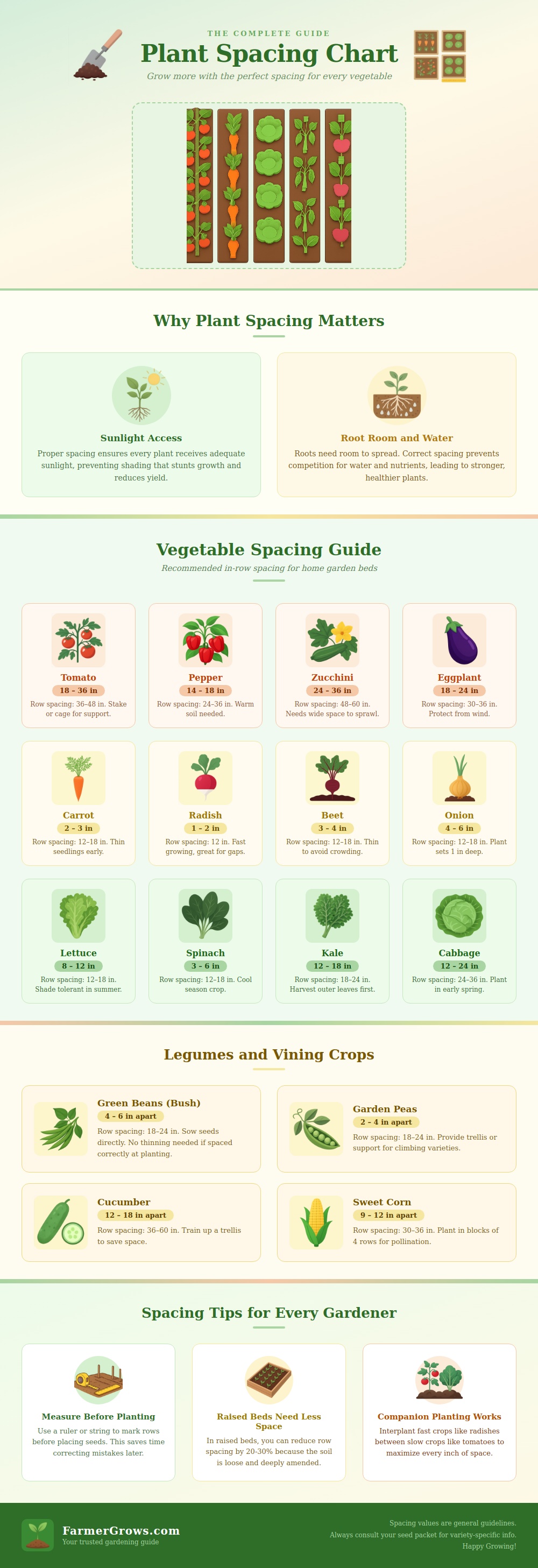
Plant spacing cares that every plant receives exactly the necessary place for its roots and leaves, but not a bit more Intensive planting uses every available space in the garden, and it works well if you do it correctly.
When vegetables crowd too together, those that last commonly suffer from little growth. They give little fruit, and the lives of the plants shorten. If you understand the space needs of every species and apply them, you escape many of those problems.
How to Space Your Garden Plants
Root vegetables like carrots, onions and radishes do not find enough place to grow, so they form little and different bulbs. Same happens with leafy vegetables like lettuce or kale. Fruiting crops, for instance tomatoes and peppers, also lose in production, because they do not reach their full size.
The secret of good spacing is to give every plant sufficient light, water, food and air for optimum growth. Without right space the plant stays little and struggles for its needs, which ultimately causes bad flowers and bad yield. Too dense crop forces plants to compete for water and food, and absence of distance between them helps diseases like powery mildew.
Biointensive planting in raised beds puts plants more closely one to the other, so that their leaves touch and rows, like this you fit more plants in a small area. In rectangular grids you divide the area in squares and spread the plants equally. Diagonal arrangement, where every second square is shifted, allows more plants in same space with same distances between centers.
You usually see spacing advice as a range. The center of that range gives good fill inside two seasons. Nearer distance helps plants cover the ground more quickly, while bigger distance works for those that wait.
A plant with 12-inch advice will grow around 12 inches wide. Every species has its mature height and width, so you must consider the final width.
Big plants, that you put in 12 inches one from the other, include broccoli, brussels sprouts, pepper, cauliflower, collards, eggplant, kale, mustard greens, okra, peppers, sweet potatoes and vine tomatoes. Basil likes four to eight inches of space horizontally, and garlic requires at least six inches. Spinach you can put in 20 to 25 cm from the nearest neighbors in a grid system.
In 3-inch distance up to 16 plants fit one square foot. Trellises best employ the spaces and mean denser crop.