Fodder Calculator
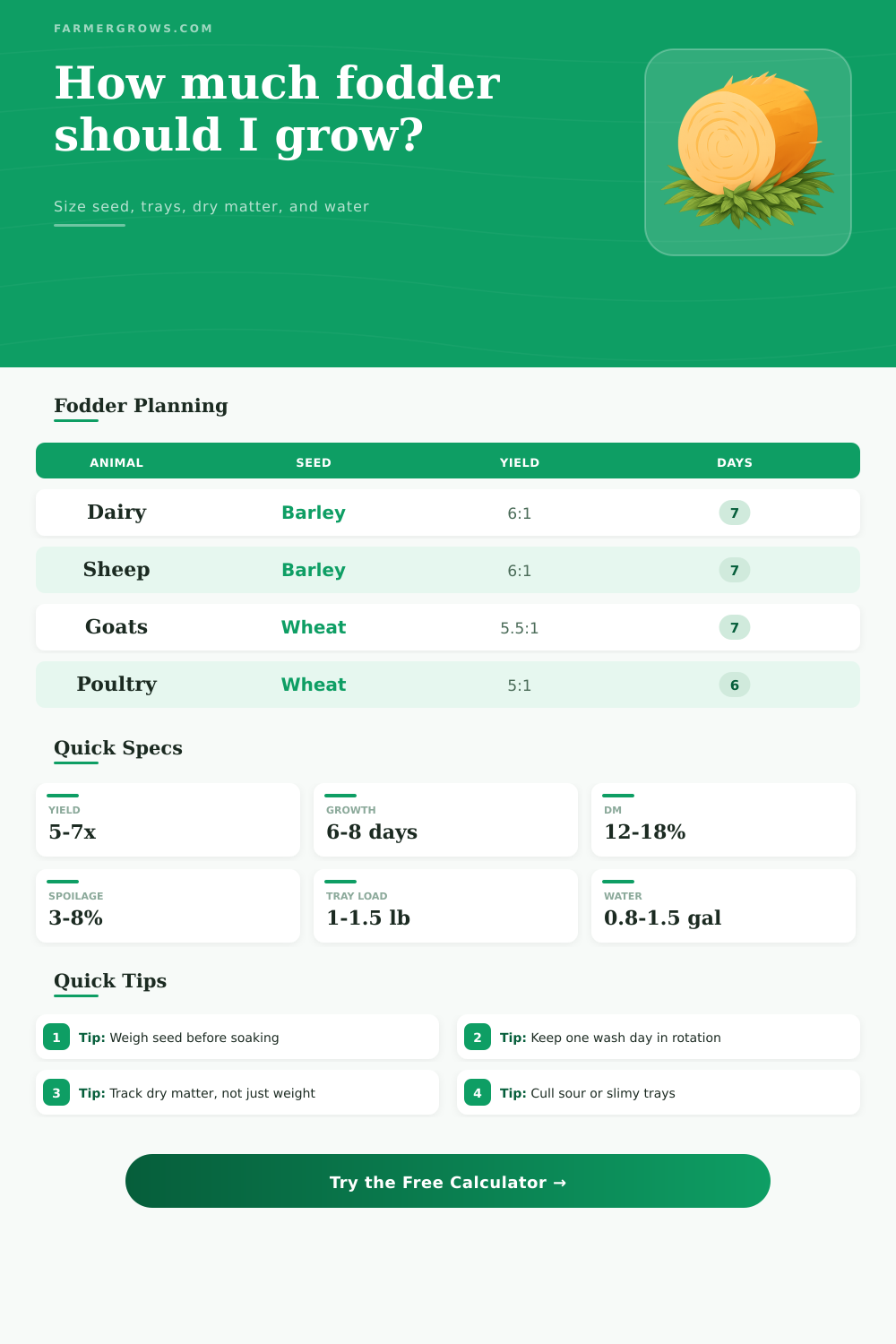
Plan sprouted livestock fodder by animal count, dry seed ration, grain yield, tray size, dry matter, spoilage, water use, and rotation days.
Use this as a production planning tool. Sprouted fodder is usually part of a ration, so compare the dry matter result with your nutrition plan before changing hay, pasture, or concentrate levels.
Livestock fodder estimate
Enter the animal count and tray details to size the daily harvest.
animal count x dry grain per animal x (1 + spoilage %) = dry seed to start daily
dry seed to start x sprouting yield ratio = fresh fodder at harvest
fresh fodder x dry matter percent = dry matter fed from fodder
daily seed / seed per tray = trays harvested per day; harvest trays x rotation days = tray spaces
| Animal group | Common fresh fodder range | Typical role | Planning note |
|---|---|---|---|
| Dairy cows | 15 to 35 lb per head daily | Supplemental fresh feed | Watch total ration dry matter and milk response. |
| Beef cattle | 8 to 25 lb per head daily | Forage supplement | Introduce gradually and keep long fiber available. |
| Horses | 5 to 15 lb per head daily | Partial forage support | Use clean mats and avoid mold-sensitive batches. |
| Sheep and goats | 1 to 4 lb per head daily | Palatable ration add-on | Small ruminants can sort mats, so chop if needed. |
| Poultry | 0.03 to 0.12 lb per bird daily | Green feed enrichment | Balance with complete feed for protein and minerals. |
| Seed type | Fresh yield ratio | Common growth days | Notes |
|---|---|---|---|
| Barley | 5.5 to 7.0 x dry seed | 6 to 8 days | Popular for dense mats and strong root structure. |
| Wheat | 5.0 to 6.5 x dry seed | 6 to 8 days | Good poultry and small ruminant option. |
| Oats | 4.0 to 5.5 x dry seed | 6 to 8 days | Bulkier seed and often a lighter mat. |
| Triticale | 5.0 to 6.5 x dry seed | 6 to 8 days | Useful where seed quality and germination are consistent. |
| Field peas | 3.5 to 5.0 x dry seed | 5 to 7 days | Higher protein seed but more sensitive to souring. |
| Tray footprint | Area | Dry seed load | Typical use |
|---|---|---|---|
| 10 x 20 inch nursery tray | 1.39 sq ft | 1.25 to 2.0 lb | Poultry, rabbits, goats, and small pilot systems. |
| 12 x 24 inch fodder tray | 2.00 sq ft | 2.0 to 3.0 lb | Small livestock systems and hand-stacked racks. |
| 18 x 36 inch rack tray | 4.50 sq ft | 4.5 to 6.5 lb | Sheep, goats, calves, and compact dairy rooms. |
| 24 x 48 inch large tray | 8.00 sq ft | 8 to 12 lb | Higher-volume cattle systems with good drainage. |
| Planning item | Typical range | Calculator input | Why it matters |
|---|---|---|---|
| Water use | 0.8 to 1.5 gal per lb seed | Water use per dry seed | Includes soak, rinse, mist, and cleanup water. |
| Dry matter | 12% to 18% of fresh fodder | Fresh fodder dry matter | Fresh weight can look large while dry nutrients stay modest. |
| Spoilage buffer | 3% to 8% | Spoilage and reject buffer | Allows for poor germination, sour trays, and trimming. |
| Rotation length | Growth days plus reset day | Rotation days in system | Tray count should cover seeding, harvest, washing, and drying. |
Plan from dry matter. Fresh fodder is mostly water, so use the dry matter card when comparing it with hay, grain, silage, or complete feed.
Protect the rotation. One missed wash or sour tray can disturb several harvest days, so keep rotation days one step longer than growth days when space allows.
When growing sprouted fodder, you will need to determine whether the fodder meets the nutritional needs of your animal and if the fodder system can be sustained according to your schedule. Sprouted fodder systems use a relatively small amount of seed and water to produce fresh fodder for your animals. However, you must find the correct amount of seed to load into each tray for the system to produce enough fodder to feed all of your animals.
Additionally, you will need to ensure that there are enough trays in motion in the system to provide fodder for your animals. Sprouted fodder contain the majority of its weight in water, so you will need to understand the difference between fresh weight and dry matter in the fodder. The calculator included in this article can help you determine the amount of fodder that will be produced.
How to Plan Your Sprouted Fodder System
However, the calculator will not help you determine whether the plan will fit your schedule or your water source. One pound of dry barley can grow to six pounds of green fodder in approximately one week. The reason for this increase in the weight of the seed is due to the seed absorbing water to grow the roots of the fodder.
This increase in the weight of the seed does not necessarily indicate an increase in the nutritional value of the fodder. The dry matter percentage of the fodder will tell you of the fodder’s nutritional value. If the fresh weight of the fodder is large but the dry matter percentage is small, the fodder will have a low value as feed for your animals.
Many will assume that the large fresh weight of the fodder indicates that the animals will produce more milk. However, this isnt necessarily the case. You should use the dry matter percentage to determine the value of the fodder to avoid making mistake in feeding your animals.
Tray rotation is one of the critical component of a successful sprouted fodder system. The rotation of the trays will determine if you have an adequate amount of fodder to provide for your animals. The calculator will ask for the amount of days that the fodder will grow and the total number of days that you will rotate the trays.
The total number of days will include the amount of days required for soaking the seeds, germination, harvesting the fodder, and the days required to wash and reposition the trays. If you only input the days that the fodder takes to grow, you will find that you run out of fodder for your animals on the day of harvesting because you have not accounted for the days required to clean and reset the trays. You can use the reserve tray component of the calculator to determine how many extra trays you need in case of a missed day of fodder rotation.
Small barns may require more days for the fodder to cycle through the system than those with more space to house the fodder trays. Water use for sprouted fodder is another variable that you will need to account for in your system. Water will be used to soak the seed, rinse the fodder from the trays, and mist the trays daily to maintain proper moisture levels.
Your actual water use may be higher than that calculated by the calculator. You can use the calculated water value as a starting point to determine how much water to use daily for sprouted fodder. If you use hand watering or have to mist the trays more than once daily to ensure that the fodder does not dry out along the edges, you will need to account for this in your system.
You must follow a routine to rotate the trays and clean them to avoid the formation of sour or slimy mats. If you find that your mats have become sour or slimy due to a missed washing routine, you will need to cull these trays as they will not contain usable fodder. This lost trays component in the calculator can help you account for these culled mats to ensure that your feeding plan is not ruined by the loss of these mats.
The method by which the animals consume the sprouted fodder will change the amount of seed that you must use daily for your animals. Dairy cows will consume more of the sprouted fodder than other types of livestock. This is due to the fact that cows will consume the fodder to aid their digestive system.
However, poultry and rabbits will require less of the sprouted fodder. You can use the animal type changeable component of the calculator to account for this. Additionally, some animals will eat at the green tops of the mats and will leave the root portion of the mats.
In this case, the animals will not consume all of the mats that you prepare. The choice of grain will change the type of mats that are produced and the way in which the fodder must be managed. Barley will produce dense mats that do not separate from one another on the tray.
However, wheat mats are more compact and require a different loading density of the trays. Additionally, oats are more airy and are often used for feeding horses. There are preset buttons for each of these grains that will change the amount of yield of fodder that is produced and the length of time that it takes for the fodder to grow.
These variables can be adjusted for your system even after the setup of your sprouted fodder plan. There are reference tables for sprouted fodder that contain the typical footprint of the trays, the amount of water that will be used, and the percentage of dry matter that each type of seed will produce. These tables can help you to ensure that your calculated numbers are within a typical range.
However, these are not rules for sprouted fodder and will not have to be followed to an “T.” If you find that the amount of water that you are using is outside of the typical range for your seed, you should review your routine for the fodder trays. If you find that the fodder mats are loaded more than the recommended amount, this will reduce the amount of airflow to the mats and create an environment that may lead to the growth of sour mats. However, underloading the trays will waste some of the space within your trays and may cause the fodder mats to dry out along the edges.
Sprouted fodder is one component of the feeding program for your animals. The dry matter of the fodder is not as high as hay or grain. Therefore, you should focus on the dry matter percentage of the fodder.
One of the advantages of using sprouted fodder is that it can be harvested on a daily basis, regardless of the weather. However, this advantage is only realized if the fodder rotation system and seed amount for the animals are set up and followed properly. You should run the numbers for your system, observe it for a few weeks, and then make adjustments to one of the variables at a time.