
Lime application is one of those tasks for lawn and garden that can make a big difference in how grass and plants grow. Lime makes the soil pH less acidic. That helps the grass absorb nutrients and other elements from the soil.
The more the soil moves from the ideal pH, the less the plants can use the nutrients. Also lime helps break down the thatch, stops some insects and diseases that damage the ground, and improves the environment of the soil.
How to Apply Lime to Your Lawn and Garden
Warm-season grasses tolerate a bit low pH, while cool-season grasses like a bit higher. Inside the right pH ranges stay available for the grasses the nutrients that they need most, including extra nitrogen from lawn fertilizers. If pH moves too much in any direction, even rich nutrients become unavailable.
Lime restores the balance in too acidic soil and brings the pH back to best levels for growth.
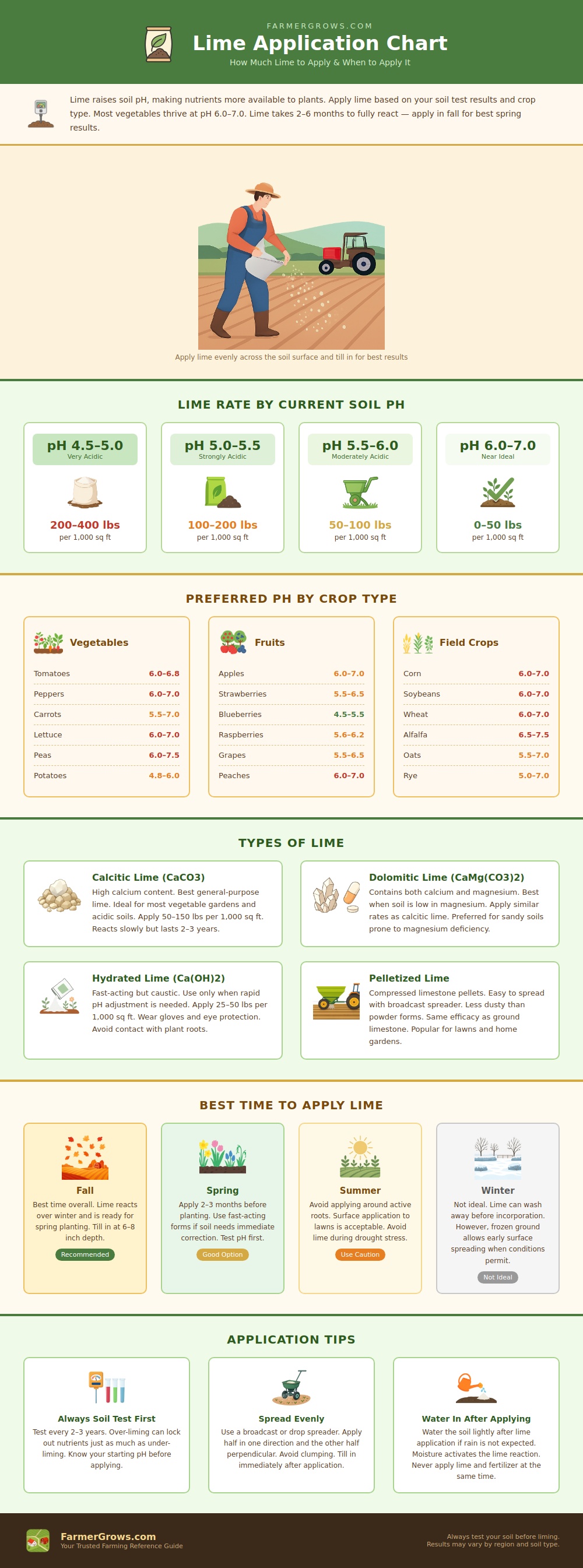
Soil test is the first step. The Lime Application Rate Calculator helps farmers and gardeners use the right amount of lime, optimizing the soil pH for healthy growth of plants. It counts the right amount according to results of soil test, usually in pounds for square foot or acre.
Different plants like different pH levels. When you add lime, it reduces the acid in the soil. For instance, pine trees like acidic soil, so not every plant benfits from liming.
If needed more than 100 pounds of lime, you apply 50 pounds in spring and 50 pounds in fall, later retest the next spring and add more if required, until you reach the wanted pH level. Dolomitic lime works well, because it has magnesium together with calcium, which helps when tests show low magnesium. Pelletized lime is more easily spread by means of a spreader than powder lime.
Autumn is the main time for apply lime, phosphorus and potassium. You should apply lime in spring or fall, when it rains a lot. Because water is needed so that lime reacts with the soil, the results are slow in dry soil.
It commonly takes a year or more to observe a response, even in ideal conditions. Usually it takes two until three years to note the full impact of ag-lime on the soil pH.
Lime you lay before the fertilizer. If pH is too low, the roots cannot absorb the fertilizer. Compare the lime materials according to cost for unit of neutralizing value, not according to price for tons.
Good lime application gives economic gains by means of bigger crops, better fertilizer efficiency and less need of extra nutrients. During application keep pets away to give time that lime settlesinto the soil.