
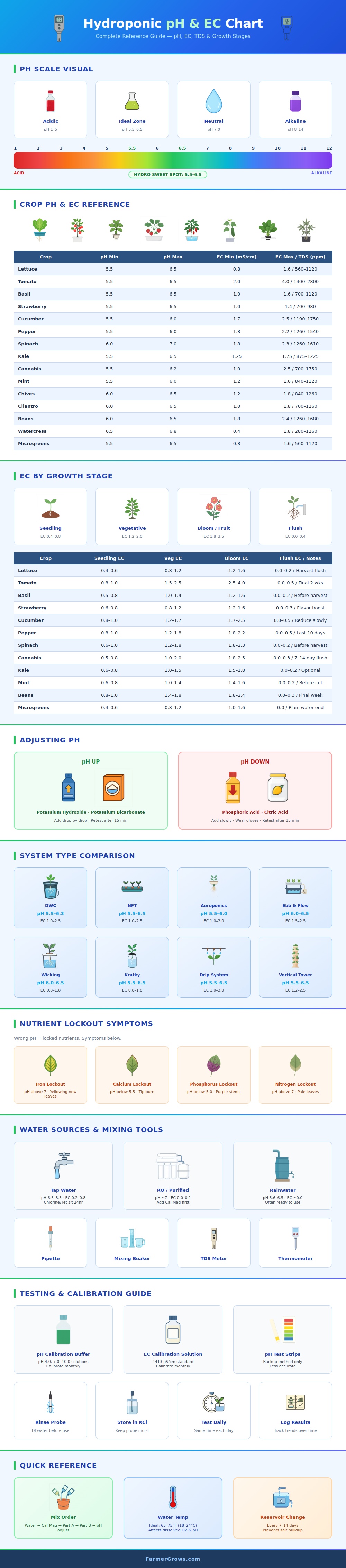
pH are a measurement of how acidic or alkaline an nutrient solution is, and pH determines whether a plant can absorb nutrients from a nutrient solution. Even if a nutrient solution contain many minerals like nitrogen, phosphorus, and potassium, the plants may not be able to use those minerals if the pH isnt at the correct level. When the pH are too high or the pH is too low, a condition called nutrient lockout occur.
Nutrient lockout is a condition where the chemical state of the water prevent the plant from absorbing specific minerals. For example, if the pH is incorrect, iron may become unavailable to the plant, and if the pH is incorrect, calcium may become unavailable to the plant. When minerals like iron or calcium is unavailable, the leaves of the plant may turn yellow or the tips of the leaves may look burnt.
Why pH Is Important for Plants
Most hydroponic plants grows best when the pH is in a slightly acid range, and this range is typically between 5.5 and 6.5. Staying within the pH range of 5.5 to 6.5 ensures that a wide variety of nutrients remains soluble in the water. If the nutrients are soluble, the plant roots can easily absorbing the nutrients.
Different plants may have slightly different pH requirement, but most plants perform well if the pH is maintained between 5.5 and 6.5. Because plants consume water and nutrients, and because water evaporates from the reservoir, the pH of the nutrient solution will change over time. Therefore, you must test the pH of the nutrient solution every day to ensure the pH remain within the correct range.
The source of the water also affects the pH of the nutrient solution. Tap water often have a high pH, and tap water often contains chlorine. Reverse osmosis water is very pure, but reverse osmosis water can be chemically unsteadily.
If you use reverse osmosis water, you may need to add a calcium supplement to the water so that the chemistry of the water is more stable. Additionally, you must monitor electrical conductivity, which is also called EC. EC is a measurement of the concentration of dissolved salts in the nutrient solution, and EC tells you how much total nutrition are present in the nutrient solution.
If the EC is too high, the concentration of salts is too high, and a high concentration of salts can cause osmotic stress in the plant roots. Osmotic stress occur when high salt levels cause moisture to be removed from the plant roots. The amount of nutrition a plant need will change as the plant grows.
A seedling requires a low concentration of nutrients, but a plant in the vegetative stage require a higher concentration of nutrients to support growth. When a plant moves into the flowering or fruiting stage, the plant requires a different concentration of nutrients to support the production of fruit. Some growers also perform a flush, and a flush is the process of running plain water through the system to remove excess salt.
You can adjust the pH of the nutrient solution using specific chemical. If the pH is too high, you can add a pH down solution to lower the pH. If the pH is too low, you can add a pH up solution to raise the pH.
You should add these solutions in small amount because adding too much solution at once can cause the pH to change too quick. You must wait for the chemistry of the nutrient solution to settle after you add a pH down solution or a pH up solution. By monitoring the pH and the EC, you can ensure that the plants have the correct amount of nutrients and that the plants can absorb those nutrients.