⚙️ Hydraulic Cylinder Flow Rate Calculator
Calculate GPM, extension/retraction speed, and cycle time for any hydraulic cylinder
| Bore Dia. | 1 in/sec | 2 in/sec | 4 in/sec | 6 in/sec | 8 in/sec | 10 in/sec |
|---|---|---|---|---|---|---|
| 1.5" | 0.19 | 0.38 | 0.77 | 1.15 | 1.53 | 1.92 |
| 2" | 0.20 | 0.41 | 0.82 | 1.22 | 1.63 | 2.04 |
| 2.5" | 0.32 | 0.63 | 1.27 | 1.91 | 2.54 | 3.18 |
| 3" | 0.46 | 0.92 | 1.84 | 2.76 | 3.68 | 4.60 |
| 3.5" | 0.62 | 1.25 | 2.50 | 3.75 | 5.00 | 6.25 |
| 4" | 0.82 | 1.63 | 3.27 | 4.90 | 6.54 | 8.17 |
| 5" | 1.27 | 2.55 | 5.11 | 7.66 | 10.21 | 12.76 |
| 6" | 1.84 | 3.68 | 7.35 | 11.03 | 14.71 | 18.38 |
| Bore" / Rod" | Net Ann. Area (in²) | @ 4 in/s GPM | @ 6 in/s GPM | % of Extend |
|---|---|---|---|---|
| 2" / 1" | 2.36 | 0.61 | 0.92 | 75% |
| 3" / 1.5" | 5.30 | 1.38 | 2.07 | 75% |
| 4" / 2" | 9.42 | 2.45 | 3.68 | 75% |
| 4" / 2.5" | 7.66 | 1.99 | 2.99 | 61% |
| 5" / 2.5" | 14.73 | 3.83 | 5.74 | 75% |
| 6" / 3" | 21.21 | 5.51 | 8.27 | 75% |
| Stroke (in) | @ 2 in/s | @ 4 in/s | @ 6 in/s | @ 8 in/s | @ 10 in/s |
|---|---|---|---|---|---|
| 6" | 3.0 s | 1.5 s | 1.0 s | 0.75 s | 0.6 s |
| 12" | 6.0 s | 3.0 s | 2.0 s | 1.5 s | 1.2 s |
| 24" | 12.0 s | 6.0 s | 4.0 s | 3.0 s | 2.4 s |
| 36" | 18.0 s | 9.0 s | 6.0 s | 4.5 s | 3.6 s |
| 48" | 24.0 s | 12.0 s | 8.0 s | 6.0 s | 4.8 s |
| 60" | 30.0 s | 15.0 s | 10.0 s | 7.5 s | 6.0 s |
| Imperial | Metric Equivalent | Imperial | Metric Equivalent |
|---|---|---|---|
| 1 inch | 25.4 mm | 1 in/sec | 25.4 mm/s |
| 1 in² | 645.16 mm² | 1 GPM | 3.785 L/min |
| 1 in³ | 16.387 mL | 1 in³/sec | 0.9831 L/min |
| 231 in³ | 1 US Gallon | 1 in³/min | 0.01639 L/min |
Hydraulic cylinders have an important role on the farm. They change positions on agricultural equipment for tasks as height of knife and steering or operate flow to motors. Quality and production during plowing crop or harvest is the top priority for big machines and the attention of the driver is best used to observe the whole farming situation
The pace of hydraulic piston depends on the flow of the fluid in the cylinder together with the area and stroke of the piston. A load on the piston rod or too much friction needs the pressure to beat that. Flow in the hydraulic system makes the actuator speed and reaction speed.
How Hydraulic Flow Changes Cylinder Speed and Force
Decrease of flow causes a slowdown. To increase the cylinder speed the same idea means bigger flow.
Bigger flow gives faster work. Piston will move twice as fast if you pump 10 gpm instead of 5 gpm everything other equal. More pressure helps to do more work.
Hydraulic cylinder can raise 10 kg or 100 kg in same 0.1 m/s. The flow rate stays the same because the cylinder moves in 0.1 m/s.
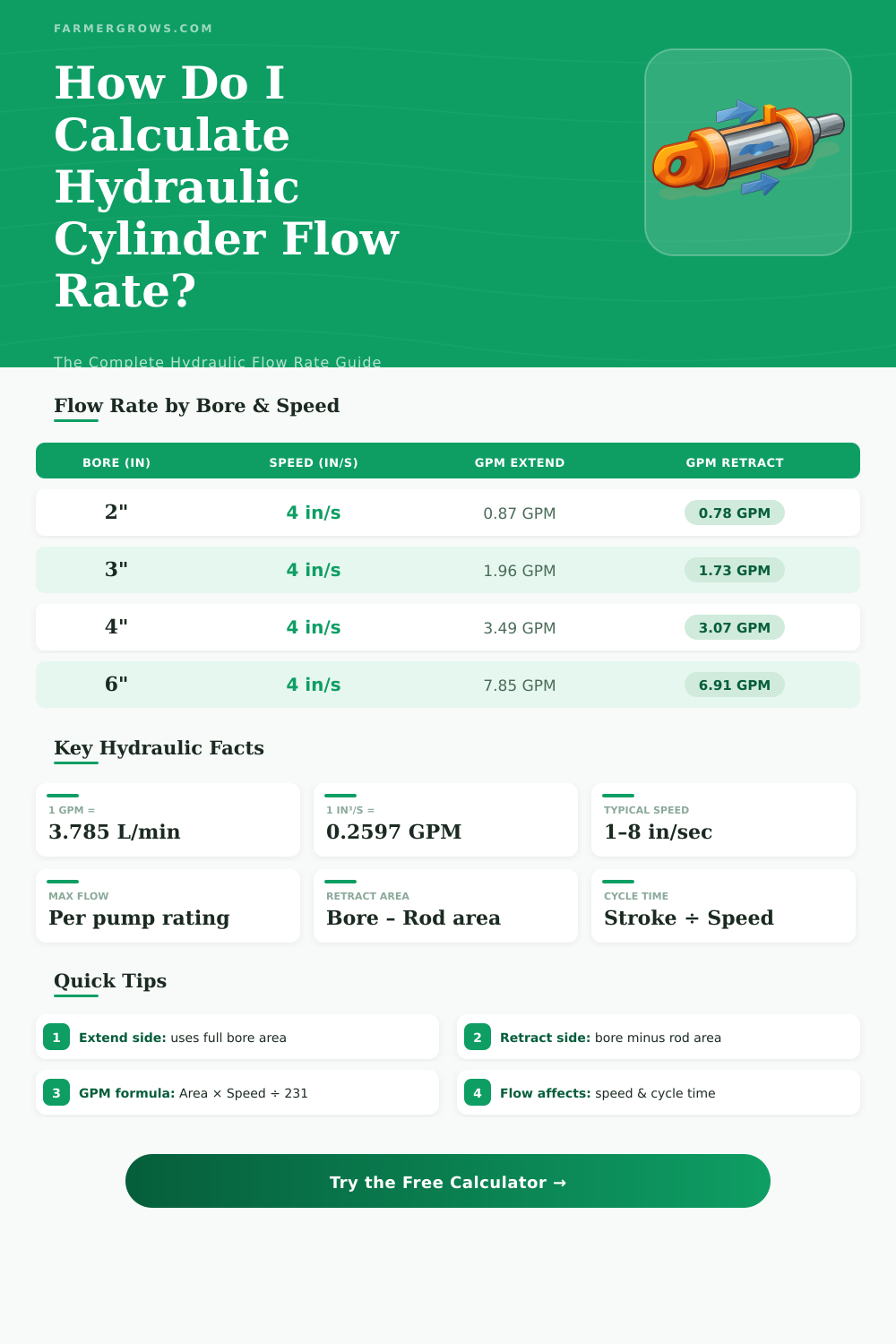
The formula for cylinder flow in gpm is 12 × 60 × cylinder speed in feet each second × area in square inches divided by 231. Cylinder volume in gallons matches cylinder area × cylinder stroke divided by 231. This is useful for design or optimize hydraulic system.
Knowing the right flow rate is necessary for reach the wanted out put.
There is a difference between extension and retraction because of different area at every side of the piston which affects force and flow. While retracting the cylinder has much less force because the rod reduces the surface. For extension the rod size does not matter.
In tractors the whole gpm usually splits between steering and other hydraulic uses. Some tractors have around 9.5 gpm for the hydraulic system. That is relatively little.
The three eighth-inch tubes and valves that some producers like for low duty loader cylinders only waste energy and add heat in motor uses. Control the flow by means of lever for push cylinder or turn motor should not create problems. Bigger hydraulic flow makes gears as post drivers much more fast and efficient.