
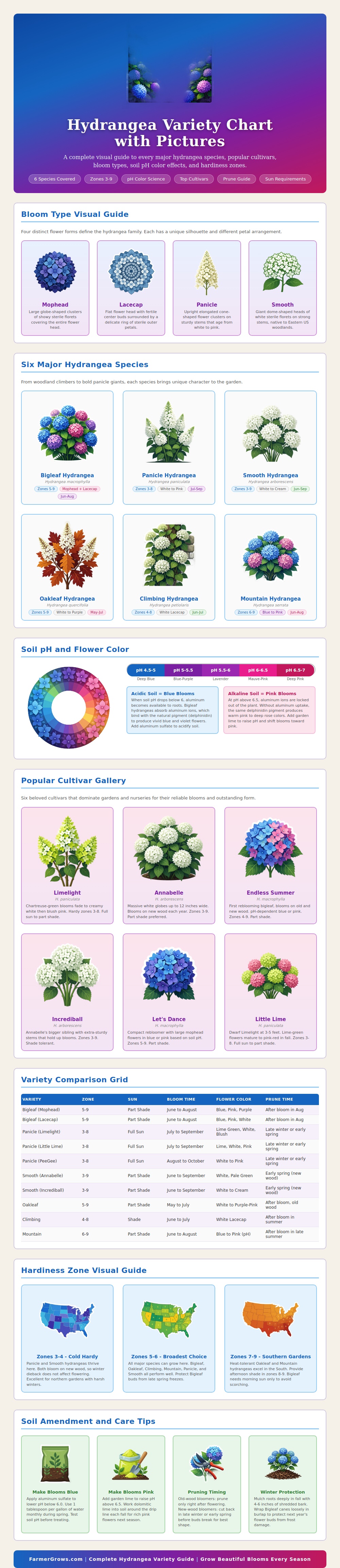
The problem isn’t that hydrangeas are hard to grow; it’s just that they aren’t all the same plant. What I mean: One variety isn’t like another, so if you treat it like one, chances are you’ll be disappointed (and then give up on this shrub altogether). In nursery, the ones for sale resembles each other but ask for very different things.
How do you tell which is which? My chart help explain this by separating out six species visually. However, the key thing to know about any particular plant are its flower shape and structure. There are four basic kinds of blooms that will influence how you prune. Mopheads make perfect spheres of sterile flowers; lacecaps start off flat and has big outer petals; panicles emerge in cone-like shapes held upright that open white then fade to pink; and smooth hydrangeas is just domes of little white flower. Knowing the shape of yours will help you get your garden going right next year.
How to Know Your Hydrangea Type
Did you know? Bigleaf hydrangeas are known to “change their mind” depending on the soil chemistry they’re growing in. According to chart, the change is related to the pH of the soil: For blue blooms, you require an acid soil (below pH 6), where aluminum in the soil becomes available to the roots. Aluminum gets bound up with some of plant’s natural pigments, creating bluish or purplish hues. For pink flower color, increase the pH (above 6.5) by liming the garden, which will lock out the aluminum so pigment shows as rose or pink. It is a little bit of a science experiment, so just be patient while getting your soil adjusted properley.
There are exceptions to all of this when it comes to hydrangea colors: Annabelle (above) and other smooth- and panicle-types like Limelight don’t vary their color according to soil pH. Why? They bloom on new wood, which means they produce flowers on growth from the current season. So if your climate is tough or you’re a heavy-handed pruner, they forgive you. And even though old buds may be killed in winter, particularly up North, panicle hydrangeas will also create blossoms during the summer months so there are always new ones coming along. Cut them back hard in late winter and you won’t sacrifice next year’s crop of showiness. The tradeoff is that they can’t changes colors.
Variety is good, but so is location. The infographic shows which zone each of these plants will grow in, helping you select one suited to yours or one that is close. Panicle and smooth varieties adapts well to severe cold; in fact, they are best served by zones 3 and 4. Oakleaf and bigleaf hydrangeas is more particular about their weather. They prefer milder conditions. They also realy appreciate some shade, particularly from the afternoon sun, in hotter parts of the South where leaves can be scorched. There’s also another option for those who live on the warm side: mountain hydrangeas with delicate lacecaps. Growing what suits where you actualy live means not having to battle nature year after year.
The secret to growing beautiful hydrangeas? It’s not so much knowing all the rules, as it is knowing the nature of each kind. Read label when purchasing; know its bloom type. Modify the soil (to achieve certain colors), or just let nature do it (if you don’t mind easygoing). Then match your expectations with the plant’s biology and the blooms will do the rest. You’ll find you’ve got a garden with predictable, luxurius color year after year… No more mystery at the nursery counter.